Vials, Caps, and Septa
All you need to know about vials, their various types, and common uses in chromatography laboratories.
Which autosampler vial should I use?
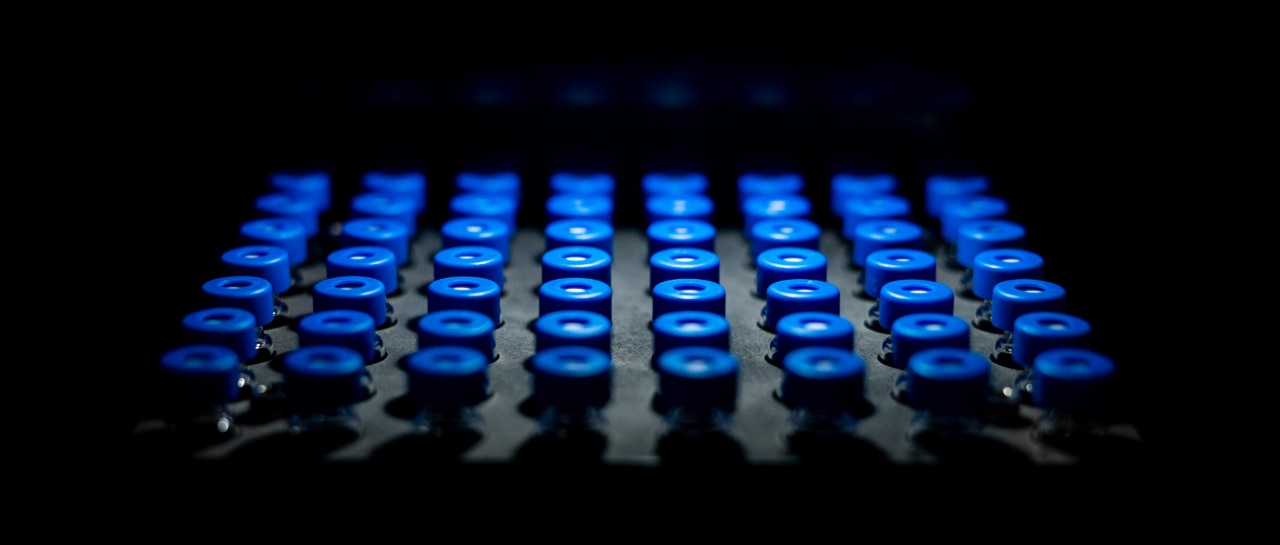
Agilent provides a broad range of autosampler vials. These include 2mLs crimp, screw, snap, headspace, polypropylene, high recovery, and finally storage vials. Agilent’s Vial Selector Tool is a valuable resource for selecting the most suitable vial/cap or septum based on your analytical requirements. Below you can find our recommendation on vial type selection for different applications.
Which autosampler vial should I use for GC-based applications?
While nothing is 100%, most customers performing GC-based applications usually choose crimp top style vials and associated caps. Due to the nature of GC sample matrices, there is a higher level of volatility requiring the ultimate seal to limit sample loss due to higher levels of internal pressure within the vial. Seal compatibility between the vial/septum and closure becomes extremely critical. The same holds true and is much more critical to GC-HS based applications.
Which autosampler vial should I use for GC HS-based applications?
Similar to standard GC-based applications, GC-HS applications require similar levels of sealability but usually involve larger volume sample containment from a few mL to up to 20 mL. Headspace vials can meet the needs of a larger sample volume.
Which autosampler vial should I use for LC-based applications?
LC-based applications are usually water-based and thus sealability is not as large a concern, allowing for screw and/or snap top containment styles. However, crimp top styles are also employed where sample security is a focus.
Which autosampler vial should I use for MS based applications?
The main difference between standard LC/GC platform-based applications and their MS-based alternatives is the source used in MS-based testing. This often requires more critical components because the system is more sensitive and measures at a higher level. Using the lowest extractable and leachable vials and caps, including deactivated glass options, can help improve the overall performance of the analytical workflow. Agilent often recommends the following deactivated (silanized) vials for MS based applications:
- 5183-2070 – 2mL clear deactivated screw top vial
- 5183-4432 – 2mL 8-425 clear deactivated screw top vial
- 5183-2071 – 2mL clear deactivated screw top vials with write-on spot
- 5183-4433 – 2mL amber deactivated screw top vial
- 5183-2072 – 2mL amber deactivated screw top vials with write-on spot
- 5183-4494 – 2mL clear deactivated crimp top vial
- 5183-4495 – 2mL clear deactivated crimp top vials with write-on spot
- 5183-4496 – 2mL amber deactivated crimp top vials with write-on spot
Which autosampler vials should I use for PFAS testing?
It’s important to ensure that both the sample vial and corresponding cap/septum combination do not contain any PFAS compounds or materials that leech such compounds. The issue with autosampler vials and caps is that most general usage involves two materials which are not ideal for PFAS testing. Borosilicate glass is commonly used in the vial, but for the best recoveries for all PFAS-related compounds, it is recommended to use polypropylene vials instead of glass. The cap usually contains a bi-layer septum made from a combination of PTFE and silicone, with the PTFE being a major source for PFAS related compounds, which puts samples at risk. It’s recommended to use a range of vials, caps and inserts that are optimized for PFAS testing. The most commonly used style of vial is screw top (5191-8121) with an associated cap containing a thin membrane polypropylene/silicone bilayer (5191-8151). For customers who prefer snap style vials (5191-8122) and associated caps (5181-1513), this would be a secondary recommendation. For full details of what is on offer see table below:
| Vials and inserts | ||||
|
p/n |
||||
|
Product Type |
2 mL screw vial |
1 mL snap vial |
250 µL insert |
250 µL insert |
|
Material |
PP |
PP |
PP |
PP |
|
Compatible with |
||||
|
Comments |
PFAS-optimized |
PFAS-optimized |
Low PFAS2 |
Low PFAS3 |
| Caps | ||||
|
p/n |
||||
|
Product Type |
screw cap |
snap cap |
snap cap |
|
|
Material |
PP/silicone |
PE |
PEO (polyethylene-olefin) |
|
|
Compatible with |
||||
|
Comments |
PFAS-optimized |
PFAS-optimized |
PFAS-optimized |
|
PFAS-optimized (background of max. 2.5 ppt (10 ppt for EtFOSE, 3:3 FTCA) in vial for 47 different PFAS analytes, covering EPA537.1,533,1633, 8327 and ISO21675); no PFAS detected; 1 mL blank fill volume in case of 2 mL vials, 0.8 mL blank fill volume in case if 1 mL vials
2 Minor PFAS background; Not recommended for dilute-and-shoot methods; PFBA found at an average (n=6) concentration of 10 ppt (fg/µL); 46 other PFAS not detected
3 Minor PFAS background; Not recommended for dilute-and-shoot methods; PFBA found at an average (n=6) concentration of 25 ppt (fg/µL); 46 other PFAS not detected
Which autosampler vials should I use for Agilent and other branded autosamplers?
When considering vial cross-compatibilities, it’s essential to streamline your ordering process and rationalize part numbers. Over time, autosampler designs have become more standardized, allowing for the use of the same vials and caps across most common autosampler brands. This harmonization benefits labs by simplifying inventory management and negotiation with suppliers.
See our comprehensive autosampler vial compatibility chart for guidance.
Which septa should I use for my application?
Use the chart below to determine the optimal septa based on your application.
|
Temperature/°C |
Multiple injections |
Price |
Resistance to coring |
Recommended for storage |
Best for |
|
|
High Performance Septa |
40-300** |
No |
$$$ |
Excellent |
No |
High temperature headspace applications |
|
Thin PTFE |
Up to 260 |
No |
$ |
None |
No |
Superior chemical inertness, short cycle times, single injections |
|
PTFE/Silicone* |
-40-200 |
Yes |
$$ |
Excellent |
Yes |
Common HPLC and GC analyses, not as resistant to coring as P/S/P |
|
PTFE/Silicone/PTFE* |
-40-200 |
Yes |
$$$ |
Excellent |
Yes |
Superior performance for ultra trace analyses, repeat injections, internal standards |
|
PTFE/Red Rubber |
-40-90 |
No |
$ |
None |
No |
Chlorosilanes, more economical option for single injections |
|
Fluoroelastomer |
-40-260 |
No |
$$ |
None |
No |
Chlorinated solvents, higher temperatures |
|
Butyl |
-50-150 |
No |
$$ |
None |
No |
Organic solvents, acetic acids, impermeable to gasses |
*Agilent silicone is peroxide-cred, making it more inert and less likely to interact with samples.
**For up to one hour
Septa that are too thick can prevent the cap from fitting properly on the vial, compromising the seal and sample integrity. The interaction between the autosampler needle and the septum is crucial. Thicker or harder septa may require specific needle designs to ensure proper penetration without damage. Pre-slit septa are recommended for easier needle penetration and better sealing.
If siloxane interference is a concern, Agilent recommends using their certified caps and bonded caps, which provide the industry’s lowest bleed profile. This enhances analytical sensitivity, reduces downtime, and improves productivity. Agilent’s certified septa undergo rigorous conditioning to minimize siloxane bleed, ensuring high purity and consistent performance.
This ensures reliable sealing, minimal interference, and enhanced durability for high-precision analytical applications.
The right vial is only a few clicks away
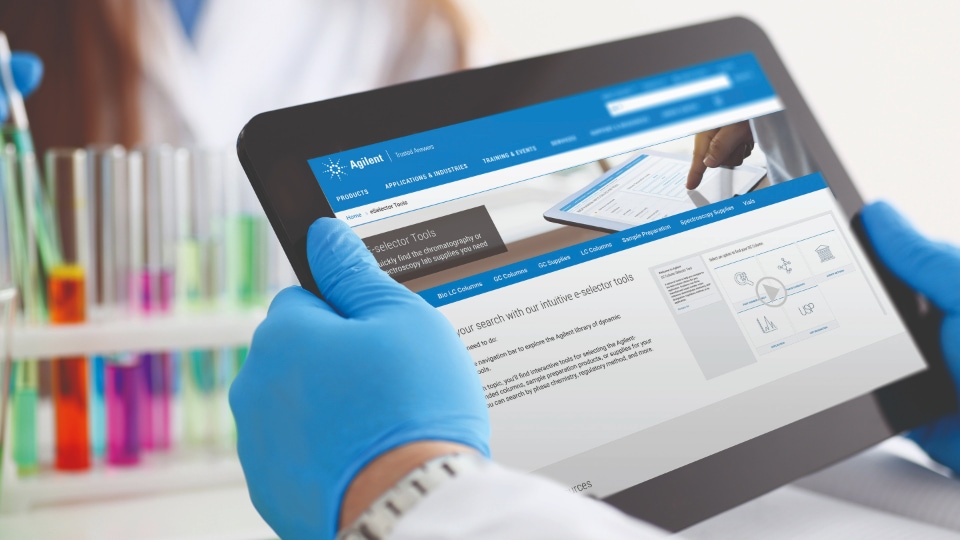
Use our online Vials Selection Tool to quickly find the right products for complete confidence in your sample containment.
- Answer a few simple questions to identify your best options
- Search by technique, product number, vial type, or instrument manufacturer
- Choose from over 600 vials, caps, and septa