Automated Sample Preparation
Laboratories are under growing pressure to do more with available resources while maintaining data quality, reproducibility, and operational efficiency. However, traditional manual sample preparation often introduces variability, consumes valuable time, and places a heavy burden on skilled personnel. As studies grow in size and complexity, these challenges can directly impact data confidence and slow critical decision-making, leaving less time for the data analysis and interpretation that drive scientific progress.
The use of automation for sample preparation can increase efficiency and walk-away time while reducing operator-dependent variability and reliance on specialized manual skills.
In this issue of TekTalk, we highlight two Agilent solutions that bring automated sample preparation capabilities to live-cell analysis. The Agilent NovoStation sample preparation system is Agilent’s first automation platform built specifically for flow cytometry. It enables full automation of 96-well plate workflows, including reagent cocktailing, cell staining, and sample washing. The compact Agilent BioTek 406 FX washer dispenser offers fast, full plate washing with up to six reagent dispensers, enabling multiple plate-washing and reagent-dispensing steps to be performed using a single instrument.
Together, these solutions enable users to minimize hands-on time and reduce repetitive manual sample preparation steps, leading to more consistent and reproducible data output while simplifying workflows and improving operational efficiency.
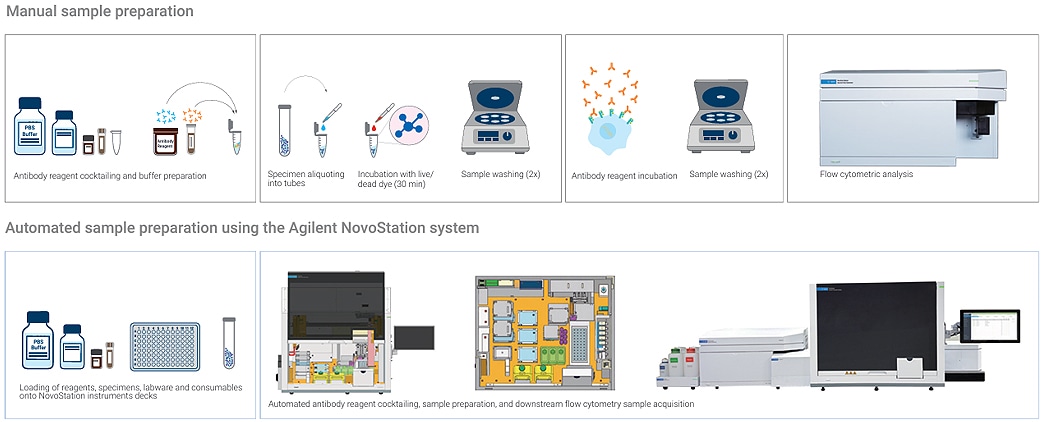
Figure 1. Workflow comparison between (top) manual sample preparation and (bottom) automated sample preparation using the Agilent NovoStation sample preparation system, demonstrating consolidated hands-on steps and reduced operator involvement.
Featured Application Notes
Automated Preparation for 25-Color Flow Cytometric Immunophenotyping of Human PBMCs
This application note describes the use of the Agilent NovoStation sample preparation system for automated 25-color immunophenotyping of human PBMCs. The NovoStation system automates antibody staining, washing, and fixation workflows, reducing hands-on time and workflow variability. Performance was evaluated against conventional manual sample preparation and demonstrated comparable results across 43 immune cell populations, maintaining high cell viability and staining quality while improving operational efficiency.
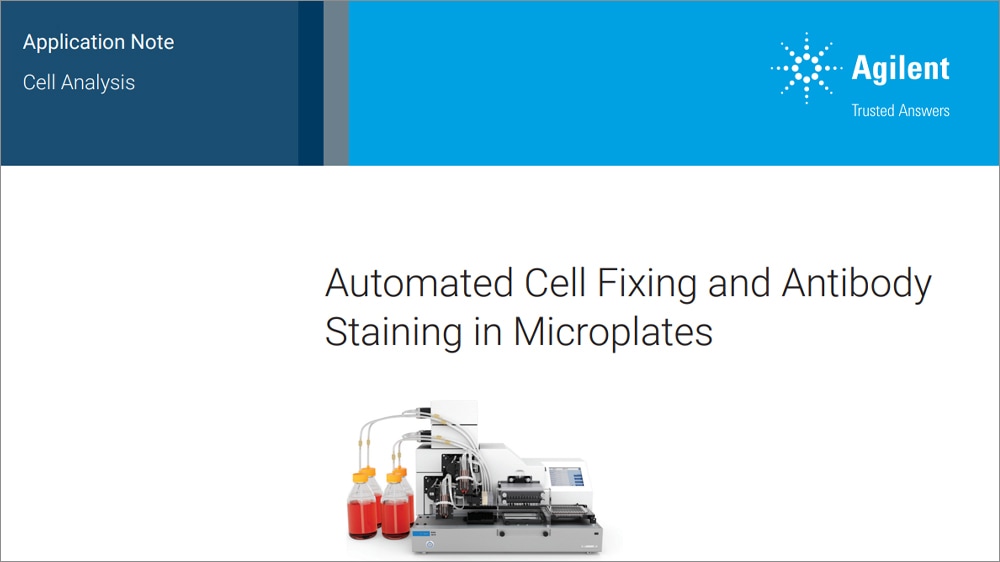
Automated Cell Fixing and Antibody Staining in Microplates
Cell fixing and immunofluorescence staining are essential for preparing samples for high-content analysis, where consistent processing can help support reliable imaging results. This application note explores a microplate-based approach to fixation and antibody staining, covering key stages from permeabilization and blocking through antibody labeling and counterstaining, while demonstrating how an integrated workflow can simplify preparation for fluorescence imaging.
Tek Tips
Building Advanced Multicolor Flow Cytometry Workflows for Automation
Design the workflow around steps that can be consistently executed and controlled by automation. When adapting a multicolor flow cytometry assay:
- Consolidate compatible steps: Look for staining, incubation, washing, and fixation steps that can be incorporated into a continuous automated workflow rather than requiring manual intervention between stages.
- Define mixing and cell-handling conditions: Establish consistent mixing and washing conditions, particularly where differences in mixing speed, duration, pipetting, or cell washing could introduce variability.
Better Washes, Better Assays: Top 3 Strategies for Optimizing Automated Microplate Washing
Small adjustments to wash parameters can make a big difference in assay performance. Try these three strategies when developing or troubleshooting an automated wash protocol:
- Match aspiration position to the plate geometry.
- Tune dispense conditions to protect the sample.
- Use soak and shake steps strategically.
For flat-bottom wells, position aspiration near the outer edge where residual liquid tends to collect. For round-bottom wells, aspirating nearer the center can improve liquid removal.
For adherent-cell assays, use gentler, angled dispensing toward the well wall to reduce disruption of the cell layer. Avoid unnecessarily aggressive aspiration that can increase shear.
Optimize soak time and shaking when additional removal of nonspecifically bound material is needed. Also inspect aspiration and dispense tubes routinely for partial blockages that can compromise wash consistency.
Product Spotlights
Agilent NovoStation Sample Preparation System
The Agilent NovoStation sample preparation system simplifies flow cytometry assays by automating key steps in 96-well plate sample preparation including reagent cocktailing, cell staining, and sample washing. While it can operate as a standalone system, NovoStation can also integrate with Agilent NovoCyte flow cytometers, enabling a streamlined sample-to-answer workflow. This flexible solution helps laboratories enhance productivity, standardize sample preparation processes, and generate consistent data across users.
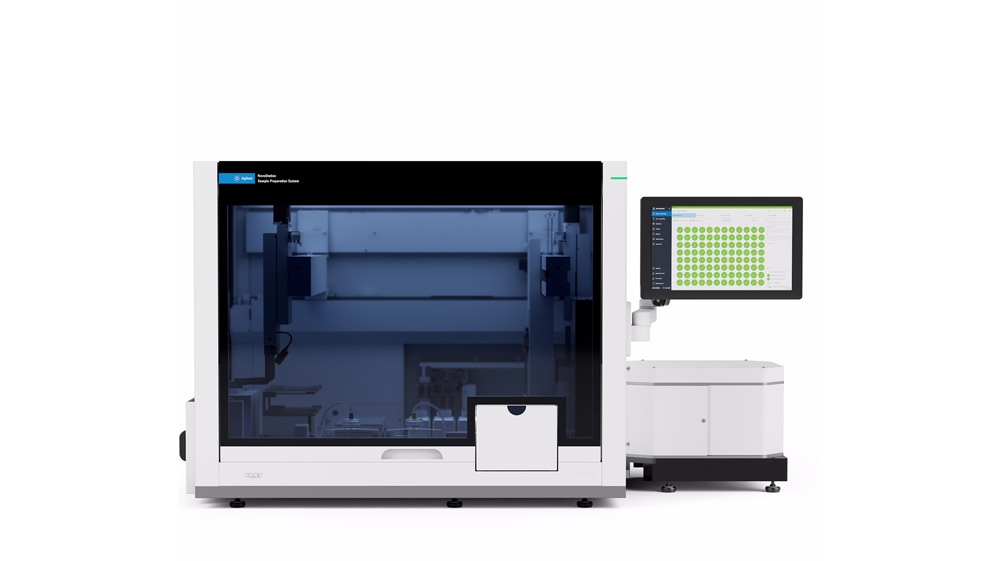
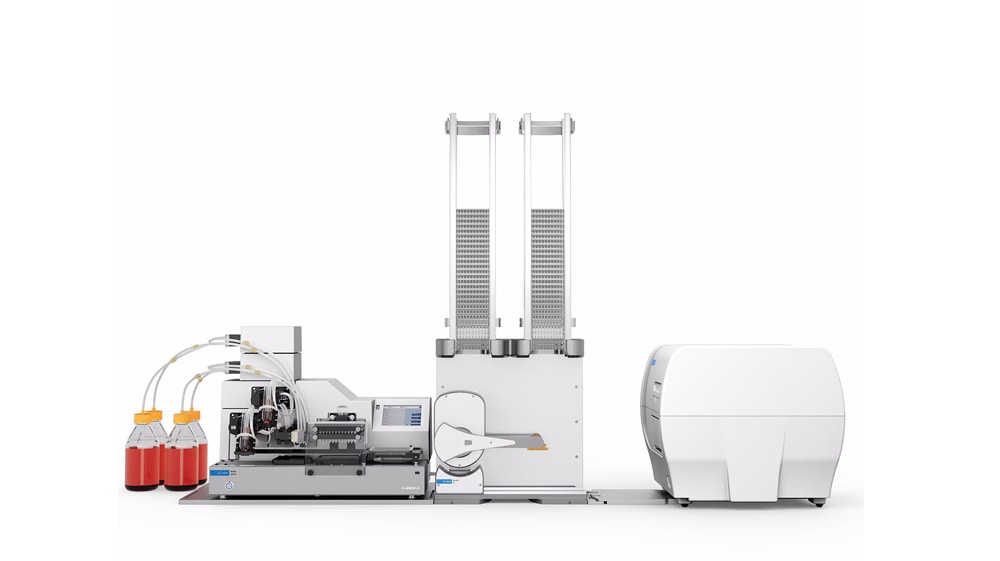
BioTek 406 FX Washer Dispenser
The Agilent BioTek 406 FX washer dispenser brings automated washing and reagent dispensing together to streamline microplate sample preparation. For cell-based workflows, it can automate steps such as cell seeding, fixation, permeabilization, blocking, antibody staining, and counterstaining. Multiple reagent paths provide flexibility for complex protocols, helping reduce manual processing, improve efficiency, and increase walk-away time.
Additional Resources
Posters
Application Notes
- Automated Sample Preparation for Kappa/Lambda Light Chain Assessment
- Automated ELISA Liquid Handling Using the Agilent BioTek 406 FX Washer Dispenser
Application Compendium
Upcoming Conferences
SLASJanuary 30 – February 3, 2027 | San Diego, CA
For Research Use Only. Not for use in diagnostic procedures.
-