Agilent Cell Analysis Life Science Instrumentation News
July 2026
Drug-induced cardiac toxicities remain a leading cause of drug attrition and FDA black box warnings, highlighting the need for early, predictive assessment strategies. Advances in in vitro models, particularly human iPSC-derived cardiomyocytes (hiPSC-CMs), have improved physiological relevance, but comprehensive evaluation requires a multidimensional approach that captures electrophysiological and contractile function alongside underlying metabolic changes that often precede decline.
In this issue of TekTalk, we highlight cell analysis solutions for cardiotoxicity assessment. The Agilent xCELLigence RTCA CardioECR system enables real-time, label-free monitoring of cardiomyocyte contractility, electrophysiology, and viability in a single experiment, supporting dynamic evaluation of drug effects. Complementing this system, Agilent Seahorse XF technology quantifies mitochondrial respiration and glycolysis in live cells, revealing early bioenergetic disruption. Agilent BioTek microplate readers and automated microscopy systems extend this workflow with scalable biochemical and high-content imaging assays that provide critical phenotypic context.
Together, these platforms form a uniquely complementary portfolio, enabling a cohesive, multidimensional view of cardiotoxicity across functional, electrophysiological, metabolic, and phenotypic domains.
Featured Application Notes
The Agilent xCELLigence RTCA CardioECR System
This application note describes the use of the Agilent xCELLigence RTCA CardioECR system in conjunction with hiPSC-CMs for the assessment of preclinical cardiac risks. The CardioECR system enables the comprehensive evaluation of hiPSC-CMs in terms of both acute effects on cardiac function, such as electrophysiology and contractility, and chronic effects on cardiac structure and viability.
Assessment of Cardiomyocyte Disease Models Using the Agilent xCELLigence CardioECR System
This application note used the Agilent xCELLigence RTCA CardioECR system to compare functional profiles of contractility and electrophysiology between a iPSC CM disease model and its isogenic control. After identifying baseline phenotypes at the cellular level, this study investigated pharmacological responses of diseased and isogenic cardiomyocytes to compounds with established mechanisms.
Tek Tips
Key Experimental Considerations for Reducing Technical Variability—Optimization of Assay Conditions
Variability in cell plating density and culture conditions—such as plate coating, maintenance medium, and incubator CO₂ levels—can lead to inconsistent results.
Optimize cell seeding density:
Perform a titration to identify the optimal seeding density that supports stable and consistent functional activity of cardiomyocytes during long-term culture.
Select appropriate plate coating conditions: Proper surface coating enhances cell attachment to the assay plate and promotes consistent cellular performance.
Minimize treatment time: Cardiomyocytes are highly sensitive to temperature fluctuations, and prolonged handling can alter baseline behavior. To mitigate this:
- Prepare compound working solutions in a plate format matching the assay plate.
- Use a multichannel pipette for rapid transfer to reduce handling time.
- Maintain physiological temperature (for example, 37 °C) during treatment using a heat block when appropriate.
Optimal compound dose range: Select an appropriate dose range based on the intended assay readouts. Functional parameters should generally be assessed within a subcytotoxic range, while considering both acute and chronic treatment effects.
Key Experimental Considerations for Biological Variability—Establish Consistent Cardiomyocyte Quality Before Screening
Variability in cardiomyocyte maturity and health is a major source of inconsistency in cardiotoxicity data.
- Define acceptance criteria prior to testing: Establish predefined quality criteria for the selected cardiomyocyte model before introducing test compounds. Cardiomyocytes from different sources exhibit distinct spontaneous beating characteristics, including beating rate and contractility. Evaluating cell-specific baseline metrics in advance helps reduce experimental variability and improves confidence in toxicity assessments. For example, when using the CardioECR system, a given cardiomyocyte line should meet predefined thresholds—such as beating rate and beating amplitude (reflecting contractility), regular beating rhythm, and Cell Index (reflecting viability)—before proceeding with the assay.
- Use appropriate control compounds: Incorporate well-characterized mechanistically relevant positive and negative controls during method development to confirm assay sensitivity, dynamic range, and reproducibility.
Product Spotlights
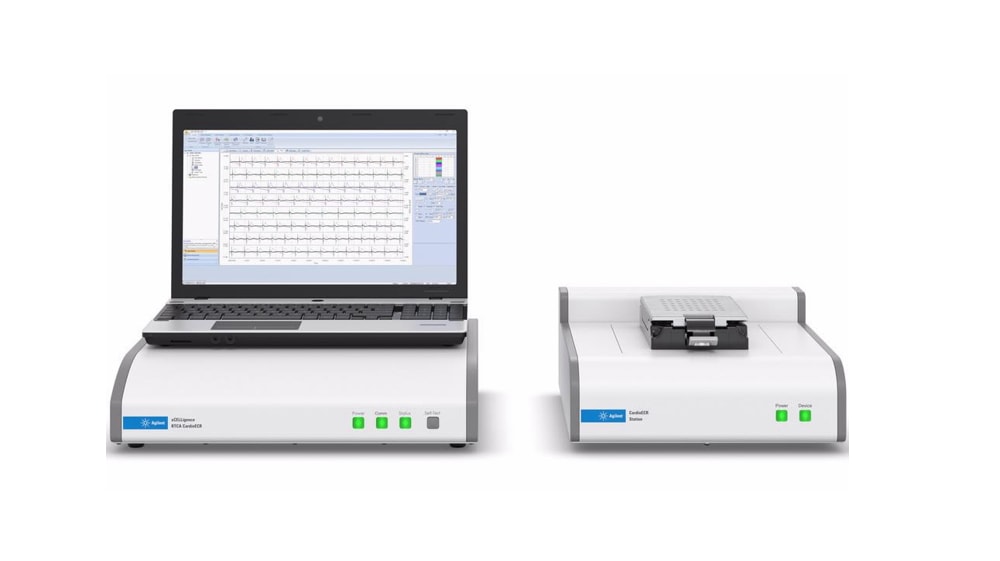
xCELLigence RTCA CardioECR
The Agilent xCELLigence RTCA CardioECR instrument bundle enables the simultaneous measurement of field potential signals through extracellular recording (ECR) electrodes, in addition to assessing contractility and cell viability through impedance electrodes. This integrated platform allows for real-time, multiplexed evaluation of the functional activity of beating cardiomyocytes. As a result, it provides a robust and predictive approach for assessing drug-induced proarrhythmic risk, contractile liability, and potential chronic toxicity during the drug development process.
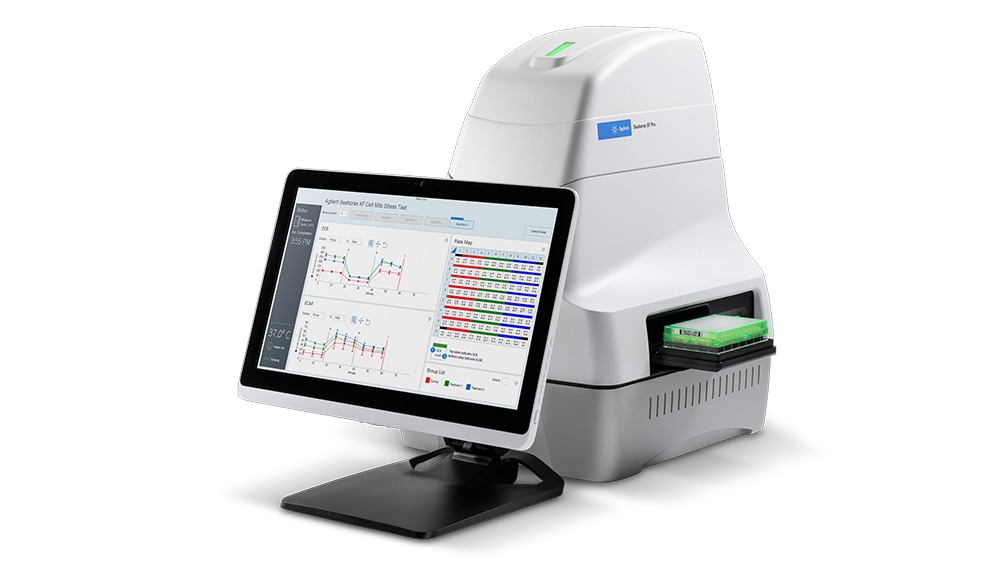
Seahorse XF Pro Analyzer
Cardiomyocytes are highly ATP-dependent cells that rely predominantly on oxidative phosphorylation to sustain their contractile function, making them particularly vulnerable to mitochondrial dysfunction. As a result, cardiotoxicity is often driven by impairments in mitochondrial function rather than immediate cell death. The Agilent Seahorse XF Pro analyzer enables real-time assessment of metabolic activity in live cells by measuring oxygen consumption rate (OCR) and proton efflux rate (PER), providing insights into mitochondrial respiration and glycolytic function. This platform allows for the early detection of sublethal metabolic perturbations, facilitating the screening of compounds with mitochondrial liabilities and supporting mechanistic characterization of cardiotoxic effects.
Webinars

Multi-Modal Connected Workflow for Cardiac Safety Assessment of Drugs Using hiPSC-Derived Cardiomyocytes
This webinar shows a connected workflow using human iPSC-derived cardiomyocytes (hiPSC-CMs) for microelectrode-based measurements (including viability and contraction, live-cell imaging, mitochondrial toxicity, and cell metabolism) as a frontline screening assay for safety assessment of pharmaceutical drug compounds.
Additional Resources
Application & Industries
Application Notes
- Multimodal Connected Workflow for Cardiotoxicity Assessment Using Human iPSC-Derived Cardiomyocytes
- Connected Workflow: Assessment of Inotropic Compounds in Paced Cardiomyocytes Using Calcium Imaging
- The Agilent xCELLigence RTCA CardioECR System: A Multiparametric Functional Analysis Instrument for Cardiac Safety and Toxicity Assessment
- A Real-Time Impedance Analysis Instrument for Cardiac Safety and Toxicity Assessment
- Assessing the Impact of Drug Treatment on Cardiomyocyte Function
- Cardiotoxicity Assessment of Antiviral Drugs Using the Agilent xCELLigence RTCA CardioECR System
- Using the Agilent xCELLigence RTCA ePacer for Functional Maturation of Human-Induced Pluripotent Stem Cell-Derived Cardiomyocytes
- Analysis of a New High Throughput Screening Detection Technology for Rapid hERG Safety Testing using a Fluorescence Polarization Assay
- Cardiotoxicity Assessment of Antiviral Drugs Using the Agilent xCELLigence RTCA CardioECR System
- Quantitative Microscopy of Angiogenesis in Zebrafish Embryos
- Visualizing the Mouse Retinal Vasculature using the Agilent BioTek Cytation C10 Confocal Imaging Reader
Posters
Publications
- Chatterjee S, Leach-Mehrwald M, Huang CK, et al. Telomerase is essential for cardiac differentiation and sustained metabolism of human cardiomyocytes. Cell Mol Life Sci. 2024;81(1):196.
- Millard D, Dang Q, Shi H, et al. Cross-Site Reliability of Human Induced Pluripotent stem cell-derived Cardiomyocyte Based Safety Assays Using Microelectrode Arrays: Results from a Blinded CiPA Pilot Study. Toxicol Sci. 2018;164(2):550-562.
- Blinova K, Dang Q, Millard D, et al. International Multisite Study of Human-Induced Pluripotent Stem Cell-Derived Cardiomyocytes for Drug Proarrhythmic Potential Assessment. Cell Rep. 2018;24(13):3582-3592.
- Myosin inhibitor reverses hypertrophic cardiomyopathy in genotypically diverse pediatric iPSC-cardiomyocytes to mirror variant correction
- Wolosiewicz M, Balatskyi VV, Duda MK, et al. SCD4 deficiency decreases cardiac steatosis and prevents cardiac remodeling in mice fed a high-fat diet. J Lipid Res. 2024;65(9):100612.