
Analysts require reliable, robust methods to quantify trace elements in seawater to understand key biogeochemical and climate related processes, as well as to assess human impacts, track long term environmental change, and support high quality oceanographic research.
ICP MS provides the sensitivity needed for these measurements, but the high salinity and major ions in seawater, such as Na, Mg, Cl, and S, introduce significant analytical challenges. These issues include ionization suppression and polyatomic interferences, for example, ArCl+ on As, ArNa+ on Cu, and SO2+ on Zn. Triple quadrupole ICP MS (ICP QQQ) overcomes these matrix based interferences through MS/MS control of reaction chemistry in a collision/reaction cell, driving increasing interest in the technique among routine testing laboratories.
The Agilent 9500 ICP QQQ with Dual-Cell System (DCS) simplifies ICP-MS/MS performance, making it ideal for environmental labs. It combines Advanced Helium Mode (AHM) for on mass interference removal with mass shift interference removal capabilities using Air cell mode. When used together, the 9500 enables the reliable and efficient quantification of trace elements in complex saline matrices.
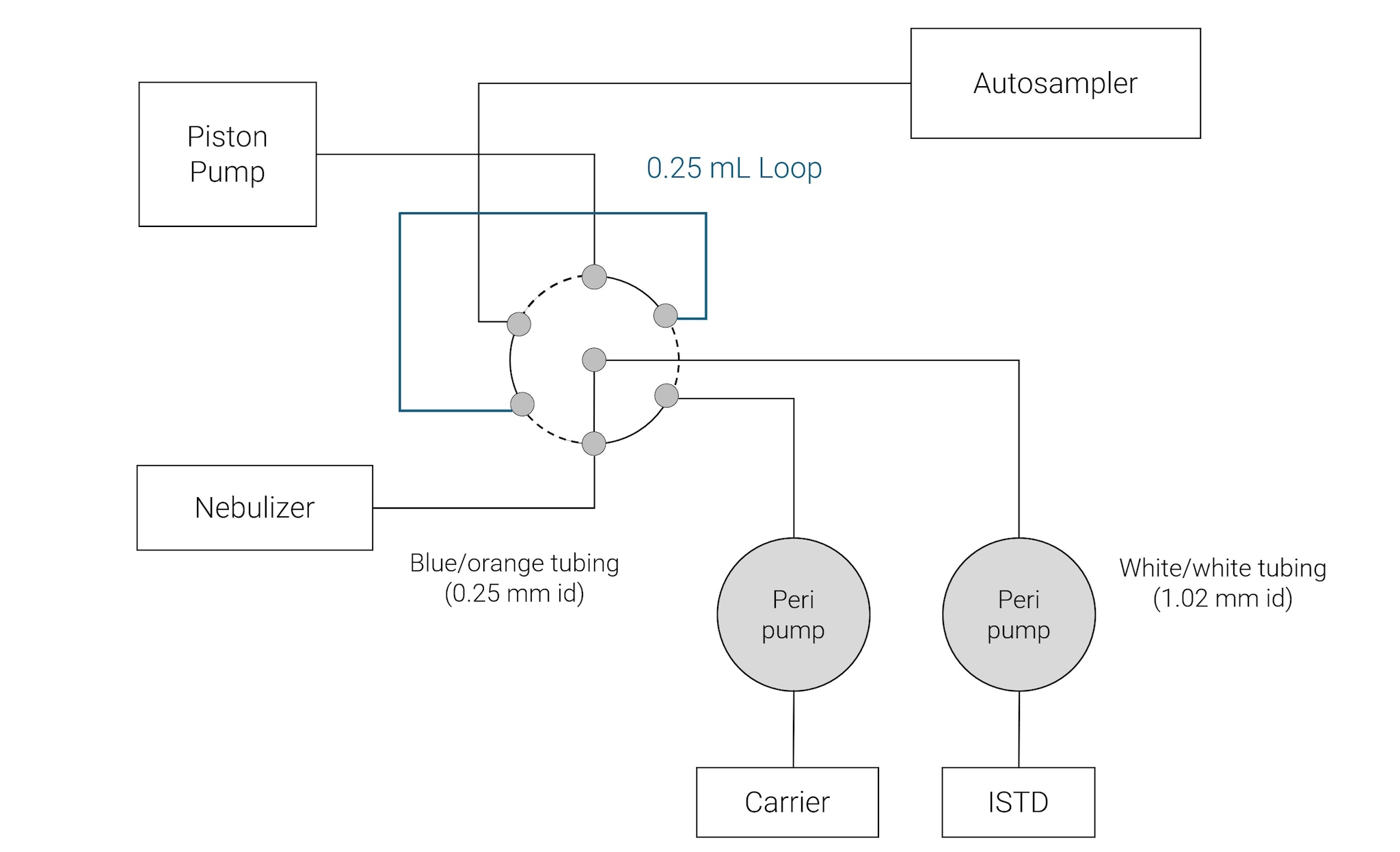
In this study, the 9500’s integrated Agilent Advanced Valve System for ICP-MS (AVS MS) was configured for on-line reverse dilution—an automated sample preparation and introduction procedure (Figure 1). The data quality for 26 elements was evaluated through the analysis of two seawater certified reference materials (CRMs) and a real seawater sample from Singapore.
Experimental
Standard preparation
Calibration standards for 26 elements were prepared from Agilent multi-element and single-element standards using a solution of 2% nitric acid (HNO3, v/v) and 0.5% hydrochloric acid (HCl, v/v). This same solution was used as the diluent, carrier, and to prepare the internal standard (ISTD) mix. The Agilent ISTD mix, containing 10 ppm each of 6Li, Sc, Ge, Y, In, Tb, and Bi, was diluted to 5 ppb and introduced online during analysis. The following calibration ranges were used:
- Most elements: 0, 0.1, 0.2, 0.5, 1, 2, 5, 10, 50 ppb
- Fe: 0, 1, 2, 5, 10, 50, 100 ppb
- Hg: 0, 0.01, 0.02, 0.05, 0.1, 0.2, 0.5, 1 ppb
Instrumentation
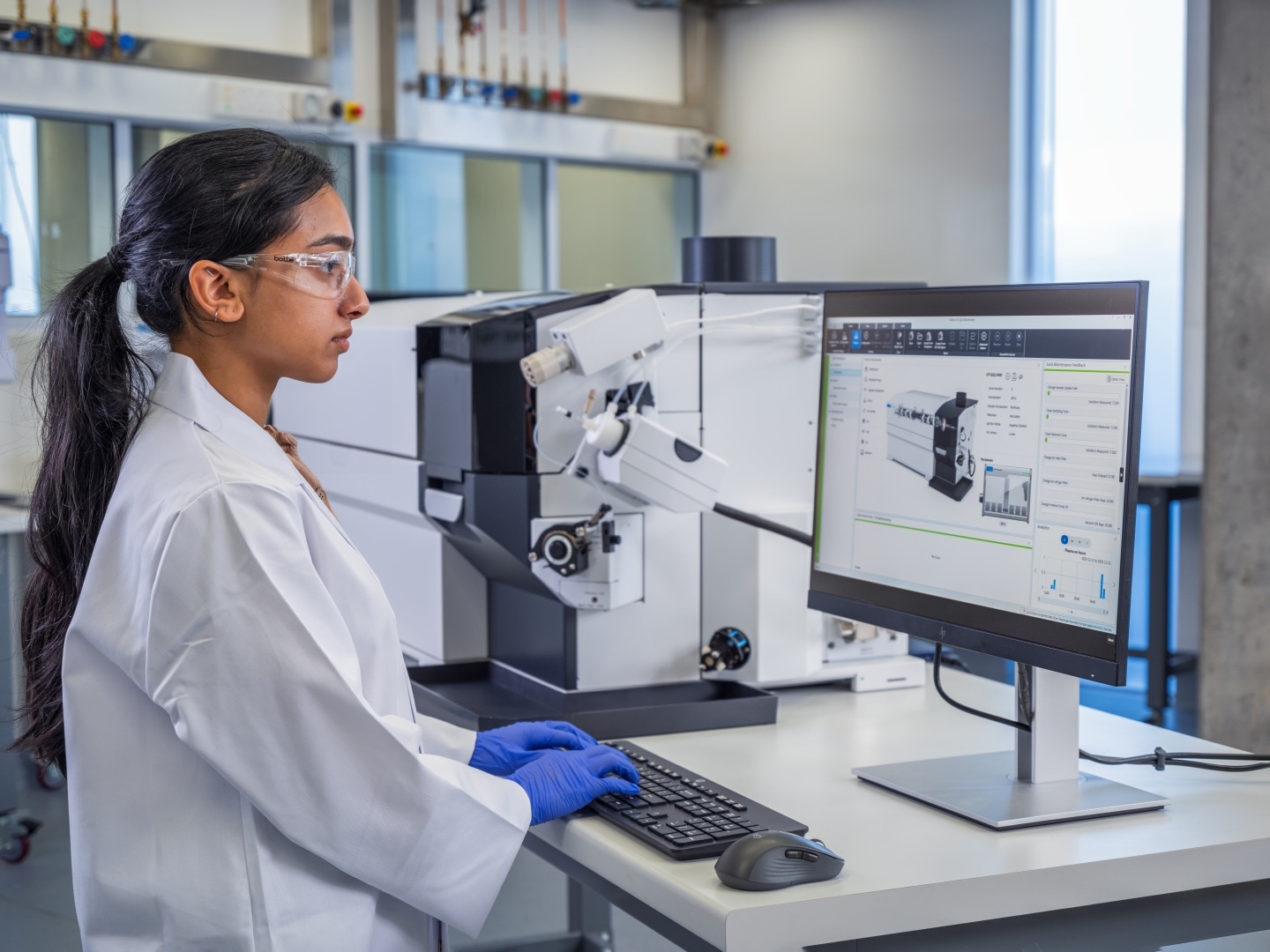
The 9500 ICP-QQQ equipped with an integrated AVS MS was connected to an Agilent SPS 4 autosampler. The standard sample introduction system comprised a u-lens, glass concentric nebulizer, quartz spray chamber and torch, a nickel-plated Ni/Cu sampler cone, and a nickel skimmer cone. AHM and Air cell modes were optimized using autotune to achieve high sensitivity and interference-free determination of trace elements during the direct analysis of seawater. Automated online dilution and seamless gas-switching enabled complete analysis in 140 seconds per sample.
Sample dilution using the AVS MS
To achieve the approximately 15× dilution of the sample before it was introduced into the plasma, the AVS MS (sample loop = 0.25 mL) was configured with narrower tubing for the sample line (blue/orange) and wider tubing for the ISTD line (white/white), see Figure 2. This integrated online reverse dilution method simplifies workflows by reducing tuning and sample preparation, boosting productivity for high-volume analysis. The system also delivers robust stability over hundreds of undiluted seawater injections, making it ideal for extended runs of challenging saline matrices.
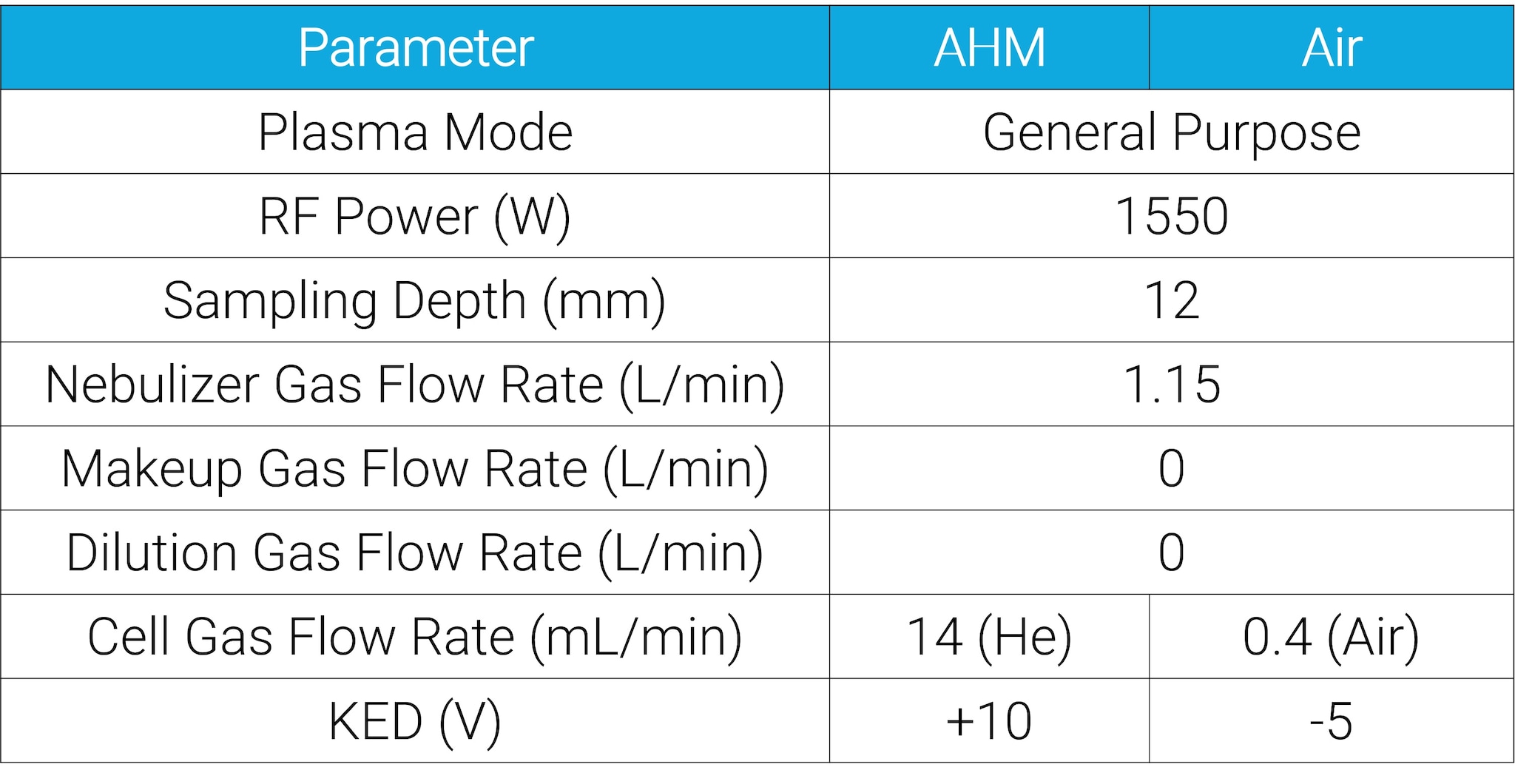
To maintain plasma stability, General Purpose plasma conditions were selected in the Agilent OpenLab ICP-MS software. UHMI was not employed in this study to reduce consumption of the valuable seawater CRMs. The 9500 ICP-QQQ operating conditions are summarized in Table 1.
Results and discussion
Quantification of impurity metals in seawater
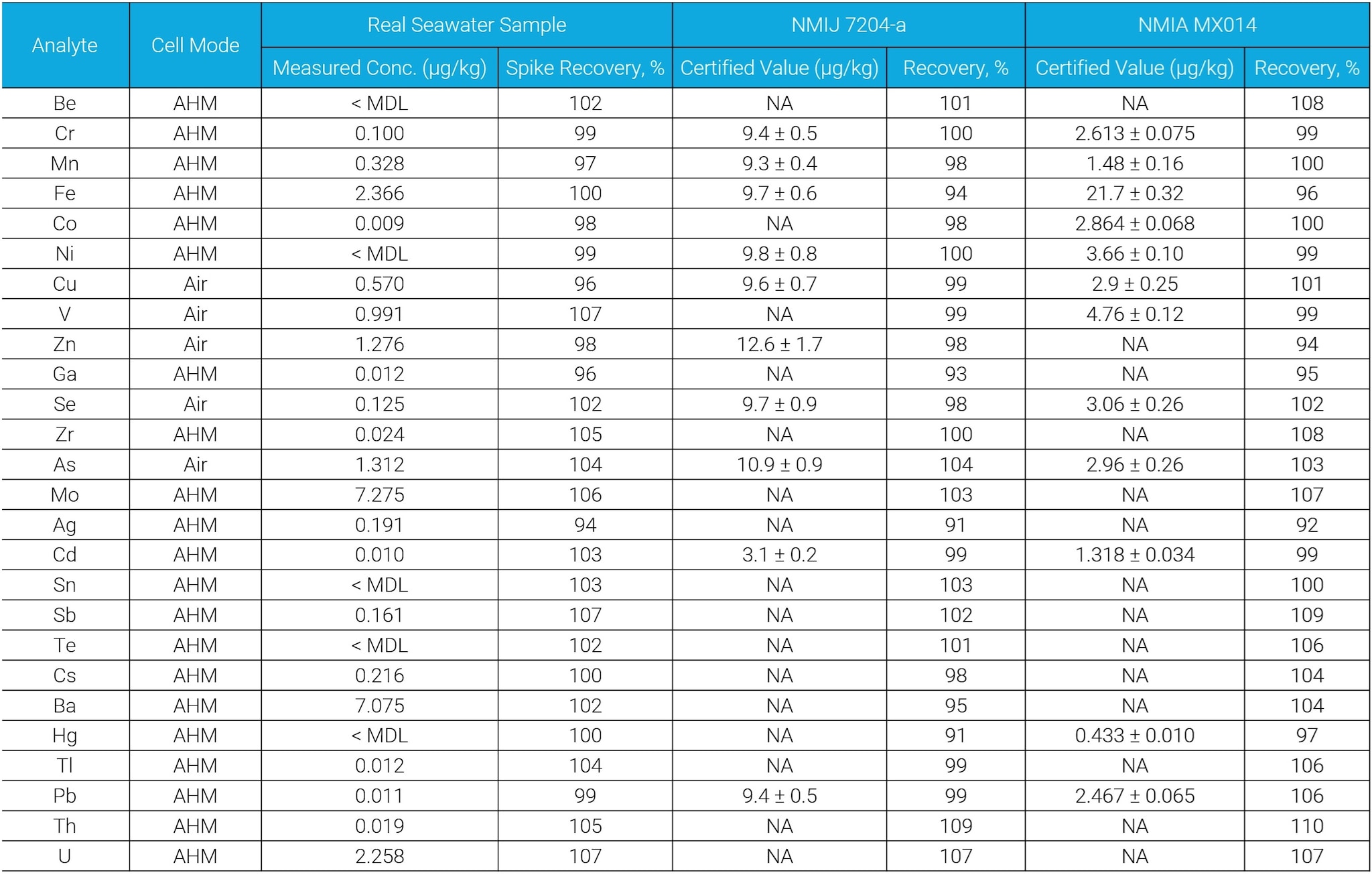
Two CRMs—NIMJ CRM 7204-a (National Metrology Institute of Japan) and NIMA MX014 (National Measurement Institute of Australia) — and the seawater sample were analyzed to evaluate the accuracy of the method for trace elements in a high-salt matrix. Duplicate aliquots of each CRM were measured, and mean concentrations and recoveries were calculated. For the seawater sample, all analytes were spiked at 5 ppb (0.2 ppb for Hg) to assess recovery. In addition, non-certified elements were added to the CRMs to extend the accuracy evaluation.
Table 2 shows the quantitative results and recoveries for the CRMs (certified and spikes of non-certified elements) and the spiked seawater sample. Recoveries for all analytes ranged from 90 to 110%, confirming the reliability of the 9500 ICP-QQQ for the direct analysis of seawater using AHM and Air cell mode.
Stability test
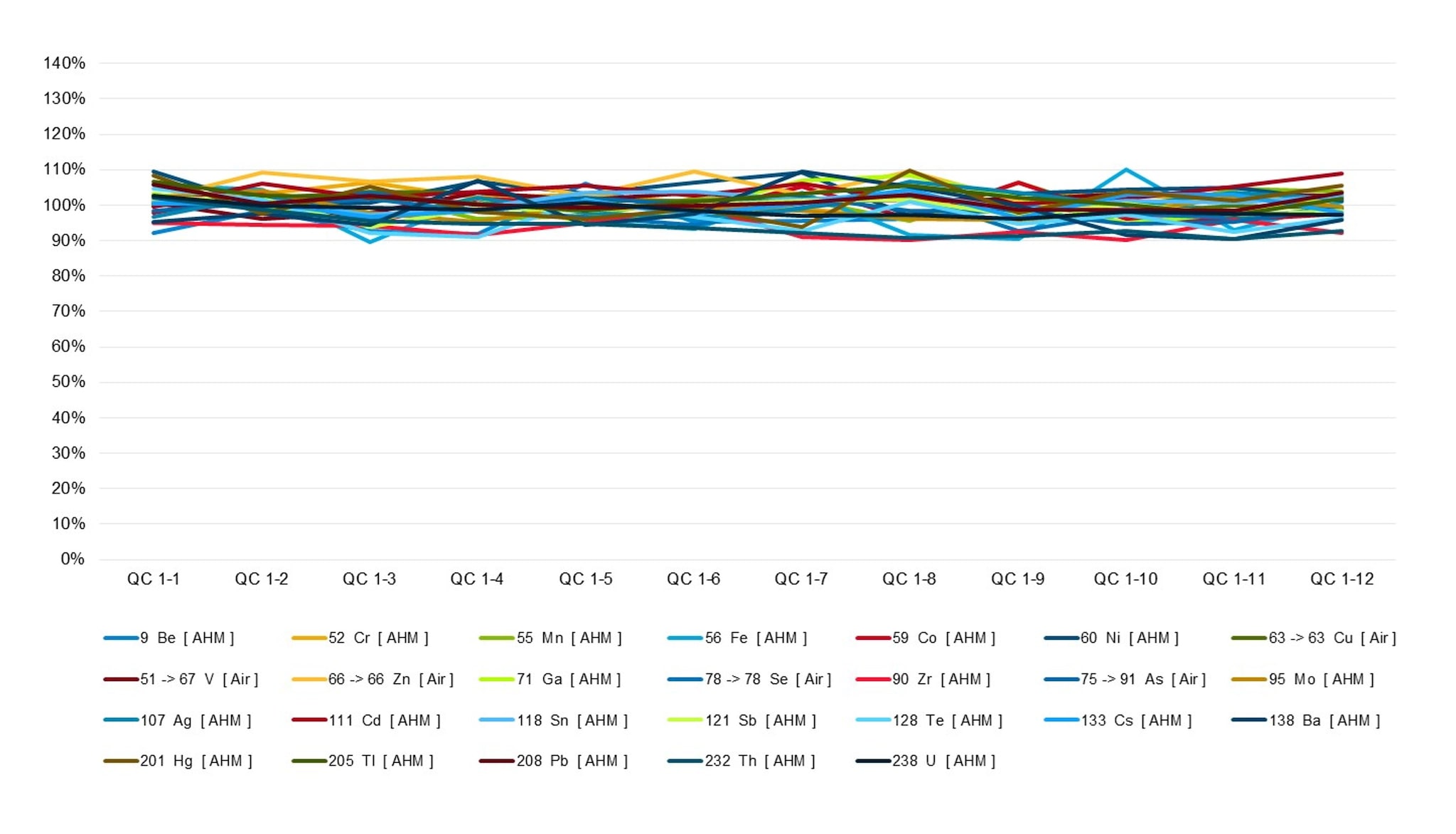
Instrument stability is essential for high throughput analysis of high matrix samples such as seawater. Its high salinity and total dissolved solids (TDS) content can cause signal drift, reduced sensitivity, and elevated background noise. In this study, the 9500 ICP-QQQ was tested for stability over 100 continuous injections of undiluted seawater. A Continuing Calibration Verification (CCV) standard (2 ppb for most analytes, 0.2 ppb for Hg) was measured every 10 samples.
Figure 3 shows CCV recoveries within ±10%, meeting EPA 200.8 criteria. These results demonstrate that the 9500 ICP-QQQ provides excellent matrix tolerance and reliable quantification for long runs of undiluted seawater samples.
Rapid, high-throughput seawater analysis
The Agilent 9500 ICP-QQQ with AVS MS in online dilution mode delivered excellent accuracy and long term stability across more than 130 analyses, meeting EPA Method 200.8 QC requirements. By quantifying 26 elements in seawater in just 140 seconds per sample with no prep needed, the workflow enables high throughput performance for demanding environmental applications.
More information
Zou, A., Yamanaka, M., Sugiyama, N. Direct Analysis of Seawater Using ICP-QQQ and Integrated Advanced Valve System, Agilent publication, 5994-8988EN