Skip to main content

Agilent Technologies

  • About Agilent
    • Newsroom
    • Company Information
    • Investor Relations
    • Careers
    • Philanthropic Giving
    • Working with Agilent
    • Patents
    • University Relations
    • Environmental, Social, and Governance
    • Great science
  • Contact Us
  • Account
  • Welcome

      • Profile
      • Dashboard
      • Orders
      • Invoices
      • Pathology Contracts
      • Quotes
      • Licenses & Agreements
      • Service & Repair
      • Products & Software
      • Saved Carts
      • Favorite Products
      • Promotions
      • Sign Out
  • Products
  • Applications & Industries
  • Training & Events
  • Services
  • Support & Resources
  • Order Center
  • |
  • 0

    1. Products
      Analytical Instruments & Supplies
    1. Chromatography
    2. Mass Spectrometry
    3. Certified Pre-Owned Instruments
    4. Spectroscopy
    5. Capillary Electrophoresis
    6. Chromatography & Spectroscopy Lab Supplies
    7. Instrument Repair
    8. Sample Preparation
    9. Chemical Standards
      Life Science
    1. Cell Analysis
    2. Automated Electrophoresis
    3. Microarray Solutions
    4. Mutagenesis & Cloning
    5. Next Generation Sequencing
    6. Research Flow Cytometry
    7. PCR/Real-Time PCR (qPCR)
    8. Microscopes and Microplate Instrumentation
    9. Oligo Pools
      Clinical & Diagnostic Testing
    1. Immunohistochemistry
    2. Companion Diagnostics
    3. Digital Pathology
    4. Hematoxylin & Eosin
    5. Special Stains
    6. In Situ Hybridization
    7. Clinical Flow Cytometry
    8. Specific Proteins
    9. Clinical Microplate Instrumentation
      Lab Management & Consulting
    1. Lab Management
    2. Lab Consulting
    3. Lab Software
    4. Software & Informatics
    5. Genomics Informatics
    6. Lab Supplies
    7. Microplates
    8. Chromatography & Spectroscopy Lab Supplies
      Dissolution Testing
    1. Dissolution
    2. Lab Automation
    3. Automated Liquid Handling
    4. Vacuum & Leak Detection
    5. Vacuum Technologies
    6. Leak Detection
    See All Products >
    See All Brands >
    1. Applications & Industries
    1. Biopharma/Pharma
    2. Cancer Research
    3. Cannabis & Hemp Testing
    4. Cell Analysis
    5. Clinical Diagnostics
    6. Clinical Research
    7. Companion Diagnostics
    8. Energy & Chemicals
    9. Environmental
    10. Food & Beverage Testing
    11. Forensics
    12. Genomics
    13. Materials Testing & Research
    14. Omics
    15. Pathology
    16. Security, Defense & First Response
    17. Vacuum Solutions
      1. Featured
      2. Semiconductors & Electronics Testing
      3. Oligonucleotide Therapeutics
      4. Peptide Therapeutics
      5. PFAS Testing
    1. Training & Events
    1. Agilent University

      Mass spectrometry, chromatography, spectroscopy, software, dissolution, sample handling and vacuum technologies courses

    2. Pathology Education

      On-demand continuing education

    3. Dako Academy

      Instrument training and workshops

    1. Webinars

      Live or on-demand webinars on product introductions, applications and software enhancements

    2. Events

      Worldwide trade shows, conferences, local seminars and user group meetings

    1. Services
      Maintenance & Repair
    1. Service Plans & Agreements
    2. Request Service & Support
    3. Exchange & Upgrade
    4. Software Upgrades & Support
    5. Asset Management & Strategic Sourcing
      Compliance Services
    1. Instrument & Software Qualification
    2. Compliance Consulting & Validation
    3. Instrument Verification
    4. Specialty CDMO Services
    5. Advanced Therapeutics
      Training & Application Services
    1. Method Consulting Services
    2. Pathology Workflow & Optimization
    3. Training & Education Services
    4. Product-specific Service Options
    5. CrossLab Instrument Service Plans
    6. Pathology Services
    7. Vacuum Product & Leak Detector Services
      Software for Lab Management
    1. iLab Core Facilities Management Software
    2. CrossLab Connect Lab Operations Management Software
    3. Pathology Solution Connectivity Software
      Installation & Relocation
    1. Installation & Introduction
    2. Relocation Services
    3. Purchasing Services
    4. Financial Solutions
    5. Lab Instrument Trade-in & Buyback
    1. Support & Resources
      Technical Support
    1. Agilent Community
    2. Get Started with Your Instrument
    3. Instrument Support Resources
    4. Columns, Supplies, & Standards
    5. Contact Support
    6. See All Technical Support
      Purchase & Order Support
    1. Financial Solutions
    2. Flexible Spend Plan
    3. eProcurement
    4. eCommerce Guides
      Literature & Videos
    1. Application Notes
    2. Technical Overviews
    3. User Manuals
    4. Life Sciences Publication Database
    5. Electronic Instructions for Use (eIFU)
    6. Safety Data Sheets
    7. Technical Data Sheets
    8. Site Prep Checklist
    9. Brochures
    10. Catalogs
    11. Videos
      E-Newsletters
    1. ICP-MS Journal
    2. Certificates
    3. Certificate of Analysis
    4. Certificate of Conformance
    5. Certificate of Performance
    6. ISO Certificates
      More Resources
    1. iOS & Android Apps
    2. QuikChange Primer Design Tools
    3. GC Calculators & Method Translation Software
    4. BioCalculators / Nucleic Acid Calculators
    5. Academic Resources
    6. ACT Ecolabel Database
    1. Order Center
    1. Order Center
    2. Quick Order
    3. Request a Quote
    4. My Quotes
    5. My Favorites
    6. My Orders
    7. eProcurement
    8. Services
    9. Where to Buy
    10. Flex Spend Portal
    1. Home
    2. Products
    3. Atomic Spectroscopy
    4. Inductively Coupled Plasma Mass Spectrometry (ICP-MS)
    5. Dual-Cell System with Advanced Helium Mode and Air Cell

    Dual-Cell System with Advanced Helium Mode
    and Air Cell Technology

    Taking ICP-QQQ to the next level

    Erina Shimizu, Naoki Sugiyama, Glenn Woods, Agilent Technologies Inc.


    Abstract

    Launched in June 2026, the Agilent 9500 ICP-QQQ is an entry-level triple quadrupole ICP-MS designed to make ICP-QQQ technology more accessible for labs upgrading from standard single quadrupole (SQ) ICP-MS systems. Featuring over 85% new or redesigned parts, the 9500 offers faster operation, better performance, and ease of use, setting new industry standards.

    Unlike traditional ICP-QQQ systems, often used for advanced or specialized tasks, the 9500 is designed for routine analysis. It combines excellent interference removal, reliable performance, and simple operation, allowing labs to benefit from ICP-QQQ for both complex research and high-volume daily workflows.

    To enhance routine use, Agilent developed innovative features like the Dual-Cell System (DCS), Advanced Helium Mode (AHM), and Air Cell. These innovations simplify interference management and boost analytical performance, helping users experience the advantages of triple quadrupole ICP-MS in everyday operations, not just demanding applications.

    The DCS improves sensitivity in helium mode and reduces interferences, while the Air Cell uses air as a reaction gas to address common analytical challenges more easily and effectively. By blending high performance with operational simplicity, the 9500 ICP-QQQ offers a clear path for labs to upgrade their capabilities and fully harness the benefits of triple quadrupole ICP-MS technology.

    This article was published in The ICP‑MS Journal.

    Read the latest issue

    Print

    Agilent 9500 ICP-MS with Dual-Cell System (DCS)


    Introduction

    The Agilent 9500 builds upon the expertise gained from four generations of Collision Reaction Cell (CRC) development and two generations of ICP-QQQ (or ICP-MS/MS) from the Agilent 8800 and 8900 ICP-QQQ systems.

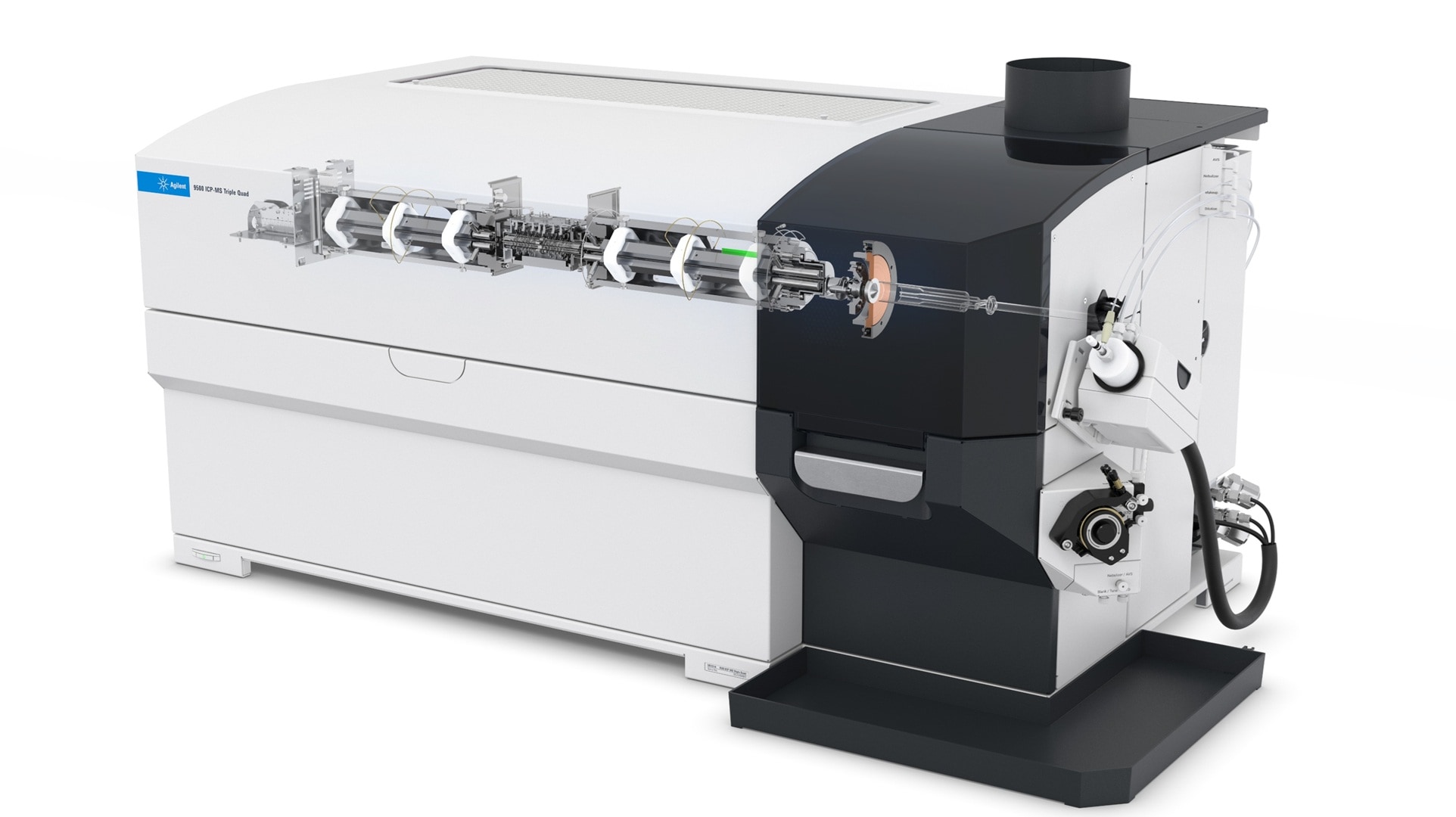
    The 9500 is not a replacement for the 8900. It is an additional instrument with features and developments suitable for labs requiring high-speed analysis and ICP-QQQ performance, but not necessarily all reaction gas modes. As standard, the 9500 is configured with two cell gas mass flow controllers, one for helium and the other for air (pure O2 can also be used). This configuration is intended to cover most applications. The 9500 can be used as a direct replacement for a single quadrupole ICP-MS (SQ-ICP-MS), Figure 1, as it requires only argon and helium gas supplies.

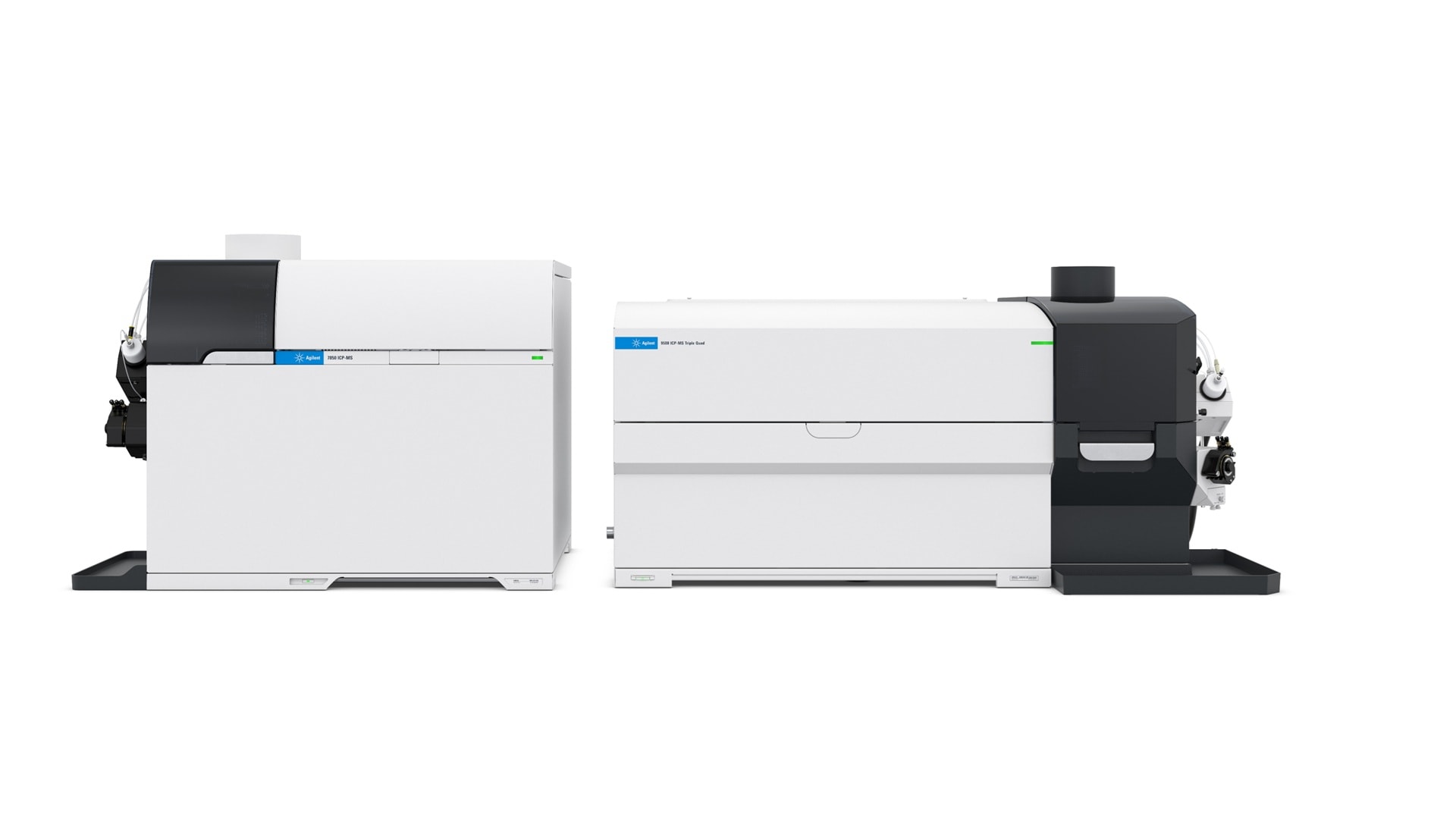
    Two sleek, modern laboratory instruments (the 7850 and 9500) in white and black are side by side against a plain background, conveying a sense of precision and technology.

    Figure 1. Agilent 9500 ICP-MS (ICP-QQQ) with the Agilent 7850 ICP-MS (left).

    Helium collision mode has been significantly enhanced with a completely new CRC design featuring two independently controlled ion guides. These ion guides enable the DCS to deliver superior sensitivity and interference suppression, even surpassing the performance of the ORS4. This new mode of operation is called Advanced Helium Mode (AHM).

    When operating in air reaction mode (Air Cell), the instrument draws ambient air through a built-in filter. The filtered air is then passed into the DCS to perform oxygen reactions on targeted interferences.

    For most labs, this configuration will be sufficient. However, there is an additional option for highly advanced applications, such as for research and high-purity chemical testing. This option adds two additional gas controllers for the DCS, typically one for H2 and the other for ammonia (as a 10% blend in He). The controllers can be specified at the time of purchase or added at any time as an upgrade. The gases can be substituted for any supported gas*.

    *Check with your Agilent Product Specialist for the currently recommended alternative gases.

    Advanced Helium Mode

    AHM combines the sensitivity of no gas mode for low-mass elements (for example, Li, Be, B), helium Kinetic Energy Discrimination (KED) for most interferences, and Collision Induced Dissociation (CID) for intense polyatomic interferences (for example, ArAr, ArO, ArCl, NaAr, and more) into a single advanced helium mode. Interference removal is further improved because the DCS features KED inside the cell as well as an external barrier to remove any unwanted cell-derived species, and both KED and CID mechanisms are permanently employed during AHM operation.

    With no need to change modes or gas flow rates, a single acquisition can be used for all elements across the majority of sample types. AHM not only simplifies method development but also improves analysis speed. Due to the higher sensitivity of ICP-QQQ, shorter integration times can be used while retaining or exceeding current DLs and BECs compared to SQ-ICP-MS, further improving throughput.

    How the DCS enables AHM

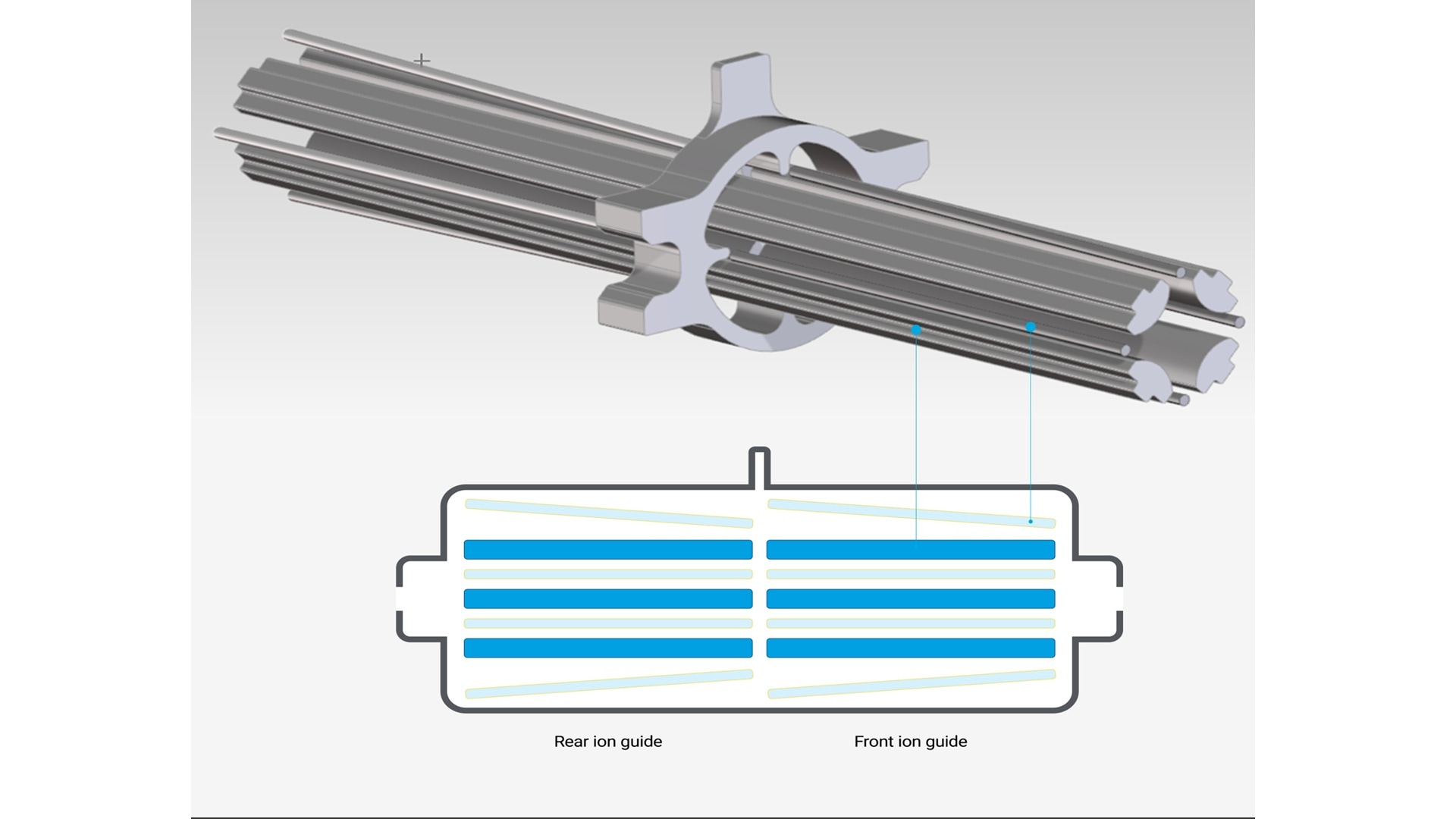
    The DCS consists of two sets of rods that can be independently controlled. They are aligned as front and rear ion guides (called Front Cell and Rear Cell). When operated in a “locked” configuration, both ion guides have the same electrical properties and act as a single ion guide. This mode of operation would be used for no-gas or non-AHM helium modes, as well as reaction modes. Figure 2 shows the design of the DCS, including the front and rear cells.

    Diagram showing ion guides in a mass spectrometer. The upper part displays rods with blue lines linking to the lower image showing a cross-section and highlights rear and front ion guides.

    Figure 2. Rendering and schematic of the DCS showing the front and rear cells.

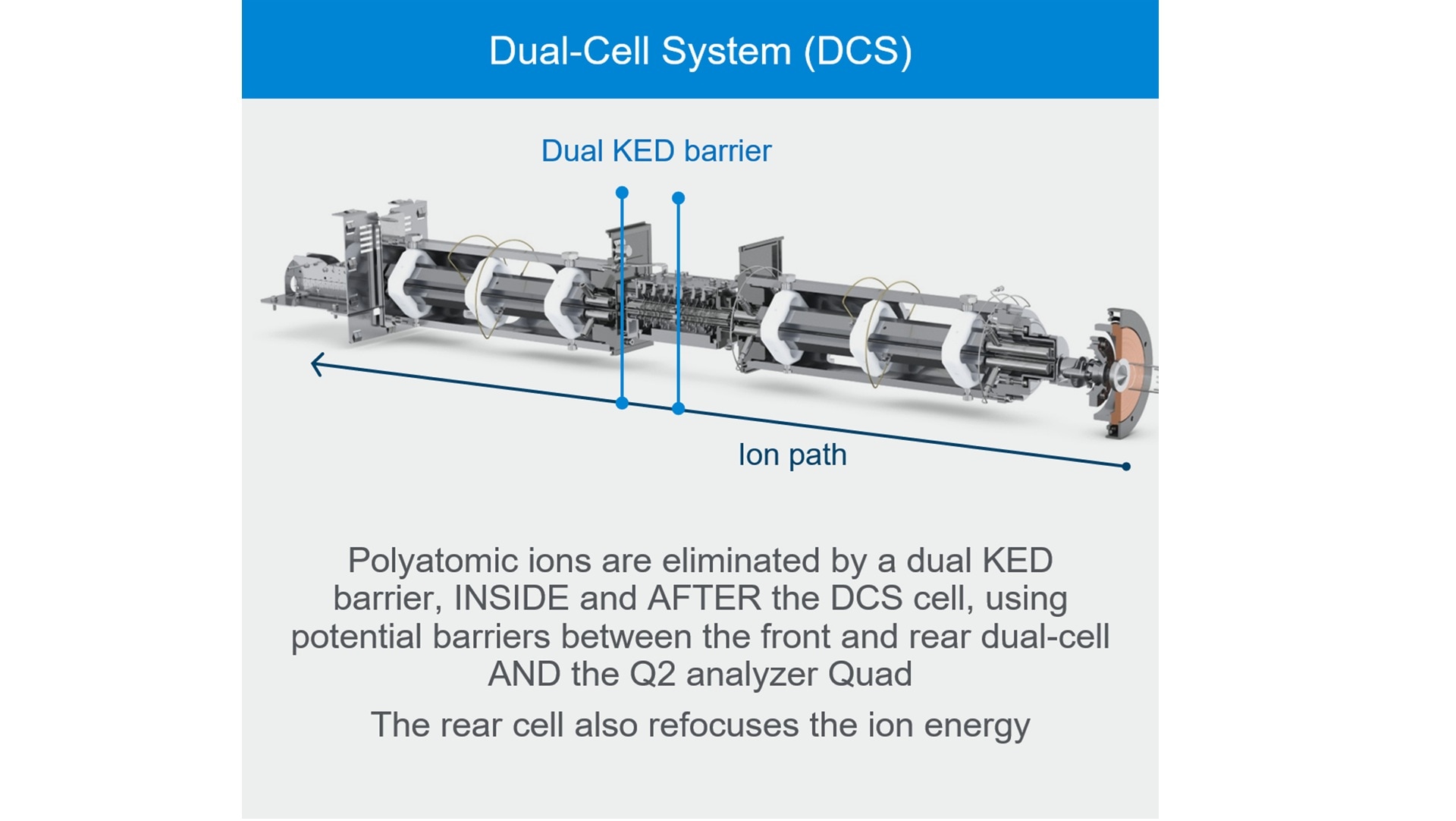
    When operating in AHM, the front and rear cells operate with different parameters. The front cell accelerates the ions to induce CID (similar to High Energy Helium mode) and also performs KED. The rear cell acts as the first KED barrier (it has a positive potential) and then “thermalizes” the ions. Thermalization is a process in which ions are slowed, and the energy difference between them is significantly reduced, thereby enabling greater focusing efficiency and sensitivity while ensuring good abundance sensitivity despite high-energy collisions in the front cell. A final KED barrier is applied after the rear cell by applying a potential bias voltage to Q2, before the detector (Figure 3).

    Diagram of a Dual-Cell System (DCS) with labeled parts: Dual KED barrier and ion path. Text describes polyatomic ion elimination and refocusing.

    Figure 3. Representation of the mass spectrometer showing the two regions of KED barriers inside the DCS and before Q2.

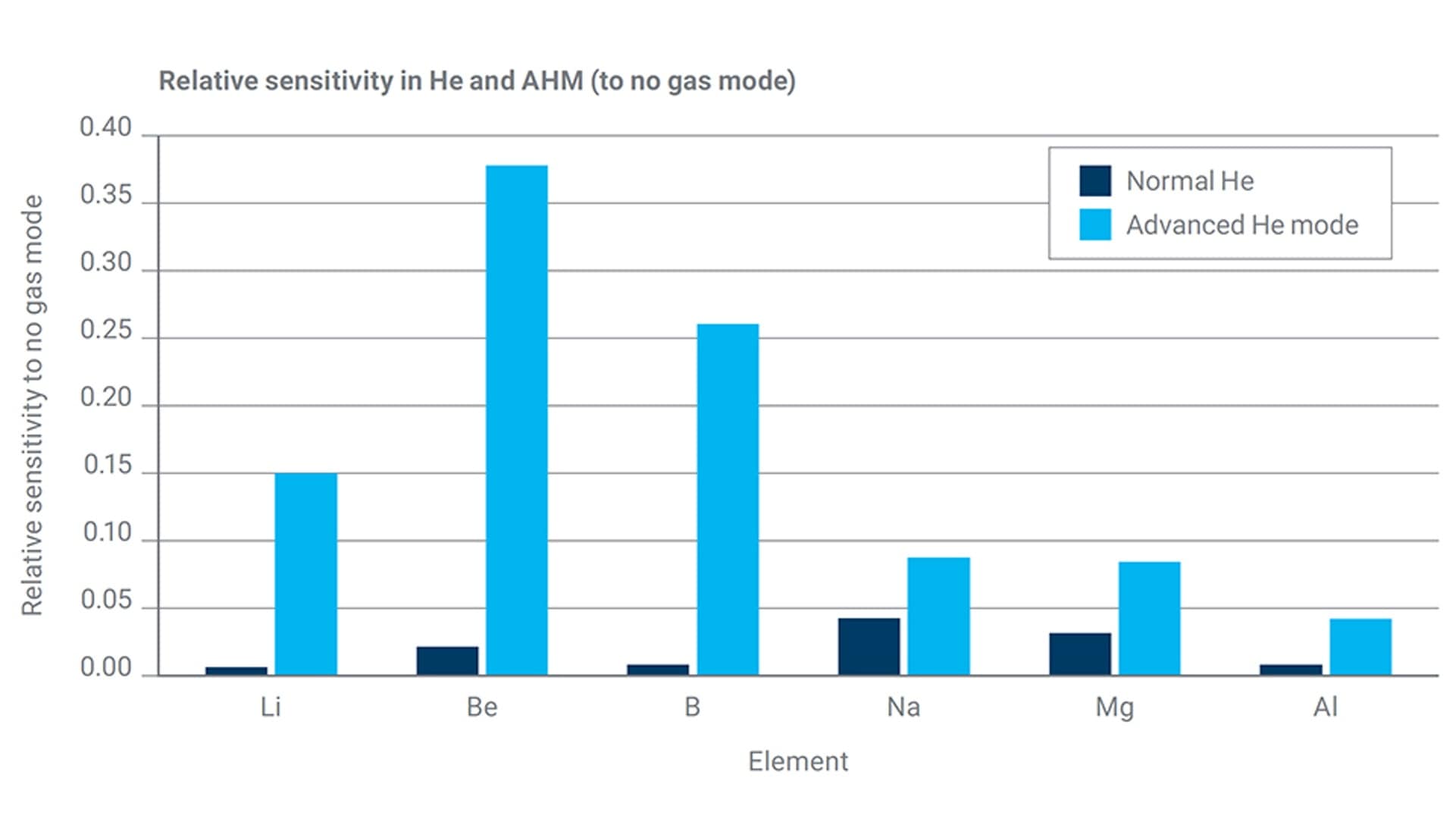
    When measuring low-mass ions (< 23 u), the cell rapidly switches its operating mode to significantly increase ion transmission efficiency and sensitivity for these ions, without altering the helium gas flow rate. Sensitivity for low-mass elements in AHM is 20x higher than when operating in helium KED; see Figure 4. This allows the full mass spectrum to be measured in a single, optimized acquisition; the operator does not need to select which mode, only the analyte, and the software works together with the 9500, providing the fastest, most optimal acquisition.

    Bar chart showing relative sensitivity to no gas mode for elements Li, Be, B, Na, Mg, Al. Light blue bars (Advanced He) are higher than dark blue (Normal He).

    Figure 4. Sensitivity gain of the Agilent 9500 ICP-QQQ operating in AHM when compared to helium mode.

    How the DCS enables Air Cell mode

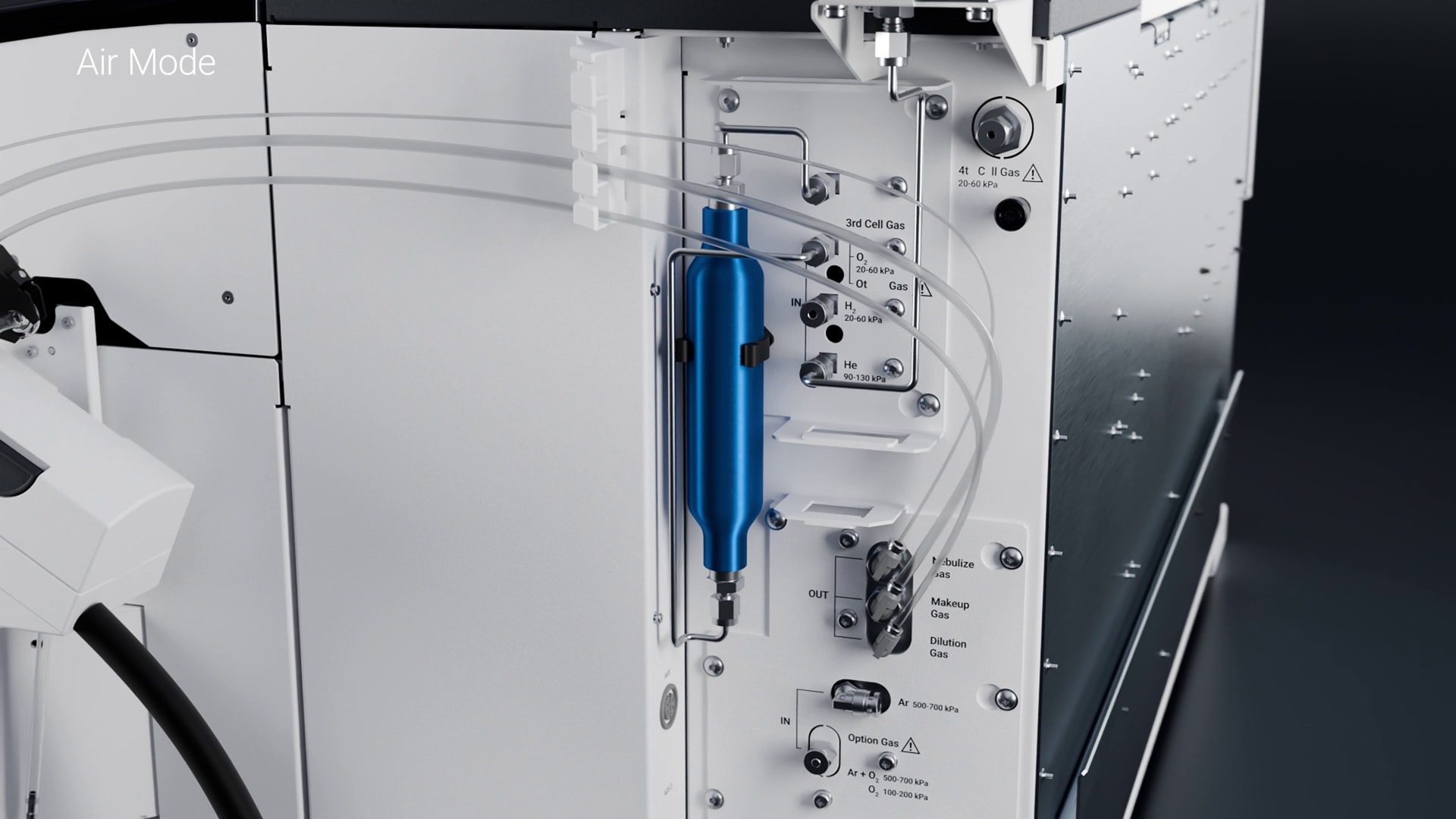
    When adding air to a CRC, care must be taken to control the reactions properly, as only oxygen reactions are desired. Any water vapor or other reactive contaminant in the laboratory air (for example, solvent vapors) would cause unpredictable side reactions, rendering the feature unusable. For ambient air use as a cell gas, the 9500 has Agilent proprietary Air cell technology featuring a built-in air filter (Figure 5) with a molecular sieve and activated charcoal to remove undesired reactive species from the air. This way, only nitrogen and oxygen are the primary species in the cell (with traces of argon and other noble gases, which have a negligible effect).

    A close-up of a scientific instrument's side panel featuring a blue cylindrical air filter, several labeled switches, and connecting tubes. The words

    Figure 5. Integrated Air Cell filter removes moisture and contamination from laboratory air.

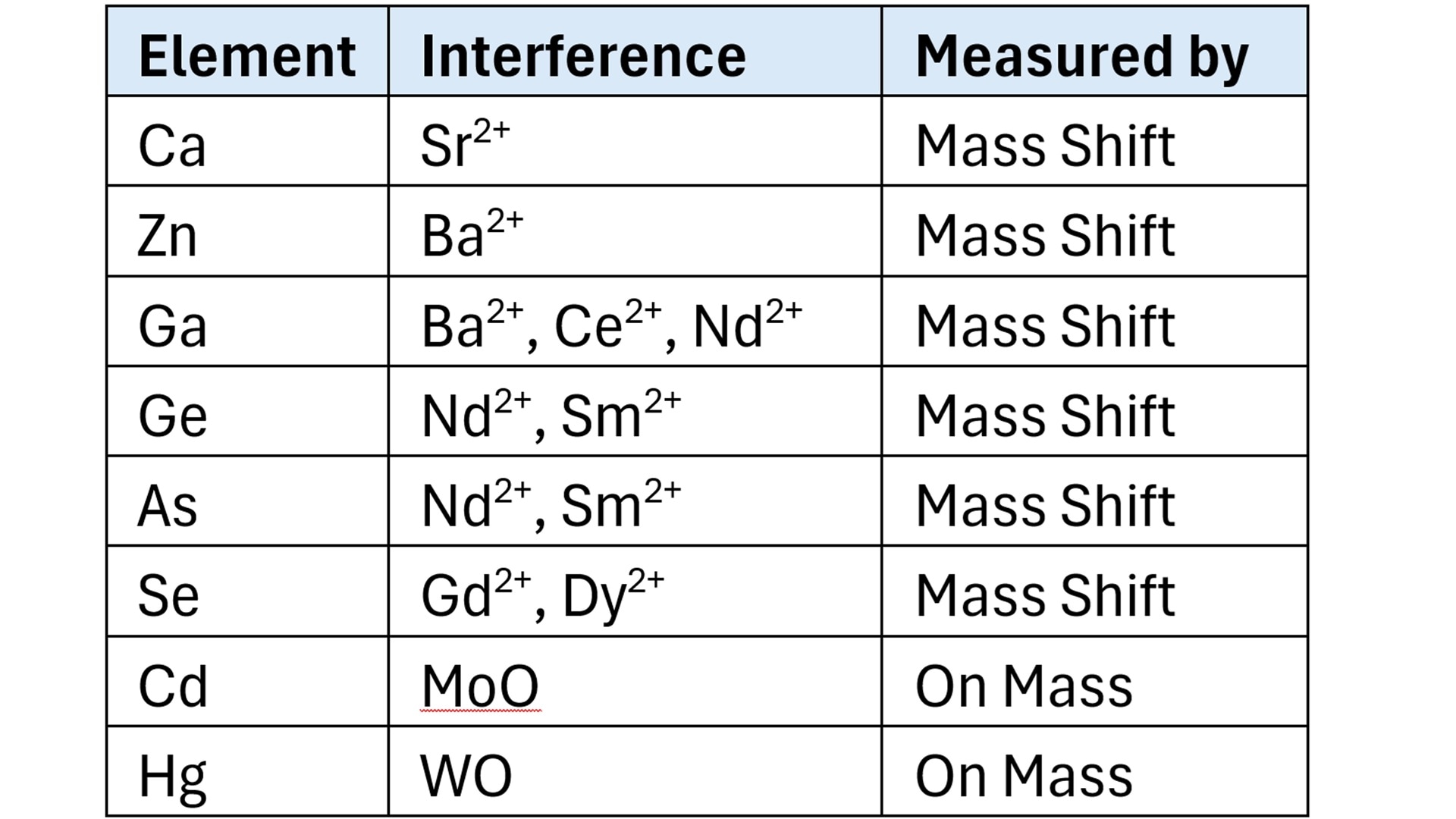
    Because nitrogen is essentially inert in the CRC, the primary processes in Air Cell mode are oxygen reactions. The benefits of oxygen reaction mode are well known1 and can help address several problematic interferences that He KED mode cannot resolve. Table 1 lists potential interferences on key elements that oxygen reactions can mitigate. Note that these interferences may not be present in all samples, so solutions can often be measured by AHM only.

    Table 1. Potential interferences where Air Cell mode (or O2) may provide an additional benefit in interference removal over helium KED.

    Table showing elements, interference, and measurement method. Elements include Ca, Zn, Ga, and others. Interference sources and methods are listed

    Operating in Air Cell mode automatically switches to MS/MS operation and locks the front and rear cell guides so they act as a single large ion guide. The central ion guides scan their voltages and frequencies based on Q1 to produce optimal ion transmission for the selected ion.

    Oxygen is the reactive species in the cell, so oxygen reactions predominate the interference-removal process. The inert nitrogen acts as a “buffer” gas, which can thermalize the ion beam and increase ion residence time within the cell. Some KED processes may also occur and are desirable for certain interferences; they can affect some product ion formation compared to pure oxygen. However, the difference is not significant compared with the interference-removal performance, and Air Cell mode still yields equivalent DL and BEC across most matrices.

    Air Cell mode brings the convenience of oxygen reaction chemistry to all labs, regardless of whether a pure oxygen supply is available or not.

    How does the DCS maintain sensitivity in Air Cell mode?

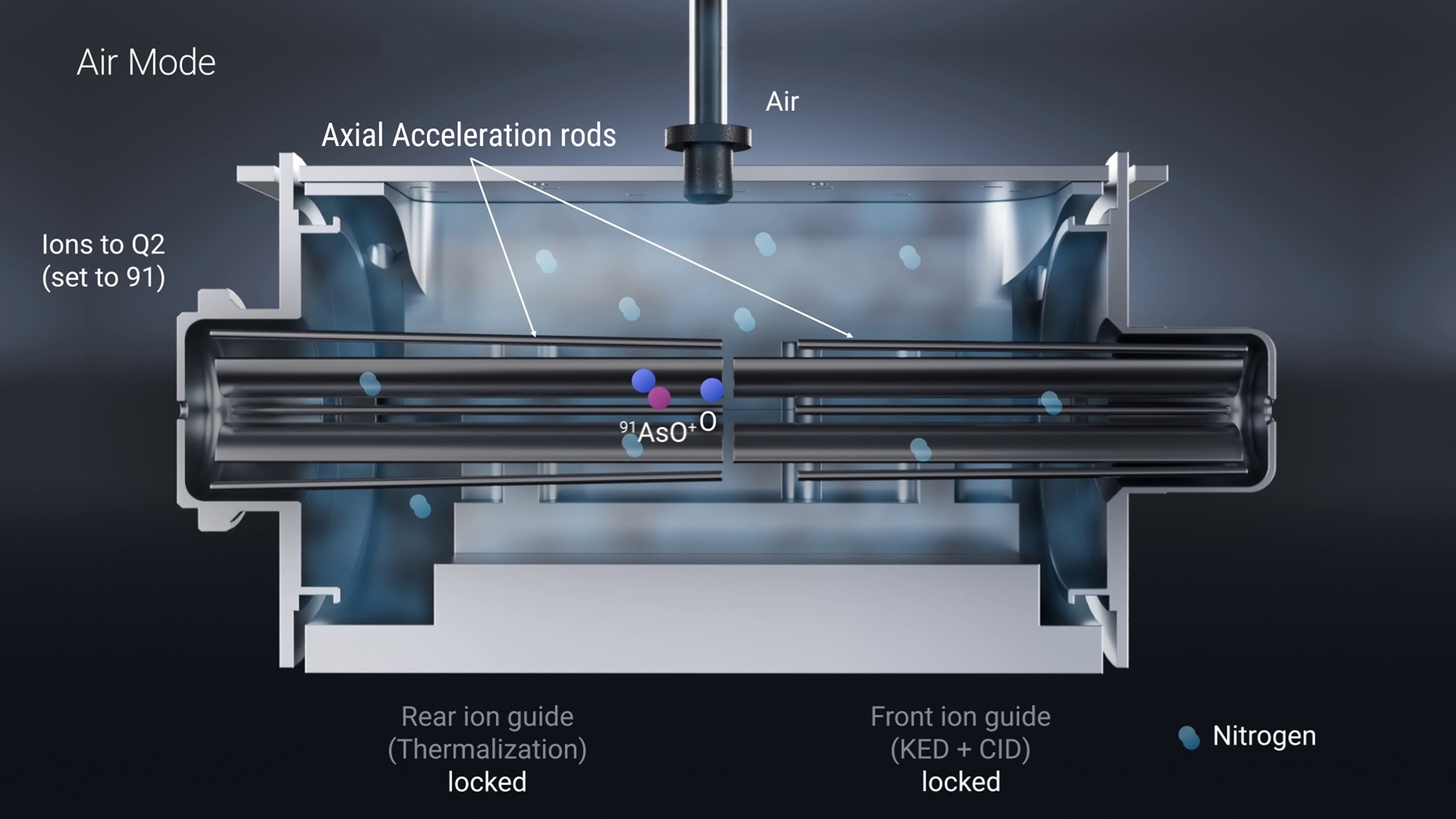
    When operating in Air Cell mode, the majority of the gas is nitrogen (78%), which can “get in the way” of the analyte ions and reduce sensitivity due to collisional losses (i.e., N2 molecules collide with the analyte ions, potentially causing signal loss). The DCS features axial acceleration in each of the front and rear ion guides (Figure 6). This creates a “funnel” shape, producing a potential gradient between the entrance and exit of each part of the cell. When combined with optimized scanning of the ion guides, this design ensures maximum ion transmission and minimal sensitivity losses.

    Diagram of a mass spectrometry DCS cell chamber in air mode. Labels indicate axial acceleration rods, air flow, and ions to Q2. Blue dots represent nitrogen, pink dots represent arsenic, and purple dots represent oxygen.

    Figure 6. The DCS operating in Air Cell mode, showing Axial Acceleration in the ion guide. This configuration increases Air Cell mode sensitivity.

    What applications can I use the DCS, AHM, and Air Cell for?

    The 9500 and DCS are well-suited to routine analysis; AHM is designed as a single high-speed operating mode for most applications. For samples with high levels of Rare Earth Elements (REE) or very high levels of Mo or W, Air Cell mode can be employed. The 9500 with DCS, AHM, and Air Cell offers great flexibility without the complexity.

    For real examples of 9500 with AHM and Air Cell performance, please check the following Application Notes:

    • Fast and Reliable Analysis of Soil and Sediments using ICP-MS with an Innovative Cell
    • Analysis of Environmental Waters by ICP-QQQ with a Dual-Cell System and Discrete Sampling
    • Analysis of Soil and Sediments by ICP-MS with Advanced Sample Introduction Tools
    • Automated Analysis of Foods by ICP-QQQ with Discrete Sampling and Autodilution
    • Direct Analysis of Seawater Using ICP-QQQ and Integrated Advanced Valve System

    For advanced applications (including additional cell gas controllers):

    • Agilent 9500 ICP QQQ with m Lens for Ultratrace Analysis of High Purity Reagents
    • Analysis of High Purity Titanium Using an Agilent 9500 ICP-QQQ

    Reference:

    1. Handbook of ICP-QQQ Applications using the Agilent 8800 and 8900

    DE-015978
    You might also like...

    Font cover of Agilent 9500 ICP-QQQ interactive, 16-page brochure, with details on its proprietary Dual-Cell System that enables fast, interference-free analysis across complex matrices. 
    The Agilent 9500 ICP-MS Interactive Brochure 
    Diagram of a Dual-Cell System (DCS) with labeled parts: Dual KED barrier and ion path. Text describes polyatomic ion elimination and refocusing.
    Dual-Cell System (DCS) and Advanced Helium Mode (AHM)
    A close-up of a scientific instrument's side panel featuring a blue cylindrical air filter, several labeled switches, and connecting tubes. The words Air Mode appear at the top left. The device is sleek and modern, suggesting precision and advanced technology.
    Air Cell Mode of the Agilent 9500 ICP-QQQ with Dual-Cell System

    This article was published in The ICP‑MS Journal.

    Read the latest issue

    • ConnectWithAgilent
    Agilent Technologies

    Headquarters | Other sites

    5301 Stevens Creek Blvd.

    Santa Clara, CA 95051

    United States

    Worldwide Emails
    Worldwide Numbers
    About agilent
    • Newsroom
    • Company Information
    • Investor Relations
    • Careers
    • Community Relations
    • Working with Agilent
    • University Relations
    • Environmental, Social, and Governance
    • Great science
    Resources
    • Literature Library
    • Video Library
    • Events
    • E-Seminars
    • Training Courses
    • E-Newsletters
    • Android Mobile Apps
    • iOS Mobile Apps
    Shopping Tools
    • Buy Online
    • Quick Order
    • My Account
    • My Favorites
    • My Orders
    • Where to Buy
    • Promotions & Offers
    • Return Policy
    Support & Services
    • Agilent Community
    • Technical Support
    • On-site Services
    • Analytical Instrument Services
    • Vacuum Product Services
    • Financial Solutions
    Now Part of Agilent
    • Biocare
    • Biovectra
    • e-MSion
    • Polymer Standards Service
    • Sigsense
    © Agilent Technologies, Inc.
    • Privacy Statement |
    • Terms of Use |
    • Contact Us |
    • Accessibility