
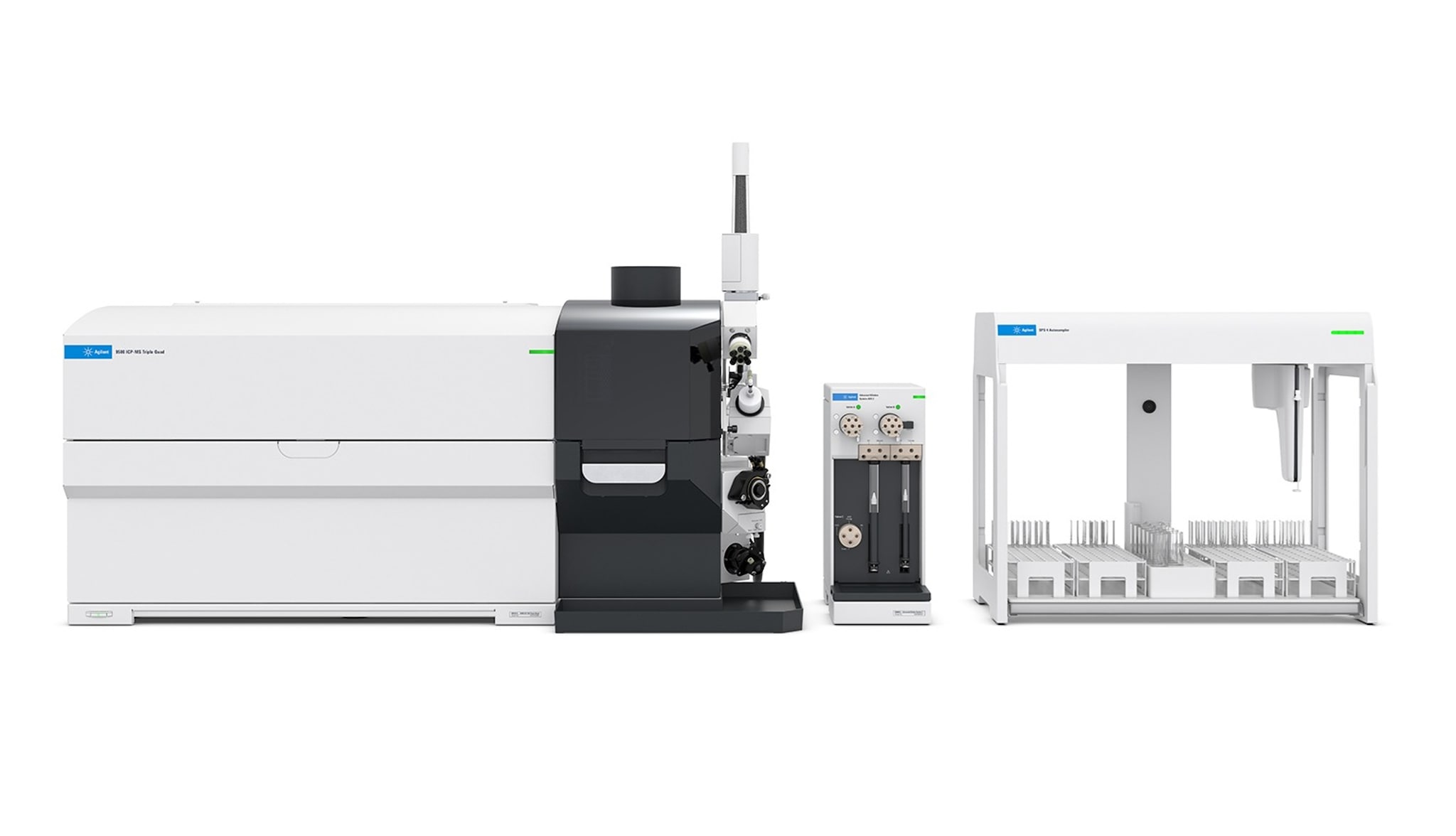
Food matrices present significant analytical challenges for ICP-MS due to polyatomic and potential doubly charged ion interferences, which can compromise trace level measurements of key contaminants. The 9500 ICP QQQ addresses these issues through its Dual-Cell System (DCS), which combines Advanced Helium Mode (AHM) and Air cell mode to deliver reliable interference removal across the mass range.
AHM suppresses common polyatomic species such as NaAr on Cu, an important advantage when analyzing high sodium food samples.
Air cell mode provides a simple solution for doubly charged ion interferences, such as rare earth element (REE²⁺) overlaps on As and Se.
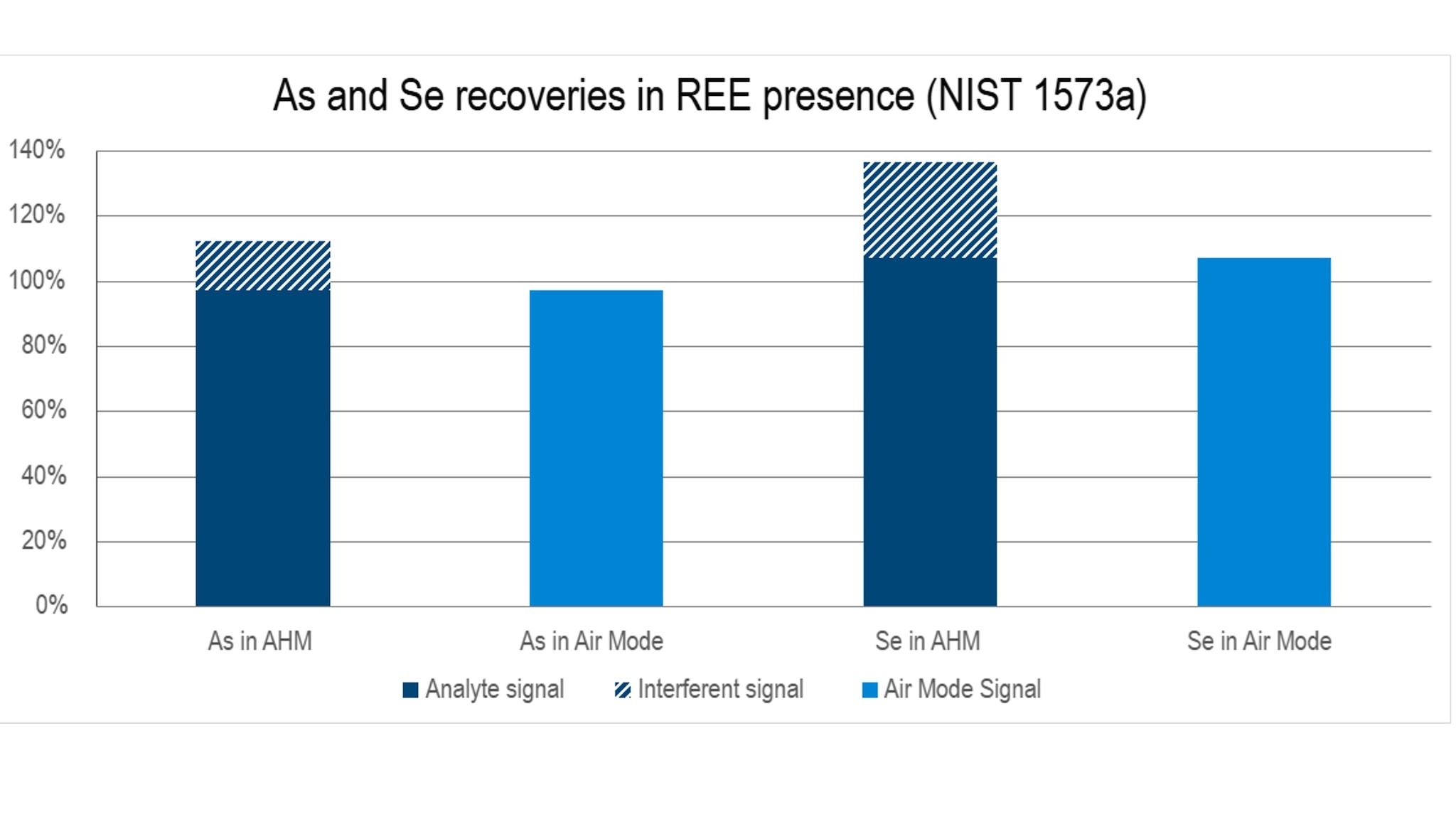
The NIST 1573a Tomato Leaves standard reference material (SRM) contains high concentrations of Gd and Sm, reflecting the presence of REEs in certain foods. After dilution, the concentrations of analytes and interferents in the SRM sample were approximately 0.35 and 0.17 ppb for As and Se, and 0.59 and 0.5 ppb Sm and Gd, respectively.
Figure 2 compares the recoveries of As and Se in AHM and Air cell mode in the presence of the REE2+ interferences. While the AHM signal response for As and Se is enhanced by interferents, Air cell mode avoids their effects, as shown by recoveries closer to 100%. Because Air cell mode uses ambient air rather than high purity oxygen, routine laboratories benefit from stable performance, reduced infrastructure requirements, and reliable accuracy without added complexity.
Experimental
Instrumentation and software-assisted method creation
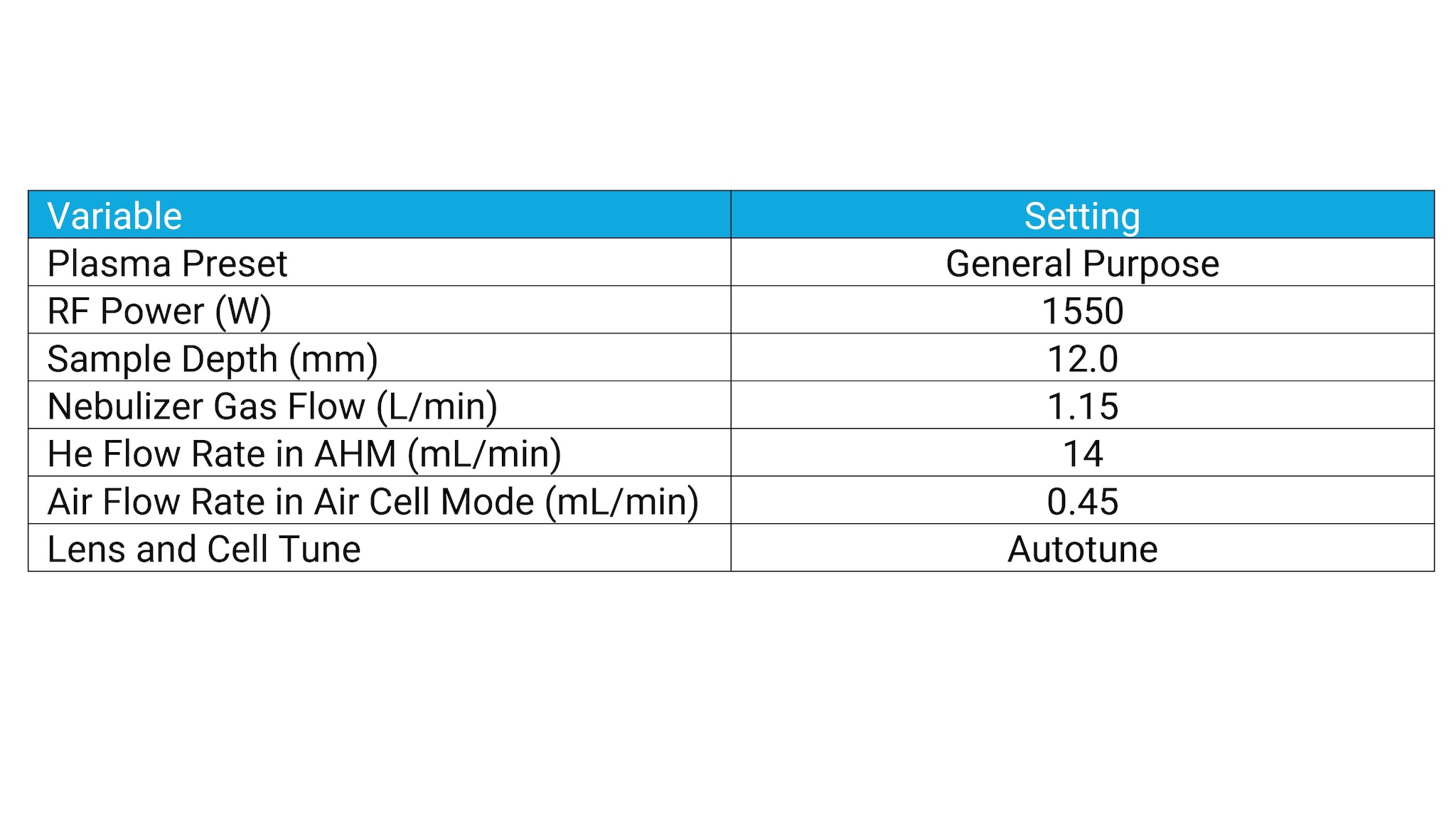
The 9500 ICP-QQQ was equipped with the standard sample introduction kit and cones. It was operated using default settings for the AHM and Air cell gas modes and tuned using the Agilent OpenLab ICP-MS software’s autotune routine. A preset Food/Clinical method was selected in the software, which populates most instrument and analyte settings, requiring minimal user input. Instrument operating parameters are listed in Table 1.
Sample and sample preparation
Several NIST food matrix SRMs were used as samples. The SRMs included NIST 1566b Oyster Tissue, NIST 1573a Tomato Leaves, and NIST 2976 Trace Elements and Methylmercury in Mussel Tissue. Sample preparation was performed according to the procedure stipulated in the AOAC 2015.01 method. The samples were acid digested using a MARS 6 closed-vessel microwave digestion system from CEM Corporation, USA.
Results and discussion
Sensitivity and analysis speed
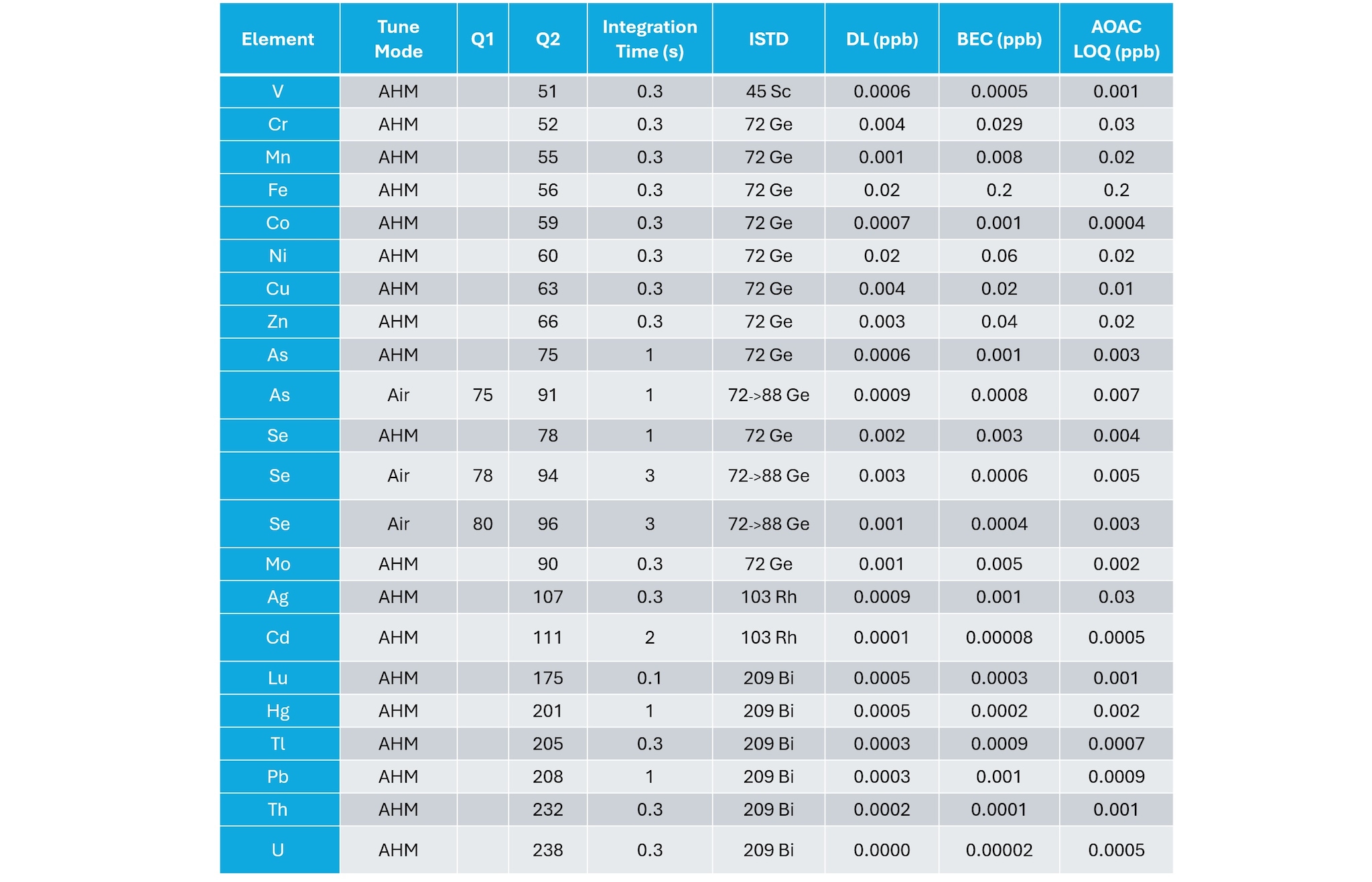
Detection limits (DLs) and background equivalent concentrations (BECs) calculated by the OpenLab ICP-MS software and the limits of quantification (LOQs) calculated in accordance with the AOAC method are shown in Table 2.
Using the integration times listed in the table, the sample-to-sample time averaged approximately 2 minutes and 45 seconds. This acquisition time is more than 30 s faster than an equivalent multitune method using a single-quadrupole ICP-MS.
Accuracy: Analysis of food SRMs
To verify the method's accuracy, triplicate preparations of the three food SRMs were each measured three times using the 9500 ICP-QQQ. As shown in Table 3, all analytes recovered within the ±25% tolerance range specified in the AOAC method. Samples were measured at a minimum dilution factor of 320x following the digestion procedure described in the AOAC method. If the concentration of any analytes was outside the calibration range, the samples were automatically diluted using the ADS 2 and remeasured.
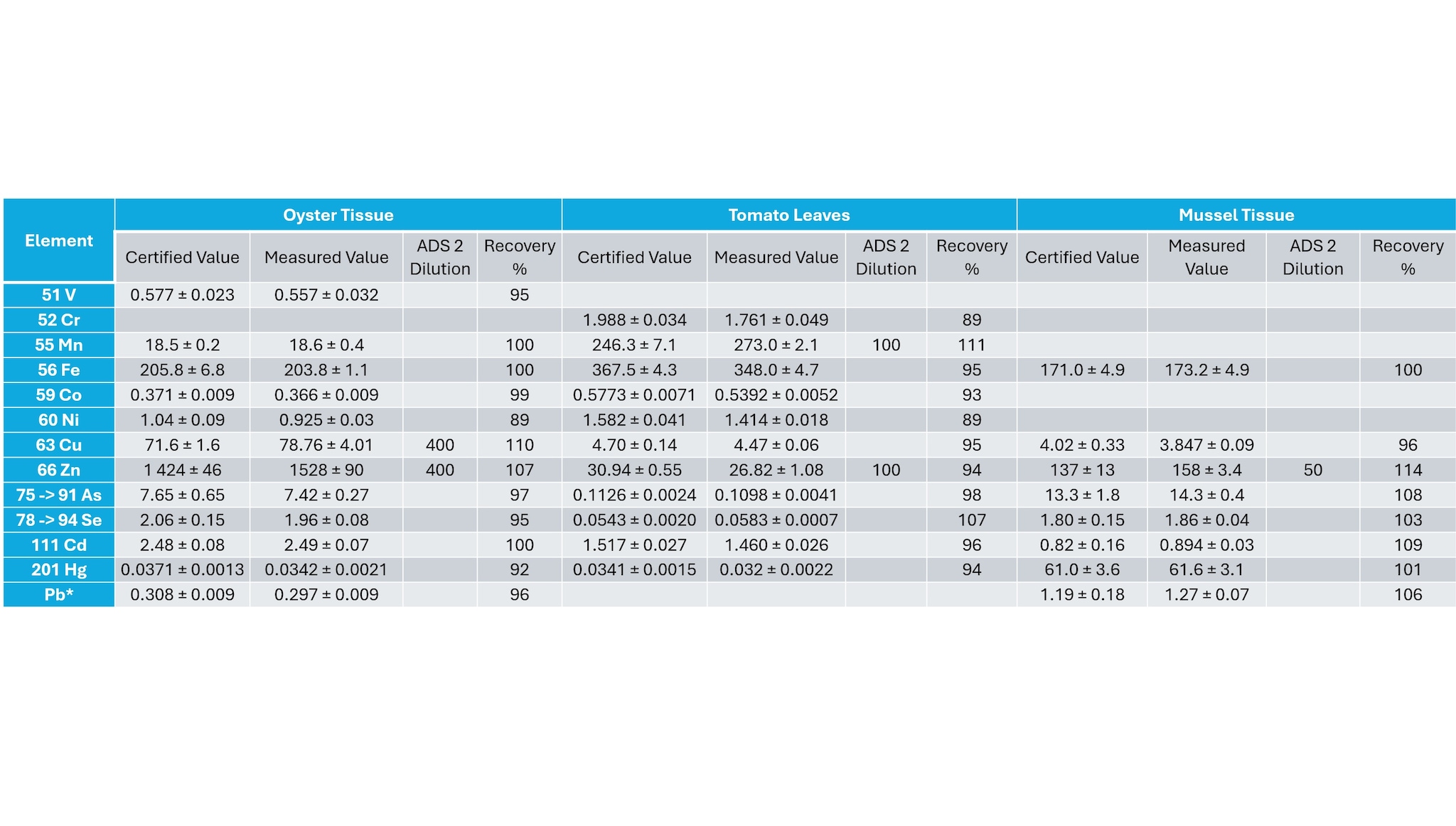
* Reported as the sum of the lead isotopes 206+207+208
Robustness and stability
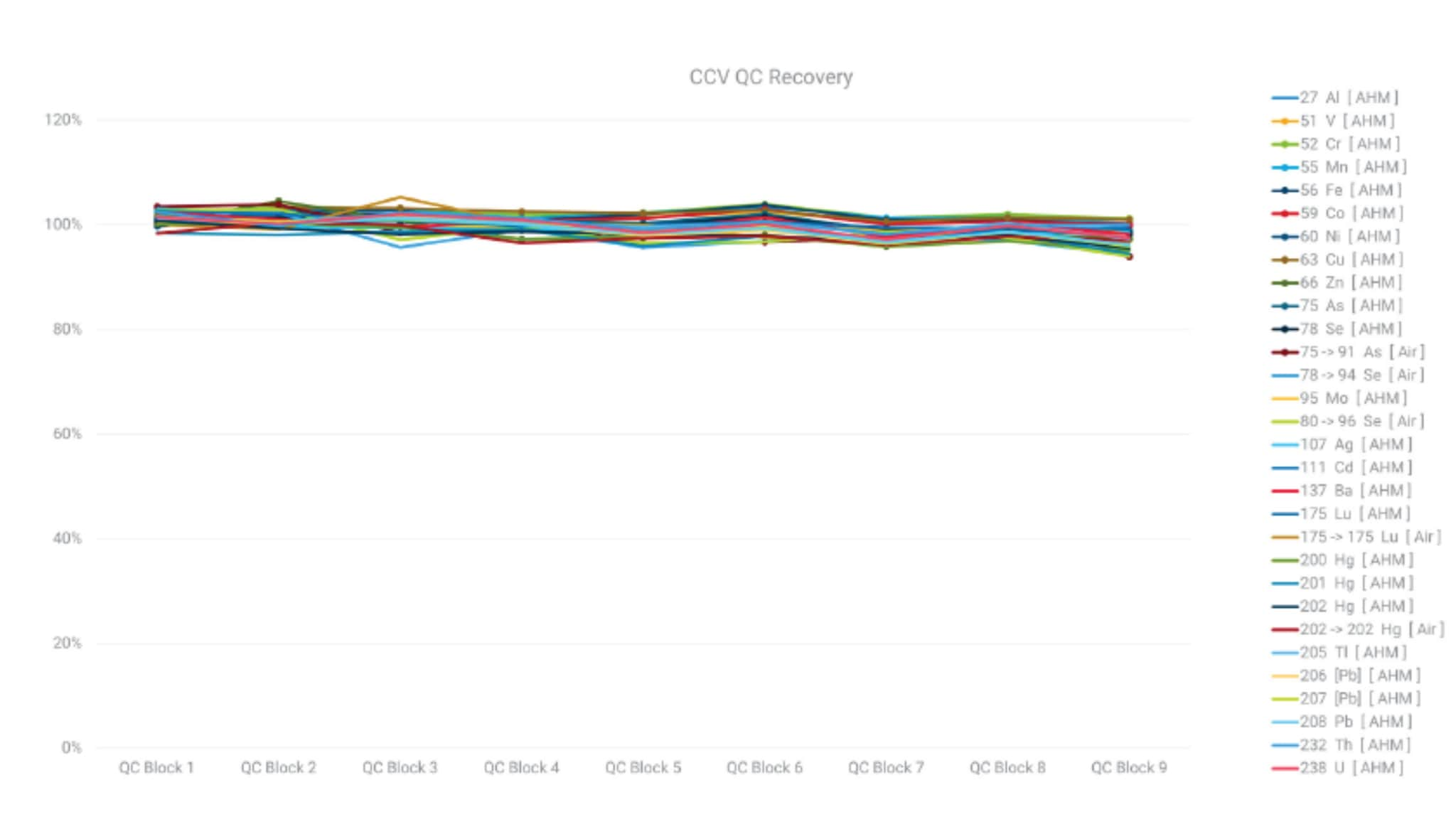
Stability and reliability are equally important for productivity. Across a 5.5‑hour sequence, all Continuing Calibration Verification (CCV) samples remained within the AOAC ±15% requirement, as shown in Figure 3. This consistency reduces reruns, supports uninterrupted workflows, and ensures dependable performance throughout long sequences.
Productive foods analysis
By combining automated dilution, streamlined method setup, and fast, interference‑free analysis, the Agilent 9500 ICP‑QQQ with AVS MS and ADS 2 provides a high‑throughput, AOAC‑compliant workflow ideal for modern food testing laboratories. The result is a system that not only meets regulatory demands but also delivers the sensitivity, speed, and reliability required to keep pace with evolving analytical workloads.
Reference
- Association of Official Analytical Chemists (AOAC), Determination of Heavy Metals in Food by Inductively Coupled Plasma–Mass Spectrometry: First Action 2015.01. J. AOAC Int., 98(4), 2015, 1113–1120
More information
Siva, Santhosh, Automated Analysis of Foods by ICP-QQQ with Discrete Sampling and Autodilution, Agilent publication, 5994-9095EN