Viral Infectivity Assays
May 2025
The field of virology continues to evolve rapidly, driven by the need for innovative solutions to address the challenges posed by viral infections. Traditional methods for monitoring viral infectivity and assessing antiviral efficacy often fall short in terms of reproducibility, efficiency, and scalability. In this edition of TekTalk, we delve into the advancements offered by Agilent cell analysis technologies, which are transforming virology research.
The Agilent BioTek Cytation and xCELLigence Real-Time Cell Analysis (RTCA) systems provide robust, automated workflows that enhance the precision and throughput of viral assays. These platforms enable researchers to visualize and quantify viral infection with unparalleled accuracy, leveraging automated imaging and impedance-based analysis. The included content describes improved approaches for conducting conventional viral infectivity assays, as well as novel methods using kinetic live cell analysis and AI-powered tools. By overcoming the limitations of conventional techniques, these Agilent solutions are paving the way for more effective antiviral drug development, vaccine research, and infectious disease studies.
Explore diverse application notes and featured instruments that highlight the unique capabilities of cell analysis technologies from Agilent. Discover technical tips providing valuable insights into overcoming common workflow bottlenecks and optimizing results. Finally, learn how these innovations are driving progress in virology and customer stories that showcase their impact in real-world research settings.
Featured Application Notes and Handbook
Agilent xCELLigence Real-Time Cell Analysis Viral Assays
Real-Time Cell Analysis instruments, track viral cytopathic effects continuously without the use of agar, dye, or fixative over minutes to days. These automated assays greatly reduce workload and provide quantitative kinetics for the entire virus life cycle. Download the xCELLigence RTCA Vaccine and Virology Handbook to learn about a simple and high throughput workflow to easily evaluate:
- Viral titers
- Neutralizing antibodies
- Anti-viral drugs
- Virucides
- Oncolytic viruses
- Virus quality and fitness
Detecting and Characterizing Virus Neutralizing Antibodies in Real Time Using Cellular Impedance and Live-Cell Imaging
In this application note, the efficacy of Real-Time Cell Analysis (RTCA) technology to screen antibodies for virus neutralizing activity is demonstrated, with impedance as the primary/quantitative readout and imaging employed for qualitative confirmation. The eSight assay described here provides a much simpler, faster, and more information-rich alternative to traditional virus neutralizing antibody assay, improving the functionality of convalescent plasma/therapeutic antibody testing and vaccine development.
Automated Viral Plaque Assay Workflow Using the Cytation Cell Imaging Multimode Reader
The application note describes an automated viral plaque assay workflow using the Agilent BioTek Cytation cell imaging multimode reader and Gen5 microplate reader and imager software. This method enhances the traditional plaque assay, which measures viral titers by counting plaque-forming units (PFU) in a monolayer of virus-infected cells. The automated approach significantly improves accuracy and efficiency by utilizing imaging and analysis tools to visualize and count plaques in various microplate formats, ranging from 6- to 96-well plates. This automation reduces the time and subjectivity associated with manual counting, providing a reliable and streamlined process for virology research.
Monitoring Viral Infection of Mammalian Cells Using Digital Fluorescence Microscopy
The Agilent BioTek Cytation cell imaging multimode reader and Gen5 microplate reader and imager software provide a powerful and flexible platform for characterizing viral infectivity using automated fluorescence microscopy. In this application note, HIV infection of HeLa cell cultures was quantified using fluorescently tagged viral particles and whole-well imaging to generate robust results consistent with flow-based analysis.
Tek Tips
High-throughput, automated, and scalable viral infectious titer assays are needed: Accurate assessment of viral infectious titer is essential for evaluating process parameters during viral vaccine development. The conventional assays, such as plaque-forming units (PFU) and tissue culture infectious dose 50% (TCID₅₀), are endpoint assays. They rely on the detection of virus-induced cytopathic effects (CPE), often requiring labelling techniques to visualize infection. They are inherently time-consuming—often taking several days—labor-intensive, low-throughput, and subject to variability due to the subjective interpretation of results. As high-throughput bioreactor systems become more prevalent in vaccine manufacturing, these traditional methods increasingly limit the speed of development and process optimization. To address these challenges, there is a growing need for rapid, automated, and scalable infectious titer assays. Agilent addresses this need by offering real-time, label-free, high-throughput TCID₅₀ solutions through platforms such as the BioTek Cytation 5 with automated imaging analysis and the impedance-based xCELLigence RTCA systems for real-time, objective CPE monitoring. To further increase throughput, the Agilent HT BioSpa system combines an automated incubator with an RTCA HT system for effortless maintenance of cell culture and quantification of virus concentration using a 384-well plate format.
Stabilization of the Cytopathic Property of Viruses
The Virus Reduction Neutralization Test (VRNT) is a quantitative assay used to assess the ability of antibodies—typically from serum samples or therapeutic candidates—to neutralize viruses by reducing their infectivity. In this assay, antibodies are incubated with a defined quantity of virus. If neutralization occurs, the number of infectious particles capable of inducing cytopathic effects (CPE) is reduced. The consistency and reliability of the VRNT depend heavily on the stability of the virus’s infectious properties. Many viruses lose viability over time when held in solution without host cells or after repeated freeze-thaw cycles. To preserve infectivity and ensure reproducible CPE, virus stocks should not be refrozen once thawed. Instead, prepare single-use aliquots of the virus in suspension that are appropriately sized for the intended experiment. For each newly prepared and cryopreserved virus batch, re-establish the infectious dose to ensure accurate and consistent assay performance.
Selection of permissive cell line and assay condition optimization
The sensitivity and specificity of viral titer assays can vary greatly depending on the virus-host system. Developing an infectious titer assay for different virus types requires extensive optimization and validation. Key factors influencing assay performance include the selection of a permissive cell line, cell culture conditions (such as growth medium and seeding density), and the timing of virus inoculation relative to cell seeding. These parameters can significantly impact viral replication and detection. In some cell lines, variability in viral antigen expression or cytopathic appearance can lead to inconsistent results. For example, in plaque assays, the use of Vero cells—particularly low-passage Vero E6 cells—is critical, as they influence plaque morphology, size, and clarity. Due to the improved automation, throughput, and hands-off time, Agilent Cytation 5 and xCELLigence RTCA systems are suitable for assay condition optimization. Ultimately, the choice of assay must align with the specific goals of the study, and careful evaluation is essential to ensure that the selected method is appropriate for the intended application.
Webinar
Rapid Vaccine Production and Testing Workflows at Boehringer Ingelheim Utilizing ViQi AVIA™ AI technology and Agilent Cytation Brightfield Imaging
March 21, 2025 | 12 PM EDT
Presenter: Nathan Likens; Principal Scientist, Boehringer Ingelheim, Ilya Goldberg, Ph.D.; Chief Science Officer, ViQi, Joe Clayton, Ph.D.; Director of Applications and Technical Marketing, Agilent Technologies

Infectivity assays are essential for vaccine development and antiviral drug discovery. Conventional practices for measuring viral infectivity, including the plaque assay and TCID50 assay, rely on time-consuming workflows and subjective analysis. As an alternative approach, Boehringer Ingelheim (BI) is utilizing ViQi's AI-powered automated viral infectivity assay, AVIA, and the Agilent BioTek Cytation 5 cell imaging multimode reader in their vaccine production and testing workflows for HVT (a herpes virus affecting turkeys).
HVT requires a blind passage step for virus amplification, which when combined with the standard plaque assay for viral titer quantification, does not support rapid vaccine development. In contrast, AVIA uses machine learning and automated brightfield microscopy to detect early signs of viral infection, identifying subtle phenotypic changes within cells that are associated with viral replication. In this webinar, we present how BI is working with AVIA to expedite results, increase throughput, and scale automation.
Learning Objectives:
- Understand the limitations of current virus infectivity measurement methods.
- Explore the advantages of AVIA over traditional assays.
- Learn how automation and AI can enhance vaccine production workflows.
Product Spotlights
xCELLigence RTCA MP - Multiple Plates
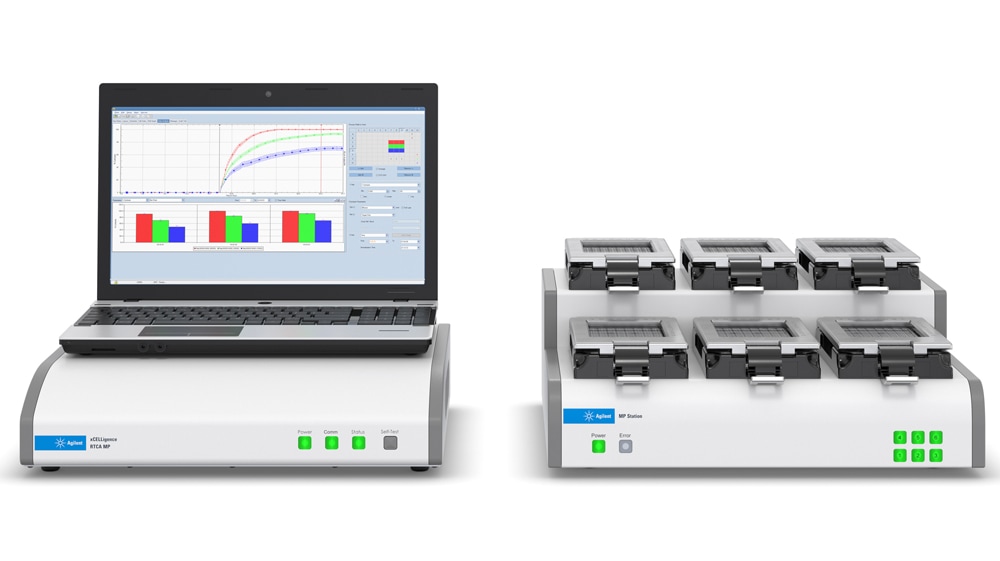
The Agilent xCELLigence Real-Time Cell Analysis (RTCA) MP instrument uses label-free cellular impedance to continuously monitor cell health, behavior, and function for up to six 96-well electronic microplates (E-Plate 96). Measure cell proliferation kinetics, identify the optimal time point for viral infection with different cell seeding densities, and assess virus-mediated cytopathogenicity in one workflow. Simply plate cells, add virus, and begin monitoring cell behavior to obtain real-time kinetic data for assay windows that stretch from seconds to days.
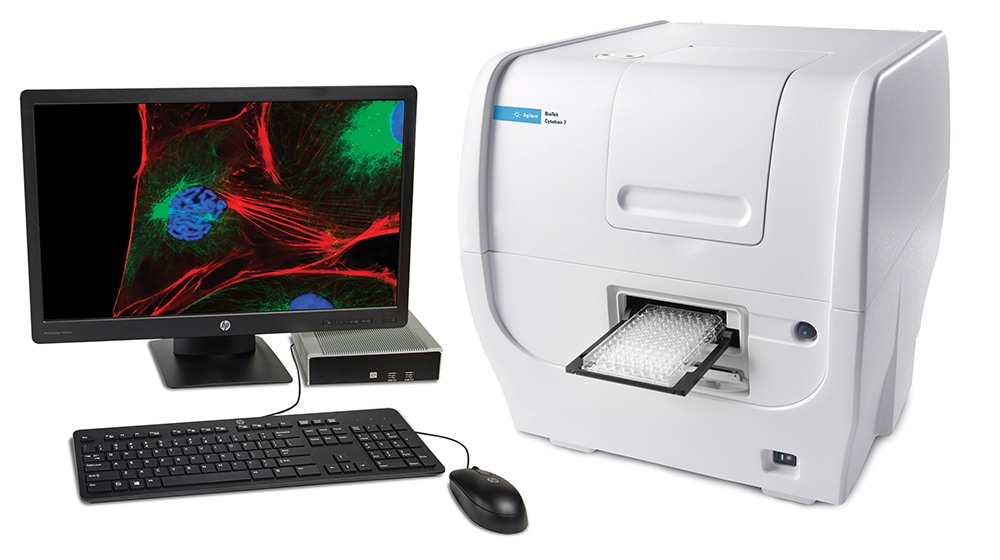
BioTek Cytation 7 Cell Imaging Multimode Reader
The Agilent BioTek Cytation 7 cell imaging multimode plate reader combines automated digital upright and inverted widefield microscopy with conventional multimode microplate reading. The inverted microscopy module provides sample visualization in a variety of microplate and vessel formats while the upright microscopy module with reflected light imaging enables even more applications, including ELISpot and fast slide scanning.
Featured Videos

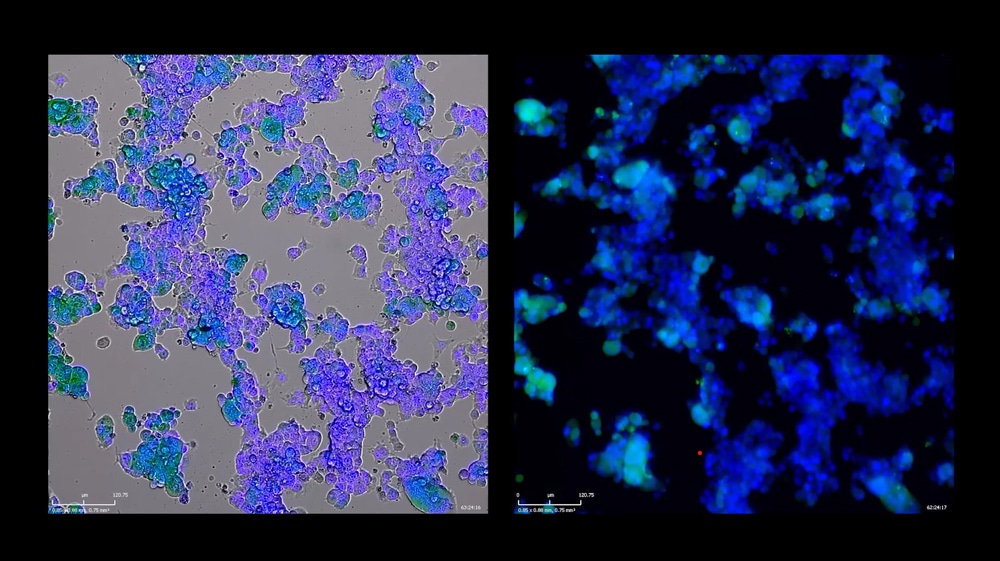
Imaging Oncolytic Virus-Mediated Killing


Additional Resources
TekTalk
- ELISpot – TekTalk
Application Notes
- Quantification of Viral Infections Using AI/ML Analysis with Brightfield Imaging
- Agilent xCELLigence Real-Time Cell Analysis – A new way to monitor virus-mediated cytopathogenicity
Handbook
Technical Overview
Webinars OnDemand
- Agilent Cell Analysis Solutions: Empowering scientific discovery and advancing groundbreaking therapeutics
- Autophagy as a master immunometabolic regulator in T-cell-mediated protection against HIV-1 Infection
- Racing against time: Rapid, high-throughput discovery of antibody therapeutics for SARS-CoV-2
- Identification of antiviral compounds against equid herpesvirus-1 using RTCA screening
Publications
- Standardized two-step testing of antibody activity in COVID-19 convalescent plasma - iScience 2022 Jan 21;25(1):103602.
- Discovery and characterization of a pan-betacoronavirus S2-binding antibody. Structure. 2024 Nov 7;32(11):1893-1909.
- High-Throughput Determination of Infectious Virus Titers by Kinetic Measurement of Infection-Induced Changes in Cell Morphology. Int J Mol Sci. 2024 Jul 24;25(15):8076
- PMI-controlled mannose metabolism and glycosylation determines tissue tolerance and virus fitness Nat Commun. 2024 Mar 8;15(1):2144.
- A liver immune rheostat regulates CD8 T cell immunity in chronic HBV infection Nature. 2024 Jul;631(8022):867-875.
Promotion
Talk to your Agilent representative to find out about promotions on single licenses for RTCA Software Pro Virology for the xCELLigence RTCA models iCELLigence, S16, SP, and DP, in your area.
For Research Use Only. Not for use in diagnostic procedures.
RA250501.263