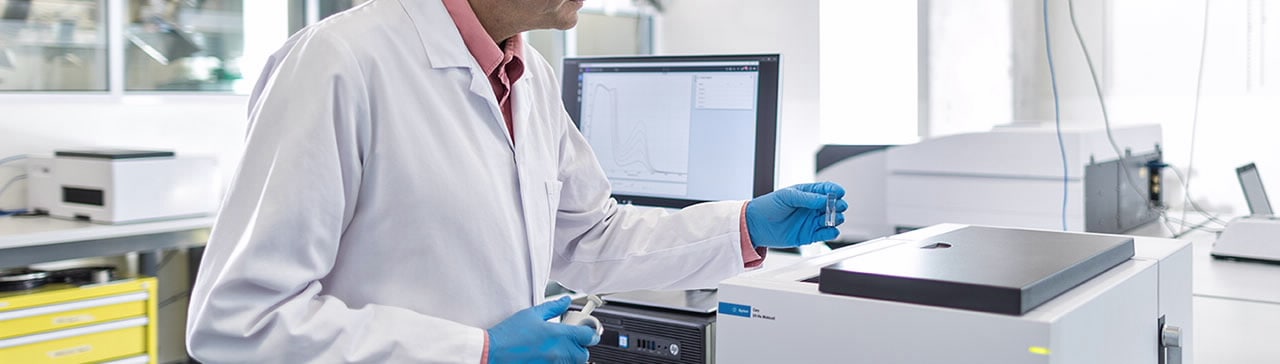
UV-Vis & UV-Vis-NIR Instruments

UV-Vis & UV-Vis-NIR Spectroscopy

Advanced Molecular Analysis with Cary Spectrophotometers for UV-Vis & UV-Vis-NIR

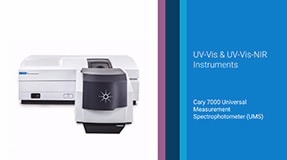
Cary UV-Vis-NIR spectrophotometers continue to build upon the optical design principles proposed by Howard Cary and embodied in the world’s first commercial recording UV-Vis spectrophotometer, the Cary 11, in 1947. For more than 75 years the Cary design philosophy has remained the same—a spectrophotometer for those who must push the limits of performance and yet have an instrument that is adaptable to many different applications.

Cary UV-Vis (ultraviolet-visible) spectrophotometers are ideal for both routine and research measurements, with flexibility, longevity by design, and software to ensure your data is managed, protected, and meets data integrity standards when required. Cary UV-Vis-NIR (ultraviolet-visible-near-infrared) spectrophotometers offer photometric excellence in a range of applications for both liquid and solid samples. Our accurate, intuitive UV-Vis and UV-Vis-NIR instruments provide exceptional resolution and unmatched linearity for every measurement.

A comprehensive portfolio of accessories and supplies adds wide-ranging measurement flexibility. Quickly and easily set up your instrument for routine ultraviolet-visible spectroscopy analysis of liquid or solid samples, precise temperature measurements, sophisticated transmission and reflectance measurements of solid samples, and many other UV-Vis and UV-Vis-NIR spectroscopy applications.

Refine By

Products

|
|

Sort Alphabetically

Filter by
Filter Content Selection Tool

Need Help? Find products using our Selection Tool.

Featured Tools

UV-Vis Pharmaceutical Compliance & Data Integrity

Learn about meeting UV-Vis compliance requirements, protecting data, and guaranteeing accurate results.

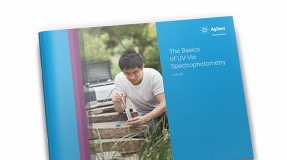
UV-Vis Spectroscopy Learning Tools

Get your Basics of UV-Vis Spectrophotometry handbook, and a pack of four undergraduate teaching lab experiments.

UV-Vis & UV-Vis-NIR Instrument Selection Guide

Find out which Agilent UV-Vis or UV-Vis-NIR spectrophotometer is best for your needs.

UV-Vis Spectrophotometer Applications Overview

A guide to modern UV-Vis spectrophotometer uses, measurement techniques, and their applications.

Featured Literature

Near Infrared Photometric Accuracy of Agilent Cary 7000 UV-Vis-NIR Spectrophotometer

Evaluating infrared photometric accuracy of the Agilent Cary UV-Vis-NIR Spectrophotometers

Amplify Confidence in Your Data Integrity

How to get the functionality you need for compliance with 21 CFR Part 11 or EU Annex 11 when using the Agilent Cary 3500 UV-Vis instrument.

Concentration Analysis of Ultra-microvolume Samples of Protein and Nucleic Acids by UV-Vis Spectroscopy

In this application note, concentration analysis of ultra-microvolume samples of protein and nucleic acid is discussed. The Agilent Cary 60 UV-Vis fitted with the TrayCell 2.0 Ultra-Microvolume Cell was used for the study.

UV-Vis-NIR Spectroscopy for Nanomaterials Research

This ebook from Wiley publishing is packed full of information about using UV-Vis-NIR spectroscopy to characterize nanomaterials.

Featured Customer Testimonials

Desiree B. Gunning

Roy J. Carver Dept. Biochemistry, Biophysics, and Molecular Biology , Iowa State University

The biochemistry teaching laboratories at Iowa State University have relied on the outstanding performance and reliability of the Cary 60 scanning spectrophotometers. Since 2000, our twelve Cary spectrophotometers have continued to be the workhorse in our teaching laboratories. A major concern for a teaching laboratory is the reliability of instrumentation, and the continued support and service provided long after purchase. After many years of heavy use in a teaching setting, all our Cary 60 instruments have proven to be of very high-quality with outstanding durability. We design our biochemistry curriculum to prepare students for research-based career paths that demand technologically curre

View More

Christophe Licitra

Research scientist, CEA-Leti, France

"I recommend the Cary 7000 UMS because there is no alignment, no user intervention, no extra baseline, its fully automated and that allows for a streamlined workflow for material characterization”

View More

Dr. Mohammad Al Kobaisi

School of Chemistry and Biotechnology, Swinburne University of Technology

Agilent’s Cary 3500 with controlled stirring and wide range of temperature control options has converted me to use UV-vis spectroscopy to monitor processes in situ using this instrument. The stability of the signal allows for long term kinetic processes too, opening up a range of experiments I was unable to do beforehand due to drift. The intuitive software and data management prevents the loss of results and ensure well organized projects and archives. The Cary 3500 is most definitely an exciting advancement from any other UV-vis spectrometer I have used previously, expanding the flexibility to control more parameters while conducting research experiments.

View More

Benjamin Tadgell, Eser M. Akinoglu

ARC Centre of Excellence in Exciton Science School of Chemistry, University of Melbourne

We are impressed with the fast scan, user friendly modular design and high throughput of Agilent Cary 3500 UV-Vis. In particular, the great temperature ramping rate and sensitivity makes our work easier. Our project uses UV-Vis to research how temperature affects the scattering properties of gold nanoparticles coated in PNIPAM polymer. As temperature increased over the 30 – 40 °C range, the polymer collapses and the particles aggregate; we are interested in understanding the dynamics of these processes. Wavelength scans at different temperatures, and thermal gradient scans are used to partially characterize these processes. We also do these measurements over a range of pH, salt concentrat

View More
Return to top
Featured Videos
Return to top
Featured News

UV-Vis Spectroscopy for Quality Assessment of Paprika as per ASTA Method 20.1

This application note highlights benefits of using the Cary 3500 Multicell UV-Vis to commercially grade paprika quality. As per ASTA Method 20.1, two paprika samples were graded with an ASTA color value, based on quantification of carotenoid pigments. Cary UV Workstation simplified data analysis with intuitive software features that eliminated the need for manual or external data processing tools.

New Cary 60 UV-Vis Diffuse Reflectance Accessory (DRA) Offers Versatile Analysis of Scattering Samples

The Cary 60 UV-Vis DRA enables accurate analysis of scattering and opaque samples. Using a PTFE-coated integrating sphere design, the DRA supports total and diffuse reflectance/transmission modes, allowing complete characterization of solid and liquid samples. With a setup time of under 5 minutes, the DRA is ideal for color, gloss, and turbidity measurements across pharma, food, materials, and environmental applications.

New Cary WinUV Color Software for Cary 4/5/6/7000 UV-Vis/NIR Spectrophotometers

A new version of Cary WinUV Color Software (v6.5) has been released for the Cary 4/5/6/7000 UV-Vis/NIR Spectrophotometers. This Color Software is suitable for Cary 4/5/6/7000 UV-Vis/NIR systems running on the Cary WinUV v6.5 software, or the recently released Cary WinUV v6.6 software.

Featured Training & Events

Maximizing the Up-Time in Your Lab While Reducing Costs of Ownership with the Innovative Cary 3500 Flexible UV-Vis Spectrophotometer

UV-Vis spectroscopy is a mature technology used to analyze, characterize, and quantify pharmaceutical and biological samples such as active pharmaceutical ingredients, DNA/RNA, and proteins for many decades.
Webinar/Training

When Optics Matter - Reduce impairments and gain deeper insights with advanced spectrophotometric tools and techniques

This webinar will guide you on the best practices, tools, and techniques needed to get the most reliable, verifiable insights into your optical components.
Webinar/Training

Advances in FTIR and UV-Vis: No Need for Cells in Liquid Sample Analysis

This webcast will highlight the benefit of advanced sampling technologies in achieving fast, easy, and reliable measurements of liquid samples in comparison with the traditional liquid cells used for FTIR and UV-Vis measurements.
Webinar/Training

Molecular Spectroscopy Webinar Curriculum

Molecular Spectroscopy Webinar Curriculum includes UV-Vis, UV-Vis-NIR, fluorescence, handheld and benchtop FTIR, and Raman systems for high performance and flexibility
Webinar/Training

0 product selected.

Clear All