
Agilent ICP-MS systems are standard equipment in many environmental testing labs due to their reliability, robustness, ease of use, and high performance. Their seamless integration with autosamplers, high-speed discrete sampling systems, and autodilutors helps laboratories keep pace with rising sample loads and faster turnaround times.
The Agilent 9500 Triple Quadrupole ICP-MS (ICP QQQ) with its unique Dual-Cell System (DCS) collision/reaction cell and AVS MS supports even faster, high-volume workflows while maintaining the accuracy required for regulatory compliance. When operated in Advanced Helium Mode (AHM), the DCS provides exceptional data quality across a broad suite of analytes—making it an ideal solution for laboratories processing large numbers of samples every day. AHM consolidates several tune modes (no gas, He, and high-energy He) into one optimized setting, removing the need for gas switching and cutting acquisition times by over 33%.
We applied this streamlined approach to the high-throughput analysis of environmental waters, using a rapid and robust multi-element ICP-MS method aligned with EPA 6020 B workflows.
Experimental
Instrumentation and assisted method creation
An Agilent 9500 ICP-QQQ equipped with standard nickel cones, a MicroMist glass concentric nebulizer, Ultra High Matrix Introduction (UHMI), optional Agilent AVS MS (0.75 mL loop), and Agilent SPS 4 autosampler was used. UHMI provides aerosol dilution to enhance matrix tolerance across varied sample types, while the AVS MS further improves long-term robustness by minimizing the instrument’s exposure time to each sample during high-volume runs.
To assist the analyst with method creation, instrument parameters were automatically loaded by selecting the generic AHM-only preset method and UHMI 4 plasma conditions in Agilent OpenLab ICP-MS software. Under UHMI-4 conditions, samples containing up to 4% total dissolved solids (TDS) can be measured, supporting stable long-term analysis at concentrations up to 500 ppm. Ion lens voltages were optimized and applied by the software to maximize sensitivity.
Analytical workflow
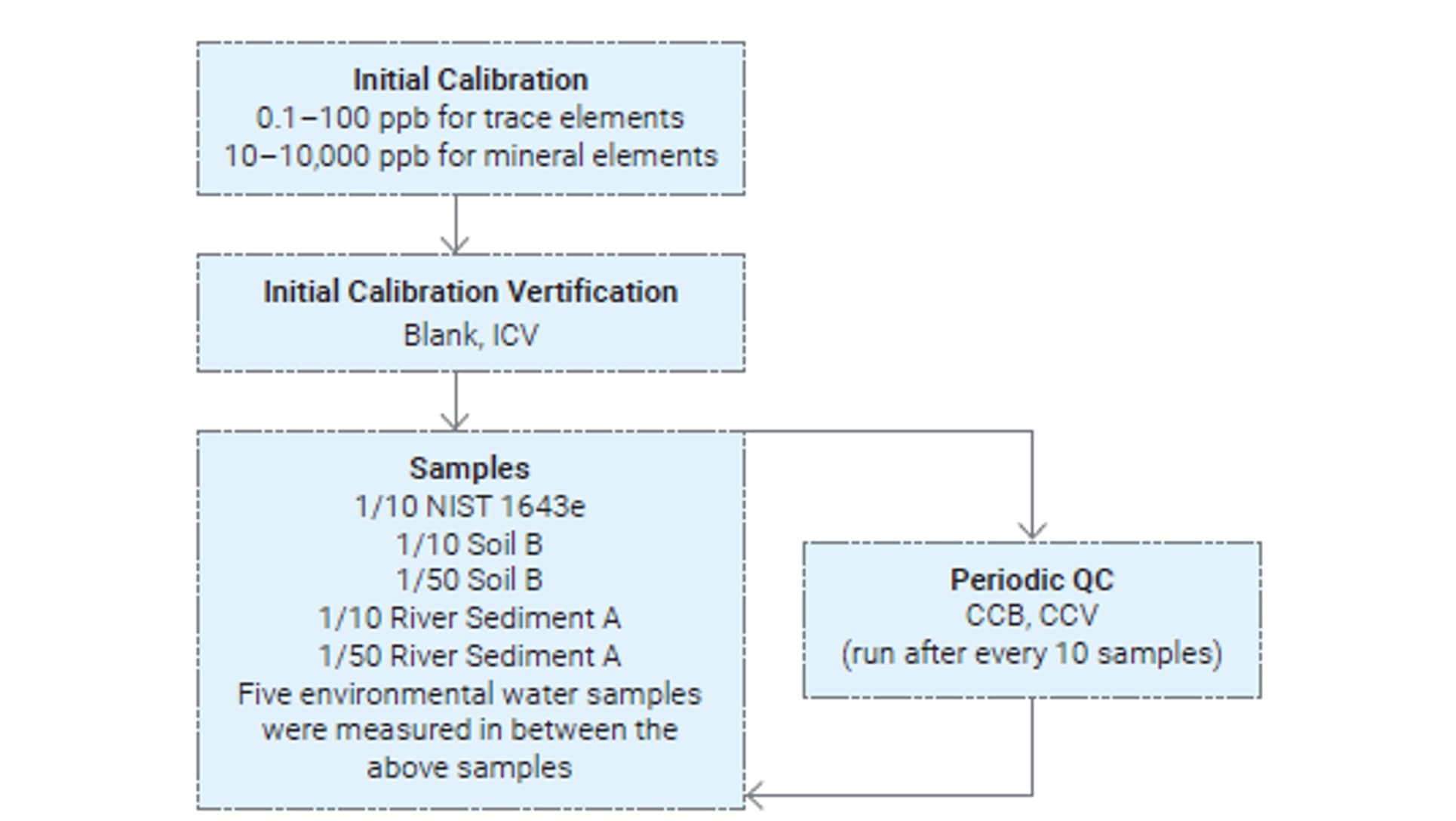
Certified reference materials (CRMs) for water, soil, and sediment from NIST and HPS were used to represent typical environmental samples and to verify method accuracy. Five environmental water samples were prepared without additional matrix matching to simulate routine laboratory conditions. Calibration standards and quality control (QC) solutions were prepared in a matrix of 1% HNO₃ and 0.5% HCl. The sequence of calibration standards, QC solutions, and samples analyzed in a two-hour sequence is shown in Figure 1. The “Samples” block was repeated continuously with automatic insertion of the “Periodic QC” block after every 10 sample runs.
Results and discussion
Detection capability
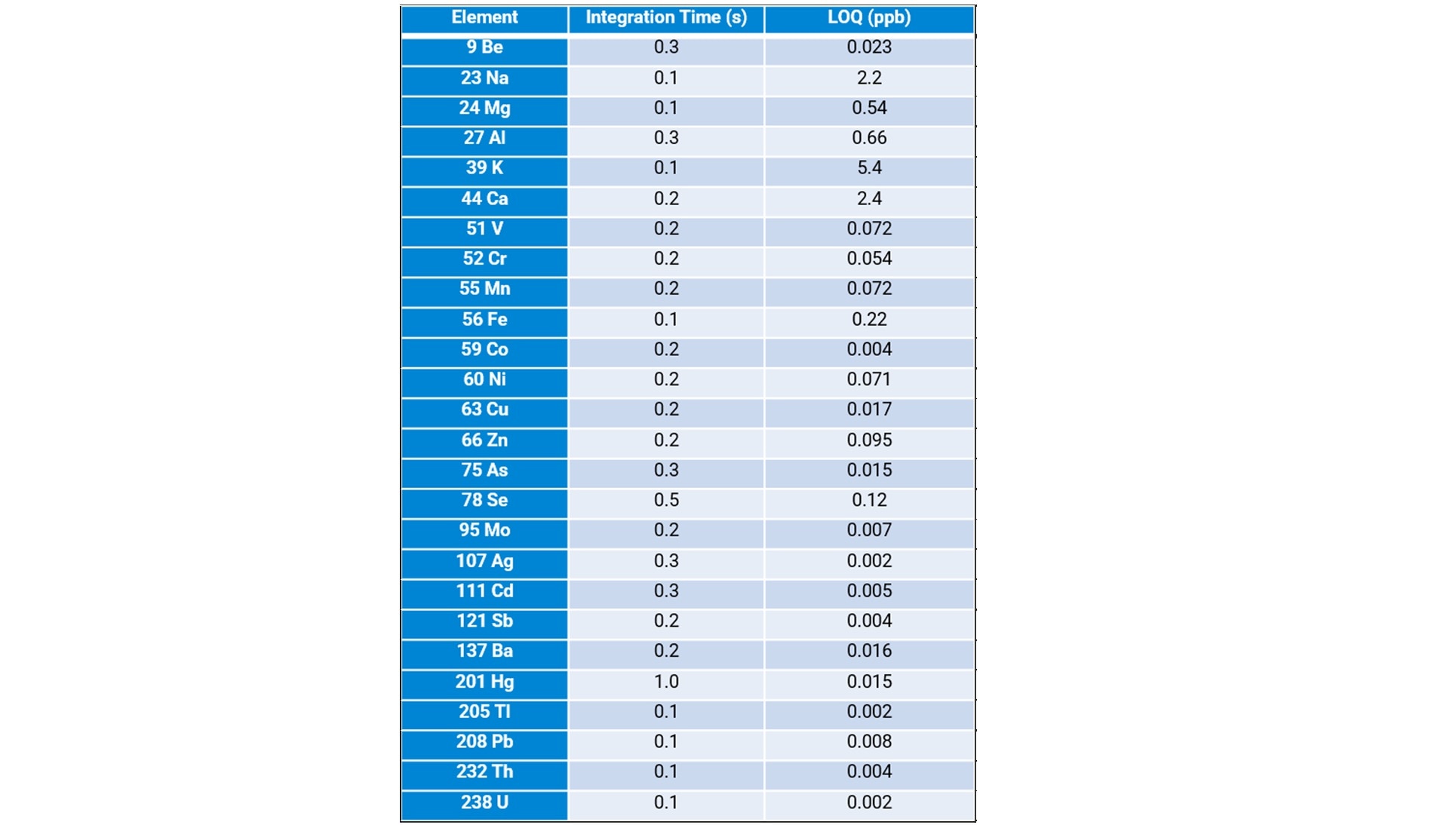
Limits of Quantitation (LOQs) based on 10σ were calculated from 10 measurements of the 1% HNO3 and 0.5% HCl blank are shown in Table 1. All LOQs fall within the low-ppt to low-ppb range.
Increasing sample throughput by 50%
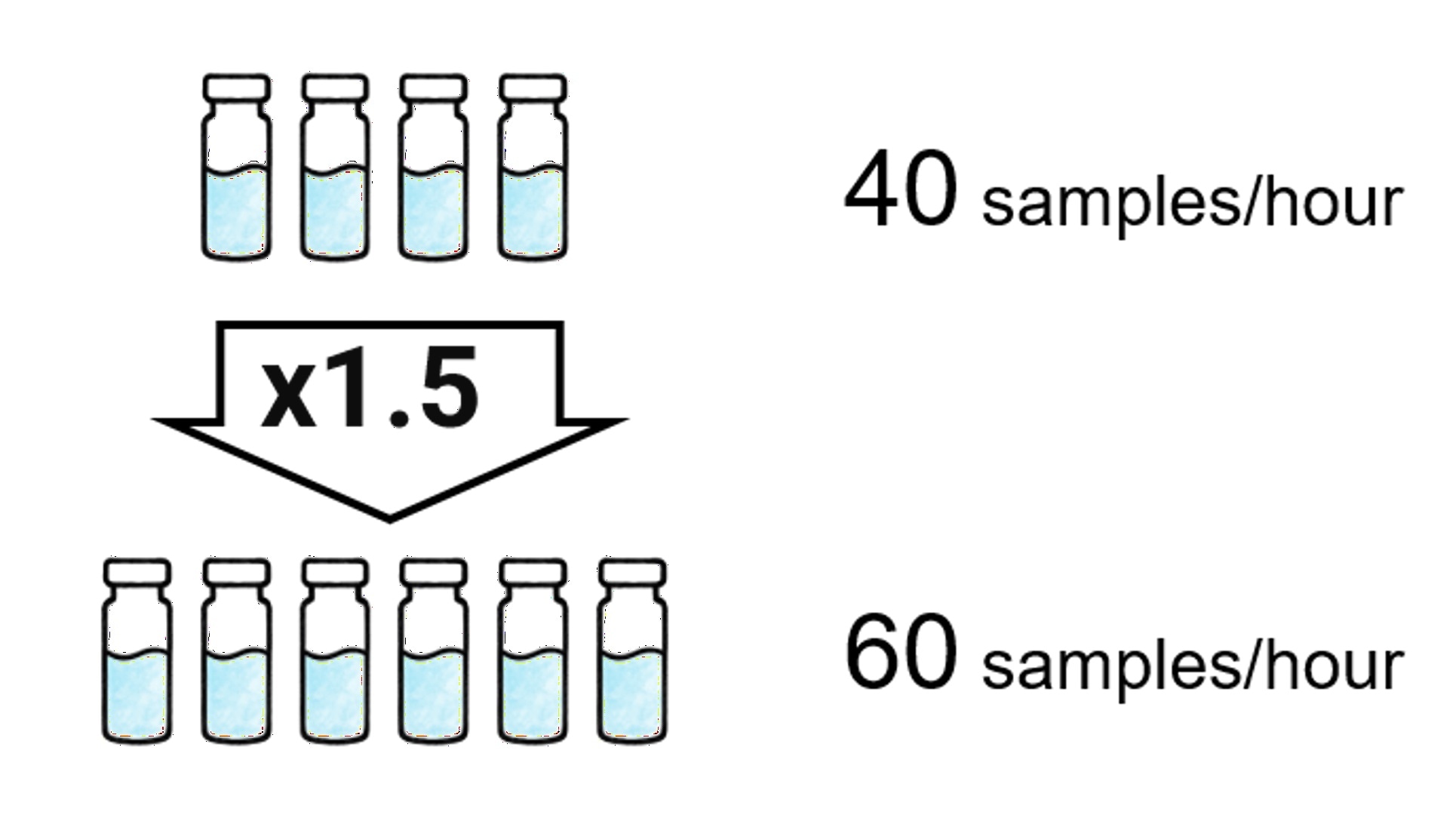
The 9500 ICP-QQQ with an integrated AVS MS was used to measure 26 analytes and five internal standards (ISTDs) using the DCS in AHM (three replicate runs). A total of 141 samples were analyzed in 138 minutes, with each sample requiring less than 1 minute of measurement time. In comparison, a similar sample sequence analyzed using an Agilent single-quadrupole ICP-MS required approximately 1 minute 30 seconds per sample.1 This workflow therefore delivers a 50% increase in sample throughput relative to the single-quad ICP-MS method.
Accuracy: Analysis of environmental CRMs
All three water, soil, and sediment CRMs were analyzed multiple times throughout the analytical sequence. To simulate a low concentration natural water sample, NIST 1643e was analyzed after a 10x dilution, while the soil and sediments were analyzed following 10x and 50x dilutions. The mean concentrations, percent relative standard deviations (%RSDs), and mean recoveries were calculated for each analyte, as shown in Table 2. The results for all elements across the CRM samples showed excellent agreement with the certified reference values. The only exception was Co in River Sediment A, which recovered outside the 100 ± 10% range. Because both the 10x and 50x dilutions were out of range, the results suggest potential contamination of the CRM.
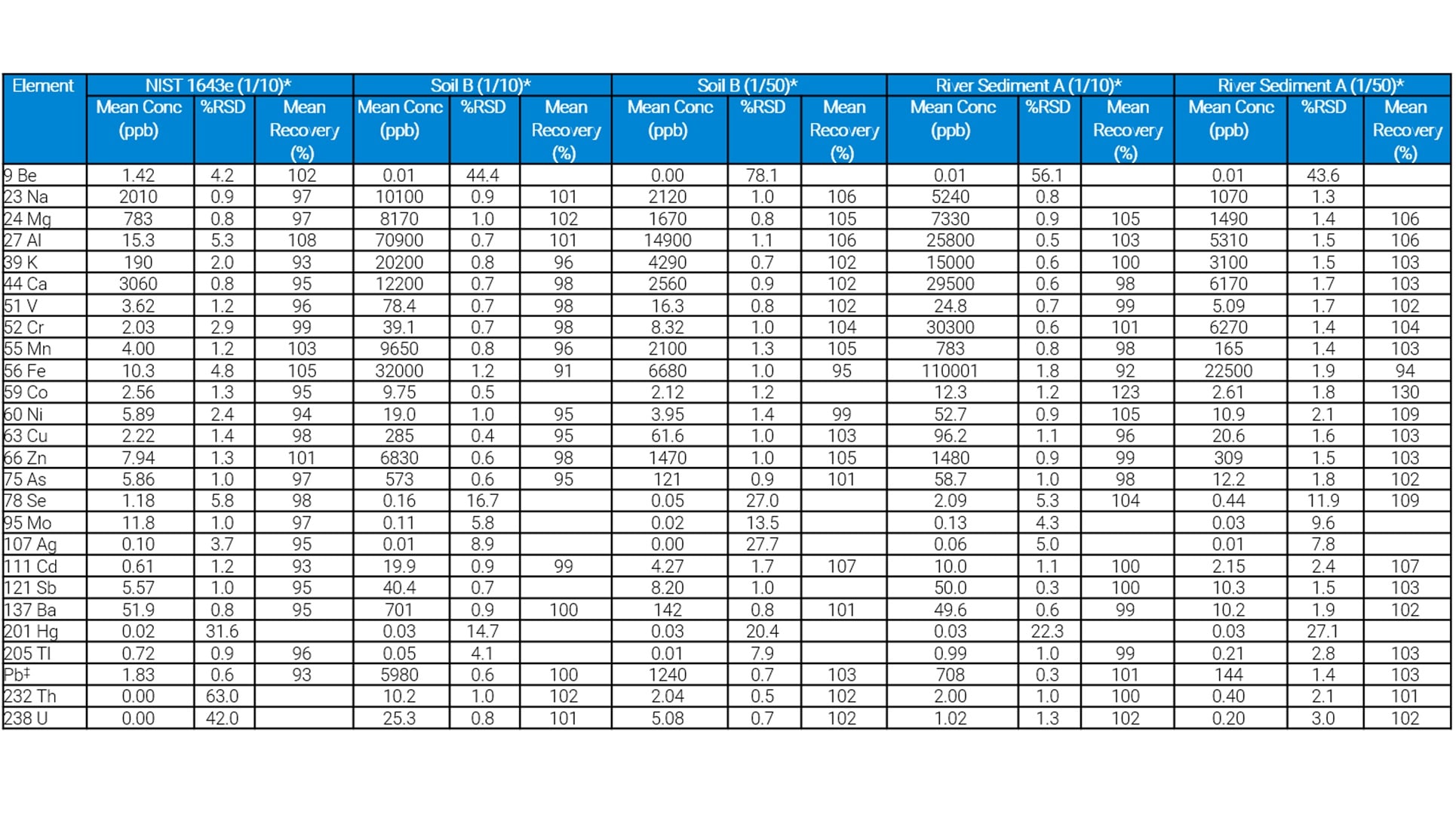
‡ Reported as the sum of the lead isotopes 206+207+208
*1/10: Concentration of 1/10 diluted solution; 1/50: Concentration of 1/50 diluted solution
Stability/robustness during analysis of high-matrix samples
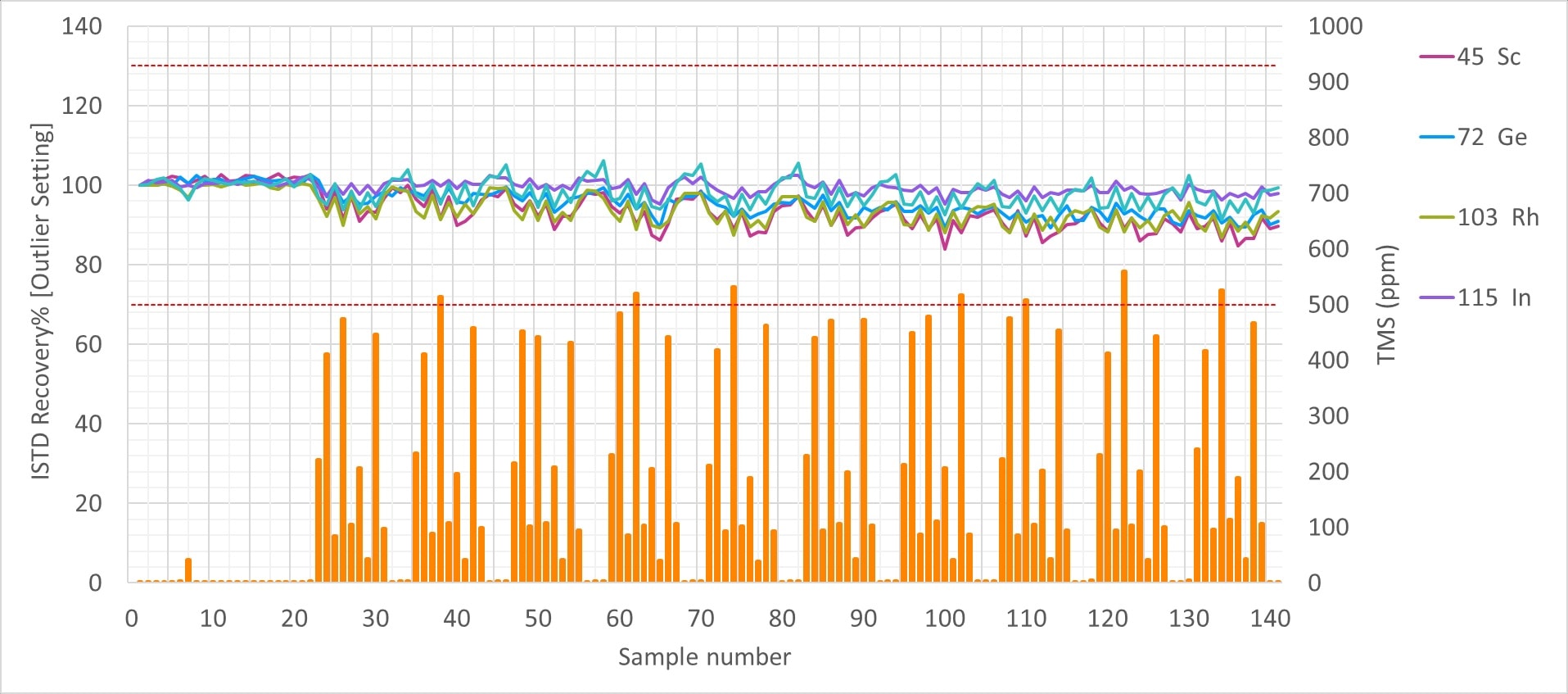
Figure 3 shows that the ISTD recoveries of the 141 samples and QC solutions remained within 80–110% throughout the two-hour run, demonstrating excellent stability of the 9500 ICP-QQQ in AHM.
The graph also includes Total Matrix Solid (TMS) values for each sample, obtained using the IntelliQuant feature of the OpenLab ICP-MS software. IntelliQuant performs a full-mass scan in approximately two seconds, providing a rapid semiquantitative profile of the sample.2
Since TDS is estimated as twice the TMS value, several samples with a TDS content exceeding 1000 ppm were repeatedly introduced to the 9500 ICP-QQQ during the sequence. Despite the elevated TDS levels, ISTD signals remained stable, demonstrating the excellent robustness of the 9500 ICP-QQQ with UHMI under challenging matrix conditions.
Enhancing productivity
The Agilent 9500 ICP-QQQ with DCS in AHM and AVS MS delivers fast, accurate, and robust high-throughput environmental analysis. This study shows a boost in sample throughput of 50% while maintaining CRM-verified accuracy and long-run stability.
References
- Yamanaka, K. Wilbur, S. Maximizing productivity for high matrix sample analysis using the Agilent 7900 ICP-MS with ISIS 3 discrete sampling system 5991-5208EN
- Agilent ICP-MS IntelliQuant Software
More information
Kondo, Satoshi. Analysis of Environmental Waters by ICP-QQQ with a Dual-Cell System and Discrete Sampling, Agilent publication, 5994-9125EN
DE-015929