Laboratory digitalization succeeds only when it works for the people in the lab. Yet for most QC labs, execution at the bench remains manual and documentation-heavy—leaving room for errors, missed steps, and rework.
Agilent OpenLab Sync closes the gap in lab digitalization by bringing QC execution to where it matters most—at the bench. It transforms manual SOPs and analytical methods into guided, step-by-step digital execution, putting the right action into the hands of analysts where QC work actually happens.

Next-level QC—activated with OpenLab Sync
OpenLab Sync is a lab execution system (LES) built for QC labs—unlocking a new, guided way to execute QC work at the bench. OpenLab Sync elevates how QC work is performed through an analyst-centric, bench-focused experience, while working alongside existing CDS and LIMS without disrupting established processes. OpenLab Sync also works alongside your existing LIMS, or for labs without a LIMS, provides everything needed to track and manage samples, analyses, and results on a single system.

Reliable execution at the bench

Higher analyst productivity
Consistent, high-quality results
Audit readiness

Faster adoption, powered by AI
What OpenLab Sync delivers
Establish a practical, low-risk entry point for digital QC that supports gradual adoption and long-term scalability.

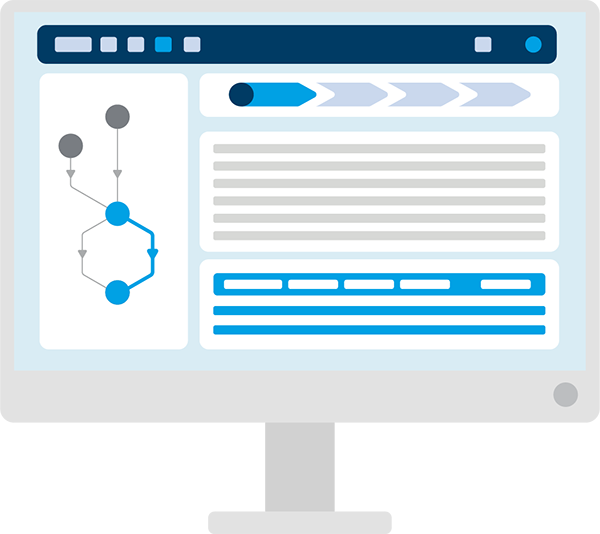
Protocol execution guides analysts through each required step in sequence using an intuitive, tablet-friendly interface that prompts the right action at the right time and prevents missed or out-of-order steps—where execution risk is highest, at the bench.

Help remove ambiguity in how USP-NF methods are applied with USP MethodConnect, helping you get started faster with less setup and verification effort.
Paperless records are only the beginning. Automate how QC work is executed and governed—from start to finish.
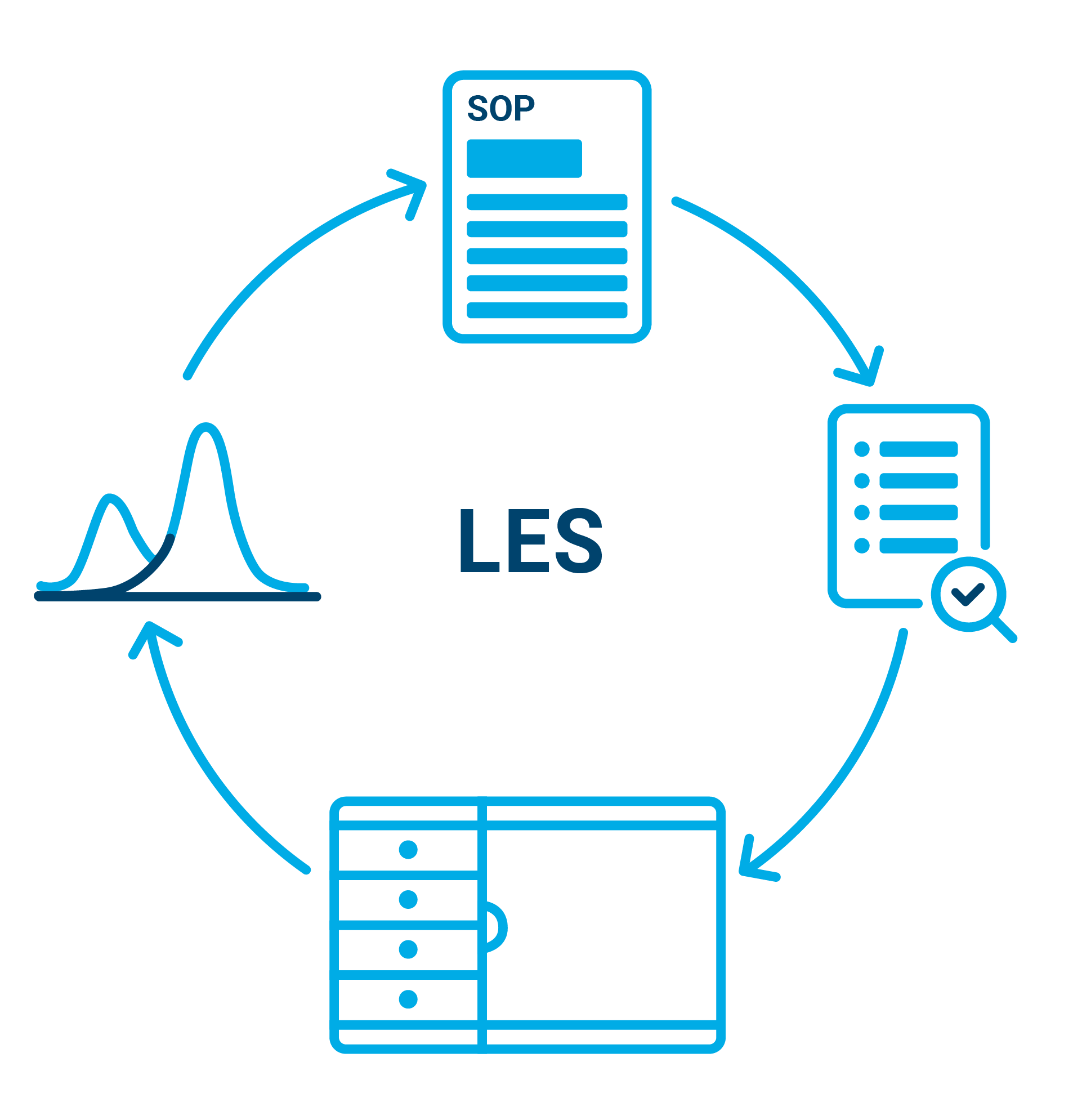
Ensure full sample traceability across the laboratory workflow, manage sample metadata, and accelerate data onboarding through simplified Microsoft Excel imports while supporting compliance and audit readiness.
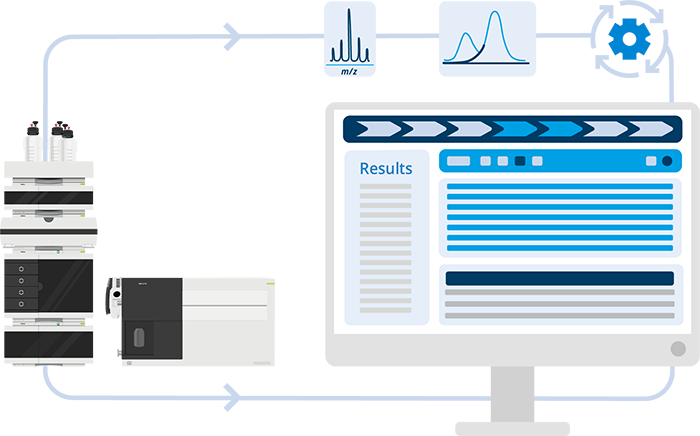
OpenLab Sync integrates with the systems that run your business and your lab, helping reduce inconsistencies, eliminate redundant work, and keep information aligned across workflows. It interfaces with any chromatography data system (CDS) to control instruments, run processing methods, and generate results. When paired with OpenLab CDS, communication is automated, creating a consistent user experience while reducing data silos between sample management and analytical results.
Produce consistent records that streamline review and reduce rework, supporting faster batch release.

Bring study planning, batch enrollment, testing activities, and reporting together in one system. Monitor trends over time and easily share or export results.
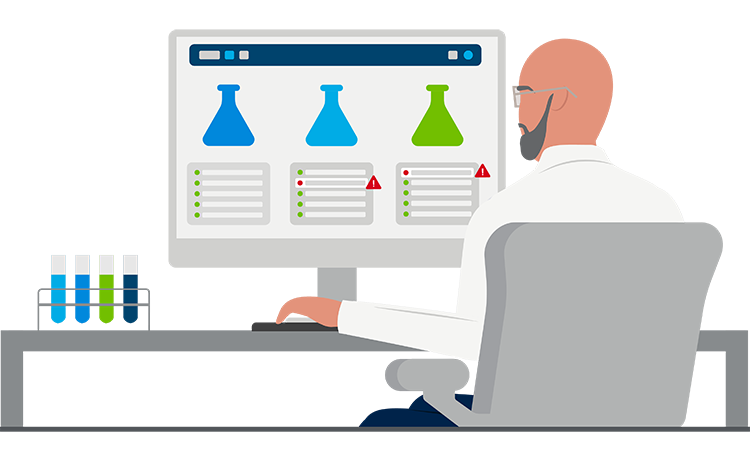
Our unique Workflow Module makes lab operations transparent for everyone in the lab. Analysts can see who is working on what, what is in process, and what comes next, while reviewers have visibility across the entire workflow.
Generate complete, traceable records that support ALCOA+ principles and stand up to audit and review.

Bench-first digitalization
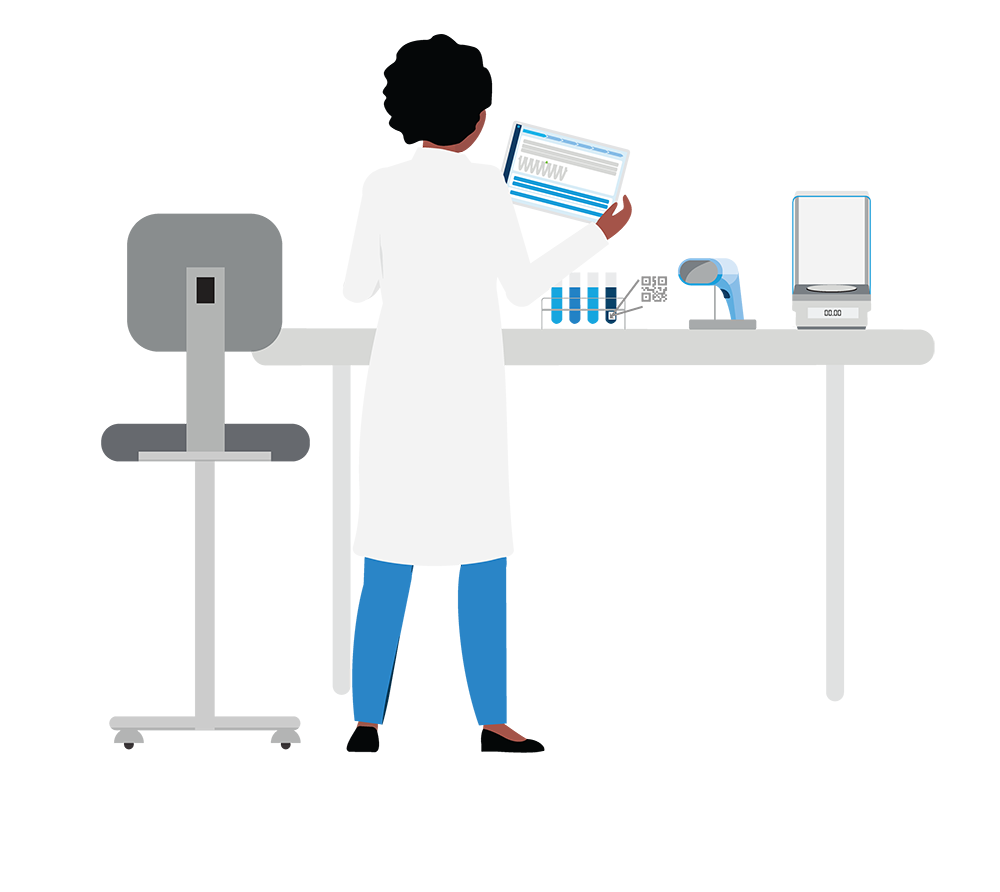
Analysts don’t need another screen; they just need the right one. The bench view runs on a tablet at the lab bench, presenting only the information needed for the task at hand. Analysts are guided step by step through the workflow, with clear instructions for what do next, structured the way work is performed at the bench.
It also connects to the lab environment—instruments like balances and pH meters, and the data systems behind them. Data gets captured automatically and instructions stay consistent for every analyst.
Boost with USP MethodConnect—trusted methods, ready to execute
OpenLab Sync connects to USP MethodConnect—developed by USP—through a plug-in built by Agilent, making Agilent the first integrator of the platform. USP MethodConnect delivers verified, machine-readable content based on USP–NF test methods, bringing trusted content directly into digital workflows to help reduce ambiguity and support faster, more confident method execution.
For QC laboratories, this means faster onboarding, greater execution confidence, and scalable standardization across teams.
USP MethodConnect delivers:
- Trusted USP-NF methods into guided, executable digital protocols
- Methods derived directly from USP standards and lab SOPs
- Reduce engineering, validation, and ongoing maintenance effort
- A faster, more reliable way for QC labs to digitize procedures
Today, USP MethodConnect is first available in OpenLab Sync. Learn more about USP MethodConnect.


Smarter QC operations—Powered by AI
AI in OpenLab Sync acts as a practical enabler for QC operations by reducing the effort required to manage, configure, and oversee complex systems—without generating, interpreting, or modifying analytical data or results.
AI can be applied to system-level and administrative tasks, including:
- Supporting instrument integration
- Configuring complex, rule-based workflows
- Monitoring software usage and identifying usage patterns
- Enabling semantic search within the software
- Generating summaries of lab activities
Activation of AI-supported capabilities remains fully under your control, with all usage contained within the customer’s IT and compliance framework.
Learn more about Agilent’s approach to AI in the laboratory.

Request your demo today
Experience a personalized demo run by Agilent experts and built for labs like yours. See exactly how OpenLab Sync replaces manual, error-prone work with guided execution.
Related resources

Frequently asked questions
Did OpenLab Sync replace Agilent SLIMS?
OpenLab Sync is the next generation of Agilent SLIMS. The previous name no longer accurately reflected the product’s expanded functionality. OpenLab Sync better reflects the addition of digital protocol execution for QC labs—connecting people, processes, and systems at the point of work. The new name also aligns with the Agilent OpenLab software portfolio and unified user experience, while maintaining the same core functionality and support for our customers’ use cases.
What’s new and what remains the same?
What’s new:
- Improved digital execution at the bench: Clearer guidance and a simple, updated user interface—bench view—to support more confident day-to-day procedure execution
- Optional USP prepackaged protocols: Ready-to-use digital protocols help teams get started faster
What remains the same:
- Core functionality and performance from previous releases
- Existing workflows for NGS, biobanks, food and environmental
- Support model
What makes OpenLab Sync different from other LES solutions?
OpenLab Sync is not introducing a new category—it applies established LES principles in a way that works for QC labs. Its differentiation focuses on the analyst: a guided, analyst-centric user experience designed for real-time use at the point of work. This role-based approach helps reduce ambiguity without disrupting existing CDS or LIMS environments.
What is a Lab Execution System (LES), and how is it different from a LIMS or a CDS?
A Lab Execution System (LES) is a software solution that guides analysts step by step through laboratory procedures and captures a complete, compliant record of how the work was actually performed. A LIMS manages samples, tests, and results—answering what was tested and what the outcome is—while an LES focuses on how the test was executed at the bench. A CDS, by contrast, controls analytical instruments and generates raw data, and it is typically linked to an LES or a LIMS rather than replaced by them.
Why the collaboration with USP?
Pharmacopeial organizations like USP set the authoritative standards labs rely on, but delivering those methods in digital, machine-readable formats requires a technology partner. Agilent, wanting to make digital adoption even easier and faster, needed trusted, validated content to power its platform—rather than asking customers to build it themselves. By collaborating with pharmacopeial bodies, Agilent closes that gap. This delivers ready-to-use, verified compendial methods delivered directly into Agilent workflows, cutting digitization timelines from months to days, eliminating manual transcription and ambiguity at the bench, and maintaining full traceability to recognized standards without heavy revalidation.
How do I deploy an LES?
OpenLab Sync supports deployment models aligned with pharma IT and quality requirements. It can be hosted by Agilent on a scalable, secure infrastructure, deployed with your preferred cloud provider, or installed within your own validated IT environment. Whether at the bench with a tablet or at a desk using a web browser, OpenLab Sync provides a device-responsive interface designed for each user's workflow. We support ISO 27001.
How does my lab benefit from this solution?
Agilent works with your laboratory key users, quality, and IT stakeholders to define an implementation plan that supports your digital transformation at the right pace, from start to finish. Our experts install and verify that the software performs exactly as designed and provide training, so designated users can confidently operate and maintain the system in a compliant environment.