“At Agilent, we believe that bringing great science to life means protecting the life that makes great science possible. This Earth Day, we renew our commitment to building a more sustainable future because the planet isn't just our home, it's the foundation of every discovery yet to come.”
Padraig McDonnell, Agilent President and CEO

Sustainability is built into every part of our business
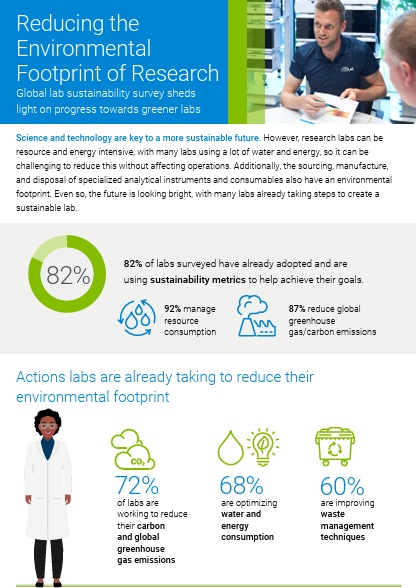
Our mission to advance the quality of life means embedding sustainability into how we operate, innovate, and engage with the world around us—balancing the needs of our business, society, and the health of our planet. This Earth Day, we’re bringing that commitment to life through activities and events across our sites worldwide, connecting our teams around learning, engagement, and meaningful action.
In 2026, we’re emphasizing progress over pledges by highlighting the tangible steps we’re taking to improve our operations, innovate with purpose, and empower our customers to achieve their environmental goals. Earth Day is a moment to reflect, but more importantly, it’s a moment to accelerate—because building a more sustainable future requires all of us, every day.”
A Message from Joydeep Ganguly
Earth Day Across Agilent Sites
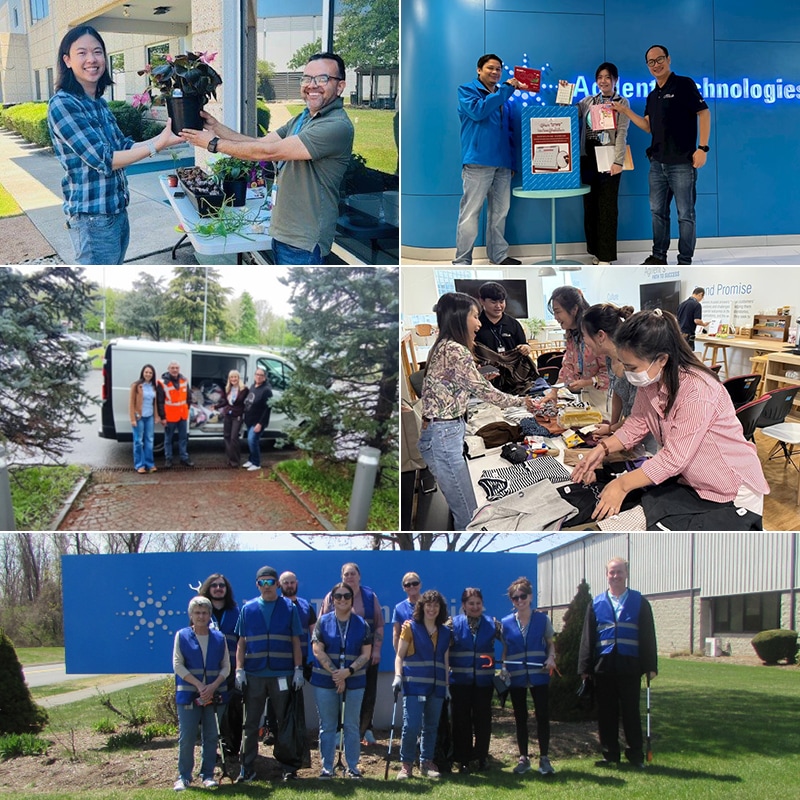
In support of Earth Day 2026, Agilent sites around the world are activating the power of everyday choices through local action. From energy-saving “lights off” initiatives, recycling and e-waste collections, hands-on workshops, site cleanups, and tree planting to employee education events—our teams across the globe are demonstrating how individual and collective actions drive real environmental impact.
Together, these site-led efforts show how our people are turning awareness into action—using our power to protect our planet.
Agilent sustainability in the news
Agilent’s Infinity III liquid chromatography systems... include
features designed to reduce energy consumption, extend instrument life, and minimize waste.
Joydeep Ganguly, Chief Operations & Quality Officer and ESG Chair

Sustainability isn’t just an environmental imperative—it’s a smart
business strategy that drives efficiency and cost savings while positioning labs for long-term
success.
Mike Viskovich, VP of Workplace Services
The Agilent 1290 Infinity III LC System exemplifies how verified
sustainability performance can drive meaningful change across science and industry.

Agilent runs a program that takes back old instruments,
refurbishes them and redeploys them. This reduces waste, extends the lifespan of equipment and
creates a circular economy that benefits the planet...
Dr. Tarun Anumol, Director of the Applied Markets Segment Group

Customer Stories
Engineering Industrial Sustainability with Veolia
For Veolia, sustainability isn’t a future ambition—it’s the whole reason the company exists. Dave Gamache, vice president of R&D at Veolia, emphasized, “Our purpose is ecological transformation. That's at the heart of what Veolia focuses on now.” That purpose shapes everything Veolia does—from system design and laboratory operations to guiding customers toward more efficient, more circular outcomes. Sustainability at Veolia is not abstract. It is measurable, engineered, and built into every process from the very beginning.
Testex: Weaving a Tapestry of Sustainability
Zurich, Switzerland–based TESTEX is committed to making textiles safer. Established in 1846 as the ‘Zurich Silk Conditioning Institute’, their experience in textiles and leather testing spans nearly the entire history of the industry itself. Dr. Andreas Kapaklis, Laboratory Team Leader at TESTEX, discussed their unique perspective.
Uluu: Sustainable Plastic Solutions with Dr. Luke Richards
Meet Luke Richards, lead scientist at Uluu, who has a PhD in biochemical engineering from the University of Melbourne and bachelor’s degree in biochemistry and bioprocess engineering. Luke’s research experience involves the application of microbes for pharmaceutical production. He has also worked as a process engineer in the dairy industry.
Columbia University: Innovative Sustainable Environmental Cleanup with Dr. Adeyemi Adeleye
Meet Dr. Adeleye, a researcher in Columbia University’s Earth and Environmental Engineering department and recipient of the Agilent 2024 Early Career Professor Award, who brings an impressive suite of tools and experience to his pursuit of exploring reactions between pollutants and reactive engineered materials and surfaces in environmental matrices.
Sustainability at Every Step of the Instrument Lifecycle
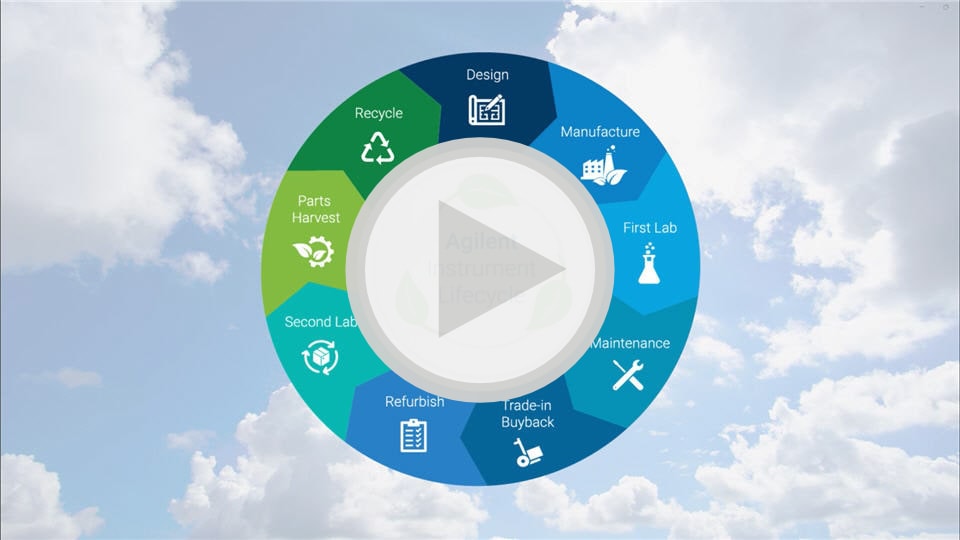
Every scientific breakthrough carries a responsibility to advance discovery while reducing environmental impact. At Agilent, circular economy principles are built into the instrument lifecycle to extend product use, reduce waste, and conserve resources. Through energy-efficient design, third party-verified product transparency, and programs for maintenance, refurbishment, and responsible retirement, Agilent helps labs operate more efficiently and sustainably. The result is reliable science with a reduced environmental footprint.