Refine Results
- Products
- Applications and Industries
- Content Type
- Analysis Technique
- Analyzed With
- Chemical Group
- Compounds
- Detection Technique
- Injection Technique
- Instrument
- Method
- Agency Method
- Inner Diameter
- Length
- Manufacturer Compatibility
- Part Mode
- Packaging
- Particle Size
- Model
- Solvent
- Analyte
- CAS Number
- Concentration
- Format
- Technique
- Unit Quantity
- Volume
- Research Area
- Cell Line
- Cell Type
- Analysis Platform
- Journal
- Assay
- About Agilent
- Language
- Publication Date

1 - 20 of 4677 results


Pesticide reference materials for environmental testing.

Designed for targeted pesticide compound screening and quantitation using LC/TQ

Targeted screening of pesticides in food with the Intuvo GC/TQ

Pre-optimized MRM transitions for simplified pesticide analysis via GC/TQ
Pesticide residue analysis is a complex and demanding task, often entailing the detection and quantification of hundreds of target compounds in intricate matrices. With its extensive library of pre-optimized MRM transitions and extensive compound coverage, P&EP 4.0 simplifies the analytical workflow. This accessibility and efficiency lower the barrier of entry into pesticide residue analysis, making it an ideal solution for laboratories of all sizes.

Specially designed for the determination of trace levels of pesticide residues.
determination organochlorine pesticides
determination organochlorine pesticides
-
Hello everyone We determine organochlorine pesticides in water using gas chromatography Agilent GC 7890A- MSD 5975C . The calibration curve was constructed with a hexane/toluene mixture.
GCMS Pesticide Analysis Recommendations
GCMS Pesticide Analysis Recommendations
-
/Pesticides_5F00_30fps_5F00_FNL.mp4 For more information, check out the application note Five Keys to Unlock Maximum Performance in the Analysis of Over 200 Pesticides in Challenging Food Matrices . Recommended parts from the video: Self-tightening, collared column nut for use with inlet/detector part number G3440-81011 Self-tightening, collared column nut for use with MSD, part number G3440-81013 Gold-plated CFT Ferrule, part number G2855-28501 Column installation tool for 5973/5975 A/B/C, 5977, 7000 (Not for 5975T), part number G1099-20030 Ultra Inert, inlet liner, splitless, dimpled, 2 mm id, part number 5190-2297
Pesticides and their stability during GC analyses
Pesticides and their stability during GC analyses
-
The list includes: Pesticide Ref. Structure Aldrin 1 Captafol 1 Captan 1 Chlorbromuron 1 Chlorotoluron 1 Cycluron 1 Deltamethrin 1 Dichlofluanid 7 Diuron 1 Fluometuron 1 Iprodione 1 Metobromuron 1 Monolinuron 1 Tolylfluanid 7 Trichlorfon 5 N-methylcarbamate Pesticides The N-methylcarbamate pesticides can only be analyzed by GC under special conditions.
Drifting organochlorine pesticide calibration when the instrument is not in use for a day
Drifting organochlorine pesticide calibration when the instrument is not in use for a day
-
Hello, I'm running Openlab CDS Chemstation version C.01.10[201], and I'm having a problem maintaining my calibration. He's the deal: On 1/11 I ran my cal curve overnight. The following day I entered the curve. The fit was great, and my check standard (0.20 ppm, 22 compounds) came right in on both the front and the rear. On1/13 I ran the check standard again. Once more both the front and rear results came in very nicely. Two days later, during which the instrument was not in use, I ran the same standard. As I had been off for a day, I ran a 10.0 ppm as a primer. I had been told this was a good idea as it prevents adsorption on the column. So, I ran the primer, a hexane to rinse. The results from the rinse showed no carry over from the primer. Then I ran the check standard. It came in too high. So did the curve standard I ran four days prior. The problem is that, while the front column results were too high, the rear column results came in nicely. When results from 1/11 and 1/15 ae overlaid, the front column peaks are higher, but the baseline on the front is no higher or lower than it was several days ago. The resting signal doesn't seem to have risen during the last few days and the peaks maintain a nice and sharp shape. Does anybody have any idea why the front column results would be shifting like this? While I'm not sure the instrument model matters, I am running on a 7890B with the Restek CLPesticides 2 column on the front and the CLPesticides on the rear.
Pesticide standards for cannabis and hemp testing. Portfolio includes state specific mixes and more.
Specially designed for the determination of trace levels of pesticide residues with ECD or MS detection.

Get the lowest possible detection and quantitation limits for pesticide residues in complex matrices

As food supply chains become increasingly global, governments are seeking to monitor a wider range of pesticides than ever before. This requires measuring hundreds of compounds in a number of different analyses, meaning labs need multi residue...

The pressure to meet stringent safety standards, regulations, and expectations for pesticide analysis has never been greater. Agilent Analyzers and Application Kits let you rapidly implement the industry's most advanced technologies for trace-level...

The worldwide use of pesticides in food and supplement production has been a cause of increasing concern amongst retailers, regulators and end users. Consumers are looking for the assurance that the foods they eat and supplements they take are safe...

The worldwide use of pesticides in food production has been the cause for increasing concern. Consumers are looking for the assurance that the food they eat is safe. Chemical diversity of these pesticides also presents a considerable challenge to...
Compare
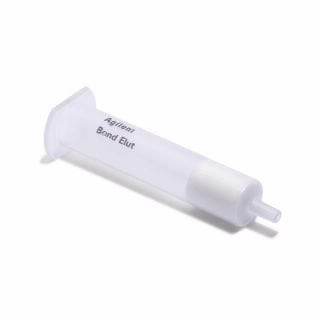
EnvirElut cartridge (Pesticide), 500 mg, 6 mL, 30/pk. EnvirElut sorbents are specially designed for the extraction of a wide range of compounds from aqueous matrices. Sorbents are application-specific for target analytes.
-
Volume:
6 mL
-
SPE Format:
Cartridge
-
Bed Mass:
500 mg
-
Sample Prep Phase:
EnvirElut
-
Unit:
30 Pack

Compare
Pesticide locking standard, 3x1 mL ampoules. Contains 10 mg/L of each: Chlorpyrifos-methyl, Dichlorvos and Mirex in n-Hexane.
-
Volume:
1 mL
-
Unit:
1 Each
Compare
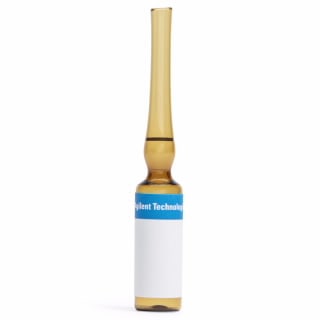
Pesticides matrix spiking standard
-
Component:
-
Solvent:
Methanol
-
Packaging:
1 mL Ampule
-
Unit:
1 Each
Compare
Pesticides matrix spiking standard
-
Component:
-
Solvent:
Acetone
-
Packaging:
1 mL Ampule
-
Unit:
1 Each
Compare
Pesticides matrix spiking standard
-
Component:
-
Solvent:
Methanol
-
Packaging:
1 mL Ampule
-
Unit:
1 Each
Compare
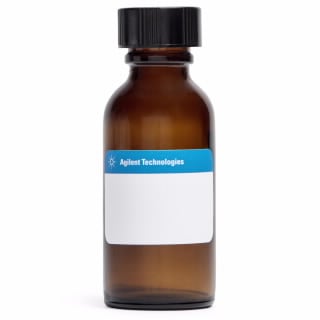
Pesticides matrix spiking standard
-
Component:
-
Solvent:
Methanol
-
Packaging:
25 mL Bottle
-
Unit:
1 Each
Compare
Pesticides individual standard
-
Component:
-
Solvent:
Hexane
-
Packaging:
1 mL Ampule
-
Unit:
1 Each
Compare
Pesticides individual standard
-
Component:
-
Solvent:
Hexane
-
Packaging:
1 mL Ampule
-
Unit:
1 Each